India
India is a founding member of the Global Methane Initiative (GMI) and provides significant ongoing support by serving in leadership roles in the Steering Committee and Coal Mines Subcommittee.
As part of its national climate strategy, India has implemented a range of measures to reduce methane emissions, including establishing regulatory standards and promoting clean energy alternatives like biogas. These efforts support both methane reduction and rural development, helping India achieve national goals and global targets for climate action.
On this page:
Methane Emissions Summary
According to India’s Third National Communication and Initial Adaption Communication to the United Nations Framework Convention on Climate Change (UNFCC), published in 2023, methane emissions accounted for 13.06% of India's total greenhouse gas (GHG) emissions in 2019. Most of India’s GHG emissions come from the energy sector and agriculture sector.
GHG Emissions by Gas, 2019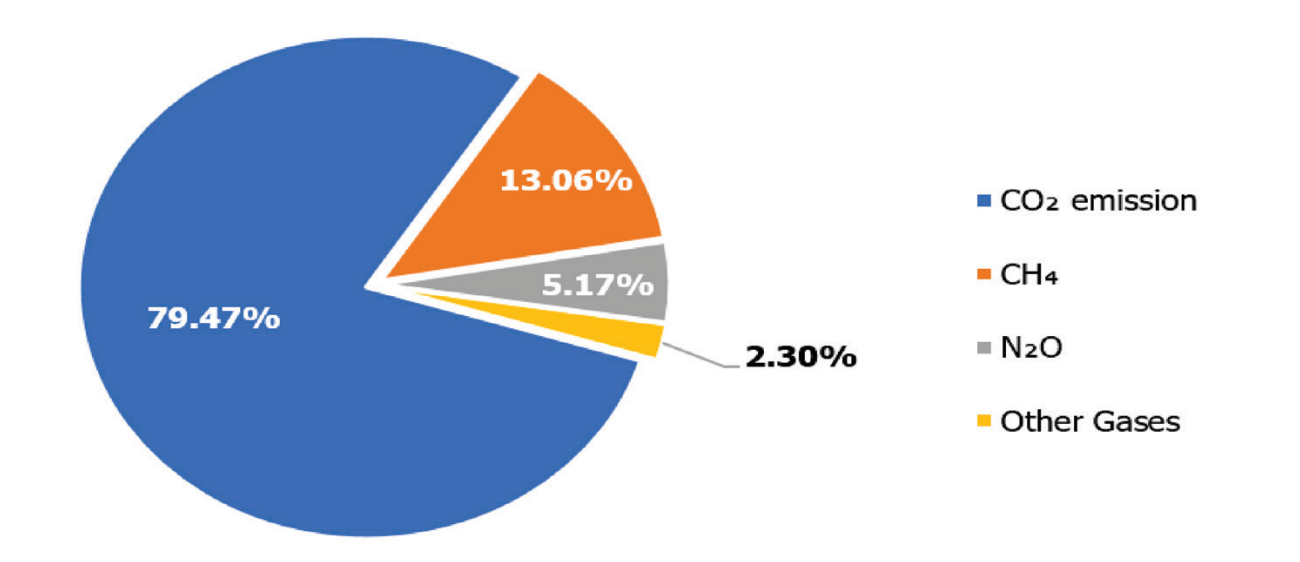
Trends in GHG Emissions by Source, 2000-2019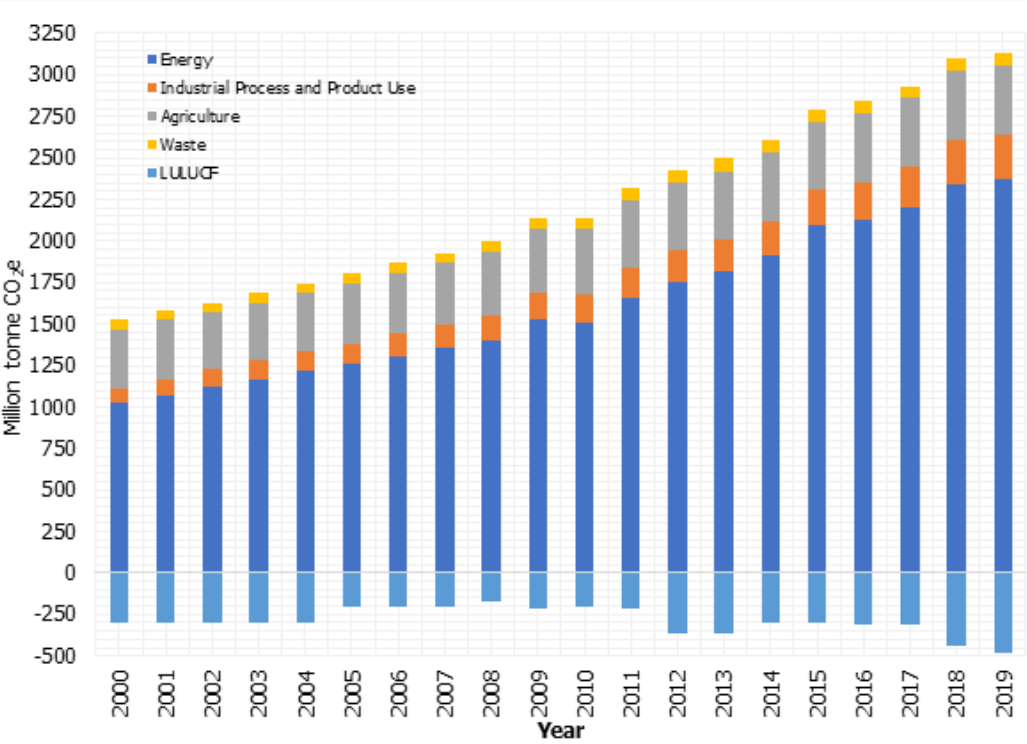
GHG Emissions by Category, 2019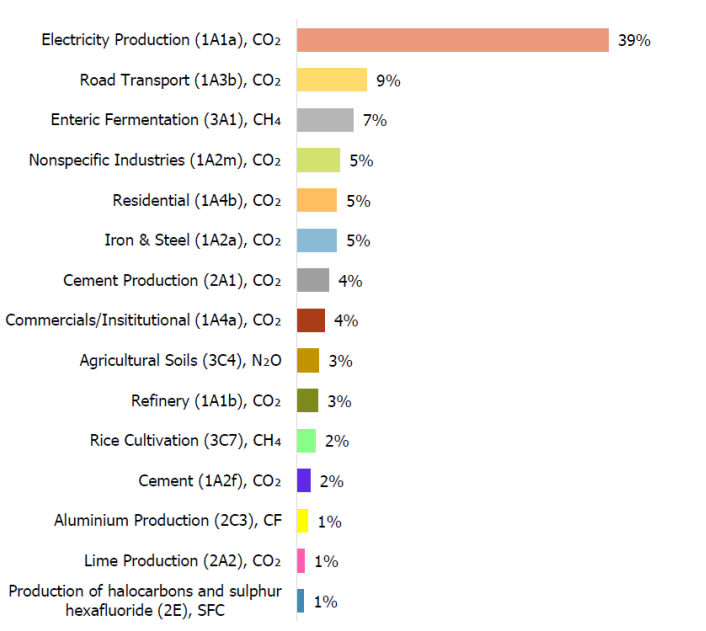
Source: India’s Third National Communication and Initial Adaption Communication to the United Nations Framework Convention on Climate Change, 2024. https://unfccc.int/sites/default/files/resource/India-TNC-IAC.pdf
Methane Commitments and Plans
National
India has a national action plan and strategies aligned with the broad goal of mitigating greenhouse gases and fostering sustainable development.
- India submitted its Long-Term Low-Carbon Development Strategy to the UNFCC in January 2022. The strategy defines India’s action plan for achieving its Nationally Determined Contributions (NDCs) goals by 2030 and its long-term goals of net zero emissions by 2070.
- In January 2019, India launched its National Clean Air Programme, a national level strategy which identified actions to reduce air pollution and improve the monitoring of air quality across the country.
- The Government of India published the National Action Plan on Climate Change in June 2008. The plan defined a national strategy to promote understanding of climate change, adaptation and mitigation, conservation of natural resources, and energy efficiency.
Subnational
Indian states address methane mitigation with individual State Action Plans. These plans take into account the physical characteristics of the State and its climate. Plans include efforts to enhance waste management systems, promote biogas production from organic waste, and adopt sustainable agricultural practices.
- Individual State Action Plans are available on the Ministry of Environment, Forest and Climate Change website.
International
India supports and engages with international climate efforts to address methane challenges.
- The Government of India played an active role in drafting and signing the UNFCCC in 1992 and is a Party to the Paris Agreement (signed in 2016).
- India contributes expertise and resources to the United Nations Commission for Europe (UNECE), including support for the:
- India has participated in the Climate and Clean Air Coalition since 2019 in support of efforts to address air pollution and promote clean air initiatives.
Methane Actions
The following highlights a sampling of actions taken by India to address methane, organized by GMI sector.
Biogas Sector
- India has promoted biogas plants to convert agricultural waste and animal manure into energy. The National Biogas and Manure Management Program (NBMMP) aims to establish biogas plants, particularly in rural areas, to reduce methane emissions while providing clean energy. (2018)
- The Galvanizing Organic Bio-Agro Resources Dhan Project (GOBARdhan) aims to convert organic waste into biogas and compost, thereby reducing methane emissions, improving waste management, and supporting sustainable rural development. (2018)
- The National Mission for Sustainable Agriculture (NMSA) contributes to reducing methane emissions by promoting sustainable farming practices that enhance resource efficiency and reduce reliance on methane-intensive activities. (2014)
- The nationwide initiative, Swachh Bharat Mission, focuses on improving waste management, particularly solid waste. By enhancing landfill management, it helps reduce methane emissions from decomposing waste. (2014)
- Under the National Innovations in Climate Resilient Agriculture (NICRA) project, the Indian Council of Agricultural Research (ICAR) has developed several methane mitigation technologies for rice cultivation and other agriculture activities. (2011)
Coal Mines Sector
- India's coal industry is promoting renewable energy projects to reduce carbon and methane emissions, focusing on solar and wind projects, including rooftop installations and solar parks in reclaimed mining areas. The goal is to install 9,000 MW of renewable energy, supporting the country's transition towards net-zero carbon emissions by 2030. (2023)
Cross-Sector
- The National Mission for Green India aims to enhance forest cover and address climate change, with efforts to reduce methane emissions. This includes promoting biogas as an alternative energy source to cut methane levels and improve environmental sustainability. (2015)
Ministries and Agencies Supporting Methane Actions
Explore the following websites to learn more about the government ministries addressing greenhouse gas emissions and climate change in India.