Georgia
The GMI Secretariat prepared this profile using publicly available information. If you are an official representative and wish to submit edits or additions, please contact the Secretariat at secretariat@globalmethane.org.
Georgia joined the Global Methane Initiative (GMI) in 2009.
Georgia has made significant strides in reducing methane emissions across various sectors as part of its broader climate strategies. The country is committed to achieving a 30% reduction in methane emissions by 2030 and has actively promoted the use of biogas and enhanced methane leak detection measures.
On this page:
Methane Emissions Summary
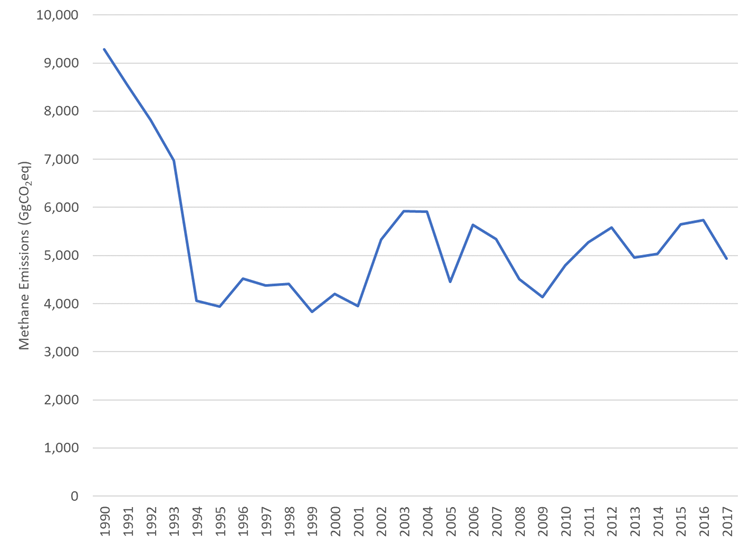
According to Georgia’s National Greenhouse Gas Inventory Report, published in 2021, methane emissions amounted to 4,941.06 gigagrams (Gg) of CO2 equivalent in 2017, with significant emissions from the agriculture (1,885 Gg CO2 equivalent) and waste sectors (1,503 Gg CO2 equivalent).
Trend of Methane Emissions, 1990-2017
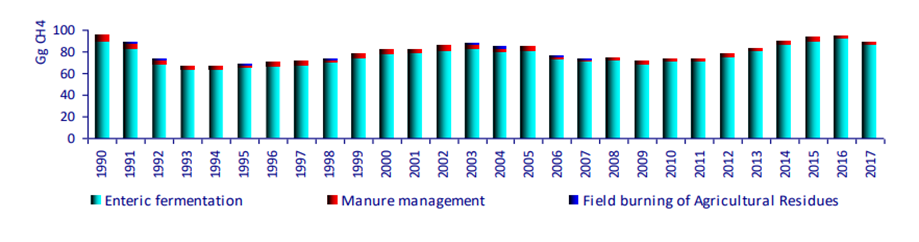
Methane Emissions from the Agriculture Sector from 1990–2017
Methane Emissions from the Solid Waste and Wastewater Sector from 2001–2017 (CO2 equivalent)
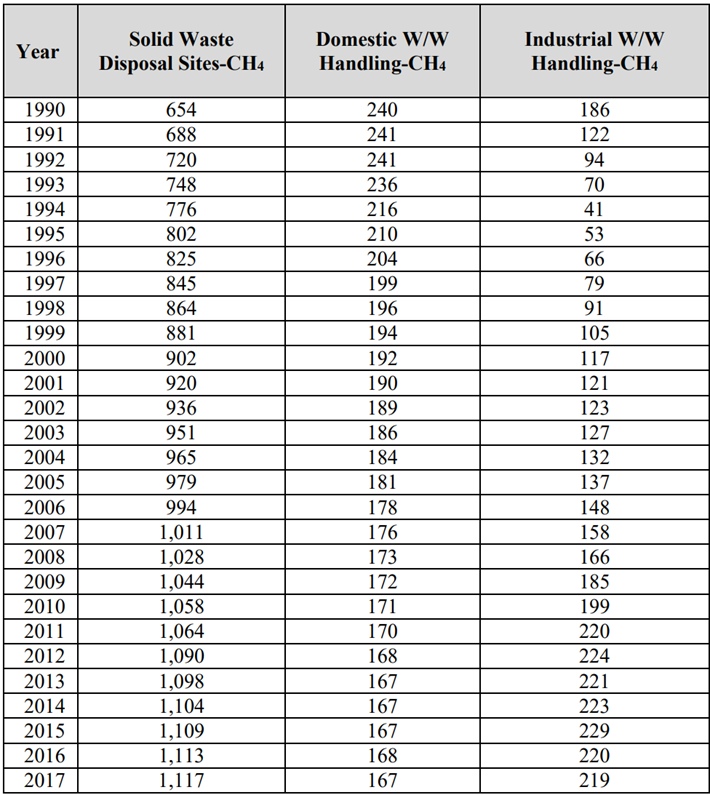
Source: National Greenhouse Gas Inventory Report of Georgia, 2021. https://unfccc.int/sites/default/files/resource/NIR%20%20Eng%2030.03.pdf
Methane Commitments and Plans
Methane mitigation efforts in Georgia are guided by national and international commitments and plans.
National
- Georgia’s Long-Term Low Emission Development Strategy, published in 2023, includes initiatives to mitigate methane emissions from various sectors. Specifically, Georgia will enhance methane recovery from coal mines and landfills, implement methane-reducing feed additives for livestock, and improve manure management by converting methane emissions into biogas.
International
- Georgia joined the Global Methane Pledge in 2021, agreeing to take voluntary actions to contribute to a collective effort to reduce global methane emissions by 30% from 2020 levels by 2030.
Methane Actions
The following highlights a sampling of actions taken by Georgia to address methane, organized by GMI sector.
Biogas Sector
- As part of the country’s Long-Term Low Emission Development Strategy, Georgia aims to reduce agricultural methane emissions by converting manure into biogas as a sustainable energy source.
- Sustainable Bioenergy for Georgia: A Roadmap outlines a strategy to modernize the country's bioenergy sector by 2030. This plan focuses on integrating sustainable bioenergy sources, such as biogas, into national energy policies.
Coal Mines Sector
- As part of Georgia’s Long-Term Low Emission Development Strategy, the country is committed to reducing methane emissions by proactively detecting and repairing leaks from coal mines, as well as enhancing the extraction of methane.
Ministries and Agencies Supporting Methane Actions
Explore the following websites to learn more about the government ministries addressing methane emissions.