Measurement, Reporting and Verification (MRV) of Methane
A resource center providing information and tools to support the MRV of methane emissions and emissions reductions.
|
On this page: |
Guidance by sector: |
What is MRV?
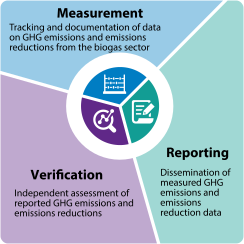
MRV frameworks offer systematic approaches to accounting for greenhouse gas (GHG) emissions and emissions reductions. MRV is an ongoing process that is repeated throughout the life of a project—often annually. The three components of an effective MRV framework include:
|
Image
|
Measurement: Measurement is the tracking and documentation of data and information on GHG emissions or emissions reductions. Reporting: Reporting entails the dissemination of measured GHG emissions and emissions reduction data and project or facility information using standardized methods and formats. Verification: Verification is an independent assessment of reported GHG emissions and emissions reductions. It is typically undertaken by an independent, third-party verification body to ensure impartial assessment. |
When To Use MRV Frameworks
The nature of the MRV activities differs depending on the context. This MRV Resource Center provides information on two main types of MRV:
|
Image

|
MRV of emissionsMRV of emissions seeks to understand emissions of an entity over time. It is generally performed at a national, organization, or facility level. |
|
Image

|
MRV of mitigation actions or emissions reductionsMRV of mitigation actions or emission reductions seeks to understand the change in emissions resulting from a project or policy. MRV activities can be conducted for all sectors and GHGs to understand emissions trends, track mitigation, evaluate programs, and ensure transparency. This Resource Center focuses on information related to MRV of methane emissions and methane mitigation from specific sectors. |
Why MRV of Methane Matters
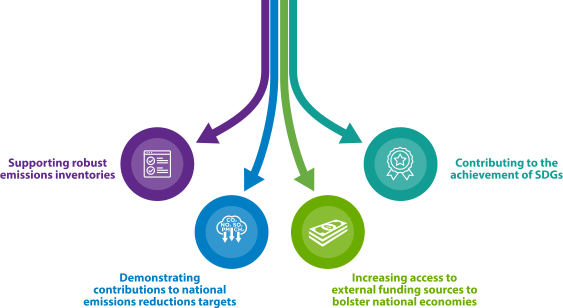
A robust MRV system for methane can contribute to several national priorities and objectives:
|
Image

|
Supporting the development of robust emissions inventoriesNational inventories that use Tier 1 approaches (i.e., based on default values) for one or more categories to estimate emissions can have high levels of uncertainty. These inventories can be made more robust by incorporating bottom-up, location-specific data collected through MRV activities. Many governments currently use Tier 1 methodologies to estimate emissions from methane producing sectors. Under the UNFCCC, countries are encouraged to gradually move to higher-tier methodologies.
|
|
Image
|
Enhancing targets, policies, and actions in Nationally Determined Contributions (NDCs)Few countries have included specific methane emissions reduction targets in their national goals, including their NDCs to the Paris Agreement. Methane emissions reductions are often overlooked in these documents, as countries typically focus on the largest carbon dioxide emissions source sectors such as energy and transportation. However, methane emissions reductions can contribute substantially to national emissions reductions targets. Robust methane MRV activities can help demonstrate that a country has met national goals or NDC targets.
|
|
Image
|
Demonstrating progress toward sustainable development and other national prioritiesCapturing and using methane can generate considerable economic and social benefits beyond climate change mitigation. These benefits can be tied to United Nations’ Sustainable Development Goals, such as goal 7 on affordable and clean energy and goal 11 on sustainable cities and communities. MRV can provide data to track and demonstrate progress toward these goals.
|
|
Image
|
Increasing access to external funding sources to promote economic growthMRV helps ensure that emissions reductions can be quantified, thus enabling project developers to better demonstrate to financiers and funders the prospective and actual mitigation benefits of their investments. MRV activities are also fundamental to securing funding through carbon markets, whether they are mandatory or voluntary programs.
|
|
Image
|
Robust MRV activities contribute to national-level priorities and objectivesImage
|
Best Practices and Resources
Find sector-specific best practices and resources for methane MRV:
|
Image

Biogas Sector (Municipal Solid Waste, Agriculture, Municipal Wastewater) |
Image

|
Image

|