The Coal Mines Subcommittee focuses on supporting the identification and deployment of practical and cost-effective methane mitigation technologies and practices to reduce or eliminate emissions from coal mines. This is achieved by encouraging collaboration among Partner Countries, Subcommittee members, and Project Network members to build capacity, develop strategies and markets, and remove technical and non-technical barriers to methane mitigation project development. Ultimately, such collaboration can increase environmental quality, improve operational efficiency, and strengthen the economy via the additional methane brought to market.
Featured Resources
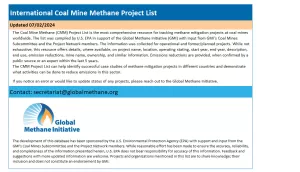
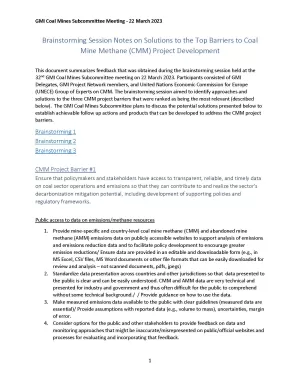
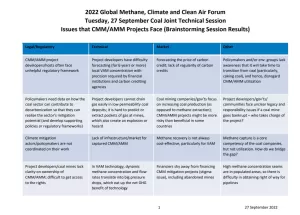
Check out these featured resources. For a complete list of available coal resources, including technical documents, presentations, and tools, please visit the resources page.
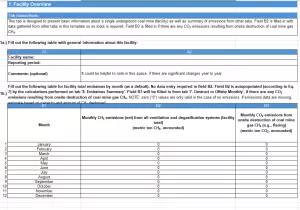
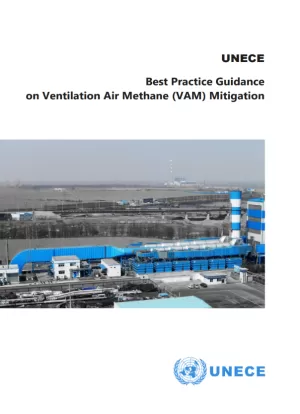
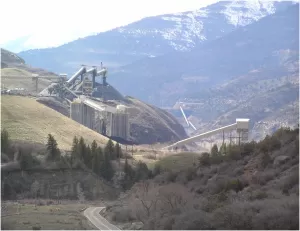
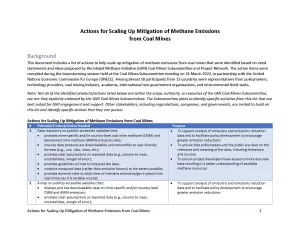
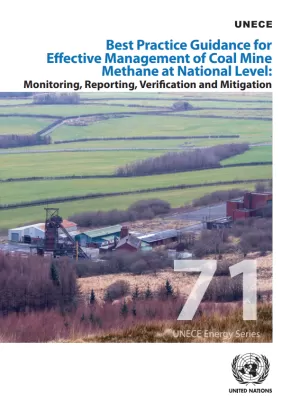
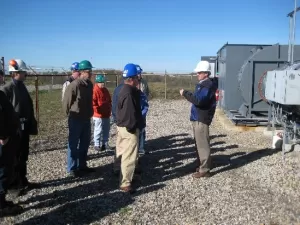
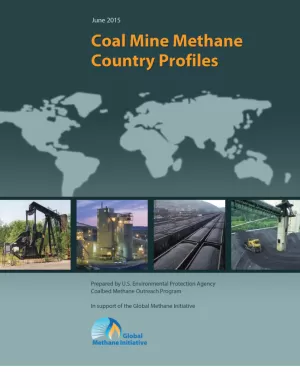
Purpose of the GMI Coal Mines Subcommittee
The Global Methane Initiative (GMI) Coal Mines Subcommittee works to reduce the impacts of climate change by providing international leadership to mitigate global methane emissions through the abatement, recovery, and use of methane from coal mines.
- Promotes the recovery, abatement, and utilization of coal mine methane (CMM), ventilation air methane (VAM), and abandoned mine methane (AMM)
- Encourages collaboration to build capacity and develop strategies and markets
- Works to remove barriers to methane mitigation project development to improve worker safety, enhance mine productivity, increase revenues, and reduce greenhouse gas (GHG) emissions.
Benefits of Participation
Delegates and Partner Countries benefit from participating in the Coal Mines Subcommittee by:
- Networking with other professionals in the field of CMM recovery and utilization and developing government-to-government connections.
- Learning about new ideas and practical resources for managing and recovering CMM.
- Obtaining feedback on country efforts, such as resources under development, and information on current policies, practices, and resources.
- Increasing visibility by leveraging GMI as a platform for disseminating information about member country industry trends, efforts, resources, projects, and tools.
- Contributing to the agenda of Subcommittee meetings, with the option to host meetings.
- Collaborating on the development of joint GMI tools and resources through co-authorship, review, translation, and dissemination.
Delegates
| Country | Delegate | Organization | Role |
|---|---|---|---|
| Australia | Hua Guo | The Commonwealth Scientific and Industrial Research Organization (CSIRO) | Delegate |
| Canada | Jane Amphlett | Environment and Climate Change Canada (ECCC) | Delegate |
| China | Liu Wenge | China Coal Information Institute (CCII) | Delegate |
| Ethiopia | Lemesa Hirpe Wari | Environmental Protection Authority - Ethiopia | Delegate |
| India | Manoj Kumar | Central Mine Planning & Design Institute Ltd (CMPDI) | Delegate |
| Japan | Shigeyuki Kimura | Japan Ministry of Economy, Trade and Industry | Delegate |
| Kazakhstan | Ruslan Koblanuly | Kazakhstan Ministry of Energy | Delegate |
| Mongolia | Demchig Tserenkhand | Mineral Resources and Petroleum Authority Mongolia (MRPAM) | Delegate |
| Mongolia | Mendabayar Badarch | Mongolian Nature and Environment Consortium (MNEC) | Delegate |
| Mongolia | Purevdorj Khurelkhuu | Ministry of Mining and Energy of Mongolia | Delegate |
| Mongolia | Tr. Altsukh | Mineral Resources and Petroleum Authority Mongolia (MRPAM) | Delegate |
| Pakistan | Basharat Bashir | Alternative Energy Development Board (AEDB) | Delegate |
| Poland | Jacek Skiba | Central Mining Institute of Katowice, Poland | Delegate |
| Türkiye | Abdullah Çiftçi | Turkish Coal Enterprises | Delegate |
| Türkiye | Abdullah Fisne | Istanbul Technical University (ITU) | Delegate |
| Türkiye | Hatice Öncü | Turkish Coal Enterprises | Delegate |
| Türkiye | Metin Aktan | Ege Trade AŞ | Delegate |
| Ukraine | Igor Yashchenko | Ministry of Energy and Coal Industry of Ukraine | Delegate |
| United States | C. Ozgen Karacan | U.S. Geological Survey | Delegate |