GMI Policy Maker Framework Thumbnail.jpg

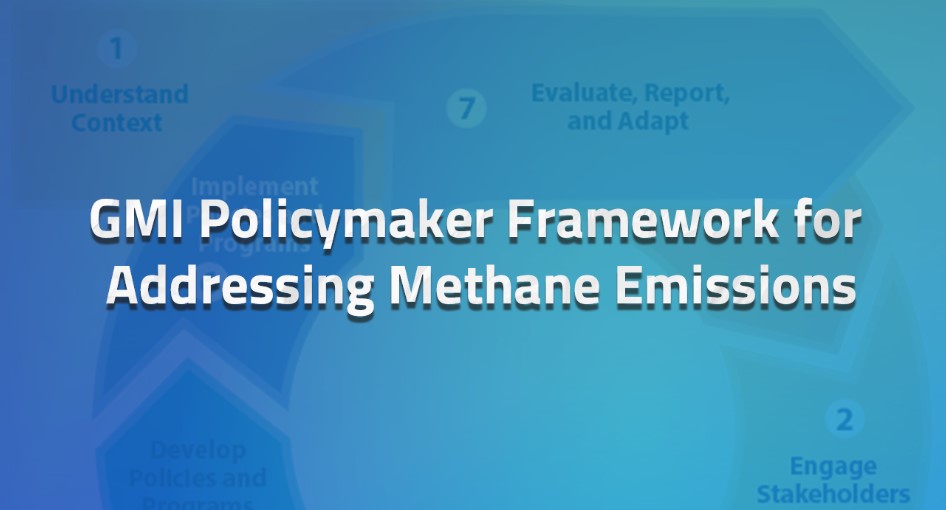
Global Methane Initiative (GMI) Policymaker Framework for Addressing Methane Emissions

The Global Methane Initiative (GMI) Policymaker Framework for Addressing Methane Emissions (the Framework) is designed to help energy and environmental policymakers address methane emissions systematically to accelerate progress toward national or subnational methane emissions reduction goals. The Framework depicts a step-by-step process for developing and implementing policies and programs to measure and reduce methane emissions economy-wide or in specific methane-emitting sectors, such as oil and gas, coal, and biogas. It provides links to helpful resources from GMI and other organizations that can help policymakers implement each step.

The Framework is available on the Policymaker Framework webpage

Topic
Language
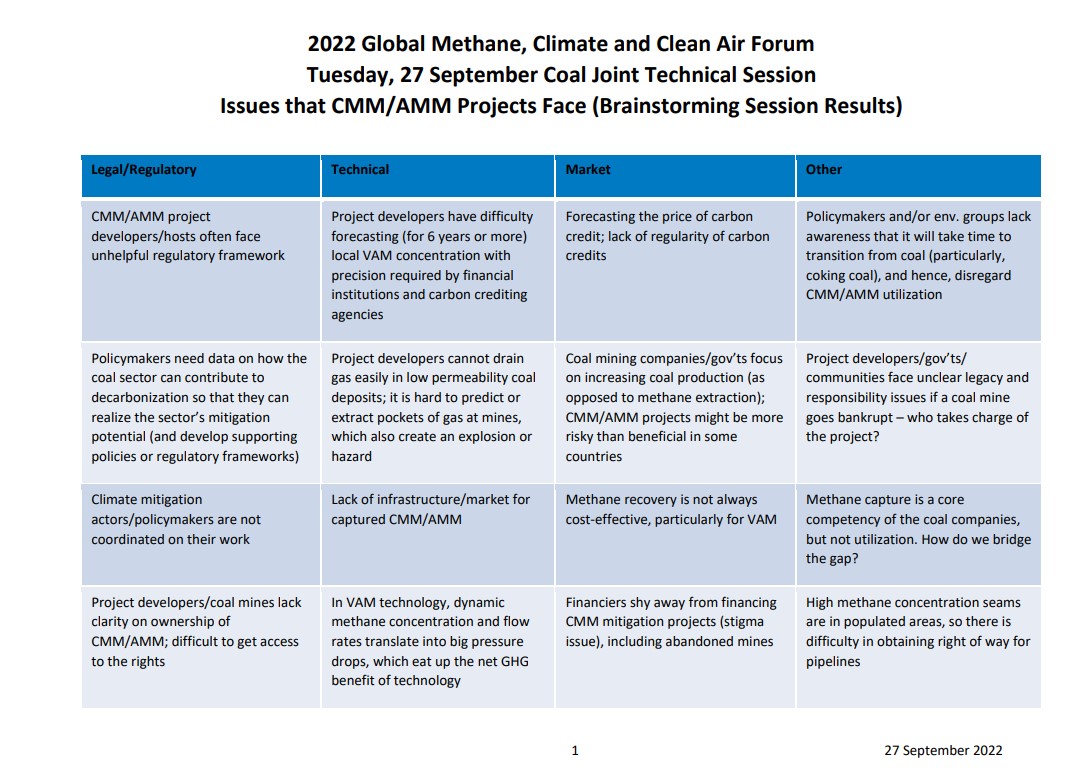
Brainstorming Session Notes on Issues that CMM-AMM Projects Face.jpg

Brainstorming Session Notes on Issues that CMM/AMM Projects Face

This document summarizes notes from a brainstorming session to discuss issues that Coal Mine Methane/Abandoned Mine Methane projects face that was held at the 2022 Global Methane, Climate and Clean Air Forum on 27 September 2022.

Download
Topic
Language
Publish Date
27 Sep 2022
Thumb-Risk-Analysis-Checklist.png

Risk Analysis Checklist

The Risk Analysis Checklist for Biogas Projects (as well as the supporting information that follows) provides “best practices” for designing, implementing, and evaluating anaerobic digestion (AD)/biogas project plans. This checklist is intended to help project developers, government agencies, financial institutions, and other stakeholders assess the feasibility of a proposed AD/biogas project and ensure the project addresses critical technical and financial aspects.

La Lista de Verificación de Análisis de Riesgos para Proyectos de Biogás (así como la información complementaria que se incluye a continuación) proporciona las mejores prácticas para el diseño, la implementación y la evaluación de planes de proyectos de digestión anaeróbica (DA)/biogás. Esta lista de verificación tiene como objetivo ayudar a los desarrolladores de proyectos, organismos gubernamentales, instituciones financieras y otras partes interesadas a evaluar la viabilidad de un proyecto de DA/biogás propuesto y garantizar que el proyecto aborde los aspectos técnicos y financieros críticos.

Download
Topic
Language
Publish Date
14 Jul 2025
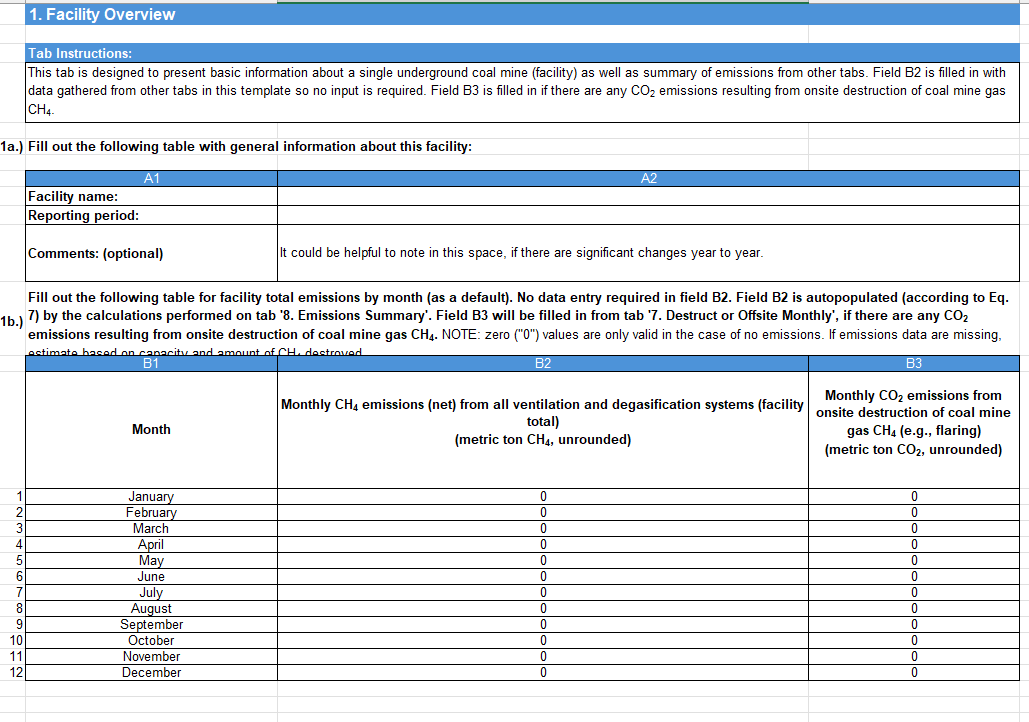
thumb-CMM-estimation-tool.png

CMM Emissions Estimate Template, Version 1.3

The U.S. Environmental Protection Agency, in support of GMI, collaborated with the United Nations Economic Commission for Europe to develop a tool to gather information and estimate annual methane emissions from underground coal mines. The Excel-based template simplifies collection of measurement data and provides equations that calculate total annual emissions for a single facility (i.e., underground coal mine). This template is intended to help companies better understand emissions from individual coal mines to identify mitigation options. It can also help governments refine their national-level emissions reporting to the Intergovernmental Panel on Climate Change (IPCC), i.e., by providing a mechanism to support a Tier 3 approach for National Greenhouse Gas Inventories. The template can be modified as appropriate; for example, changing from monthly data collection to a different frequency. It provides space to record additional information, such as from remote sensing campaigns.

July 2025: Version 1.3 was released to update column headings for clarity and a formula for calculating CO2 emissions from gas destroyed offsite. Specifically, headings on tabs 2 and 4 were updated to allow inputting date of well or shaft closure as well as to clarify that the data is to be collected monthly.  On tab 7, a formula was adjusted to take into account information from the previous tab on whether the gas transported offsite is being destroyed or not.

Агентство по охране окружающей среды США при поддержке GMI в сотрудничестве с Европейской экономической комиссией ООН разработало инструмент для сбора информации и оценки ежегодных выбросов метана из подземных угольных шахт. Шаблон на основе Excel упрощает сбор данных измерений и предоставляет уравнения, позволяющие рассчитать общие годовые выбросы для одного объекта (например, подземной угольной шахты). Этот шаблон призван помочь компаниям лучше понять выбросы отдельных угольных шахт и определить варианты смягчения последствий. Это также может помочь правительствам усовершенствовать свою отчетность о выбросах на национальном уровне перед Межправительственной группой экспертов по изменению климата (МГЭИК), т. е. предоставив механизм для поддержки подхода уровня 3 для национальных кадастров парниковых газов. Шаблон можно изменить по мере необходимости; например, переход от ежемесячного сбора данных к другой частоте. Он предоставляет место для записи дополнительной информации, например, из кампаний дистанционного зондирования.

Translations:

Download
Topic
Language
Publish Date
01 Jul 2025
Thumb_OG Meeting_Mar 2025.png

GMI Oil & Gas Subcommittee Meeting – 27 March 2025

The Global Methane Initiative (GMI) Oil & Gas Subcommittee Meeting held a hybrid meeting (in-person and virtual attendees) in Geneva, Switzerland, on 27 March 2025. The meeting was held in conjunction with the United Nations Economic Commission for Europe (UNECE) 12th Session of the Group of Experts on Gas. Mr. James Diamond of Environment and Climate Change Canada (ECCC) and Co-Chair of the GMI Oil & Gas Subcommittee led the meeting and was joined by representatives from 20 countries, including Algeria, Austria, Canada, China, Colombia, Denmark, Finland, France, Germany, Ireland, Italy, Mexico, Nigeria, Norway, Poland, Republic of Korea, Russia, Switzerland, United Kingdom, and the United States. 

The purpose of the meeting was to provide participants with updates on the activities of the Subcommittee, including the identified priorities of the 2025-2030 Oil & Gas Subcommittee Action Plan, hear from Partner Countries and Strategic Partners about their recent methane mitigation work, and review new GMI tools and resources.

Resources:

Download
Topic
Language
Publish Date
01 Jul 2025
FRF Webinar.png

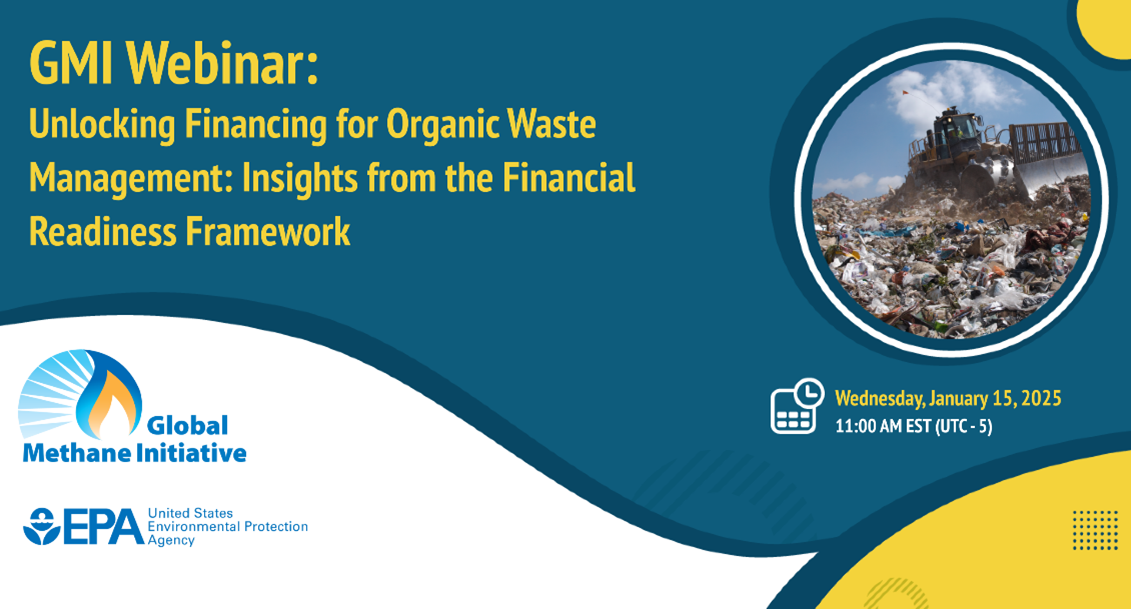
Unlocking Financing for Organic Waste Management: Insights from the Financial Readiness Framework Webinar

Cities often face challenges in obtaining financing for organic waste management projects that mitigate methane emissions and improve public health, such as landfill gas capture, composting, and anaerobic digestion projects. The new Global Methane Initiative (GMI) Financial Readiness Framework for Organic Waste Management, developed by the U.S. Environmental Protection Agency (U.S EPA), provides high-level practical guidance to help national and subnational governments, as well as private sector project developers and other stakeholders, understand the process for financing organic waste management projects, mitigate potential investment risks, and improve the bankability of projects.

Speakers:
Klara Zimmerman, U.S. EPA
Jiao Tang & Cristina Clopatofsky, Catalytic Finance Foundation
Magda Correal, Inter-American Development Bank
Gerardo Canales, ImplementaSur

Resources:


Download
Topic
Language
Publish Date
15 Jan 2025
Thumb-2024-Accomplishments-Report.png

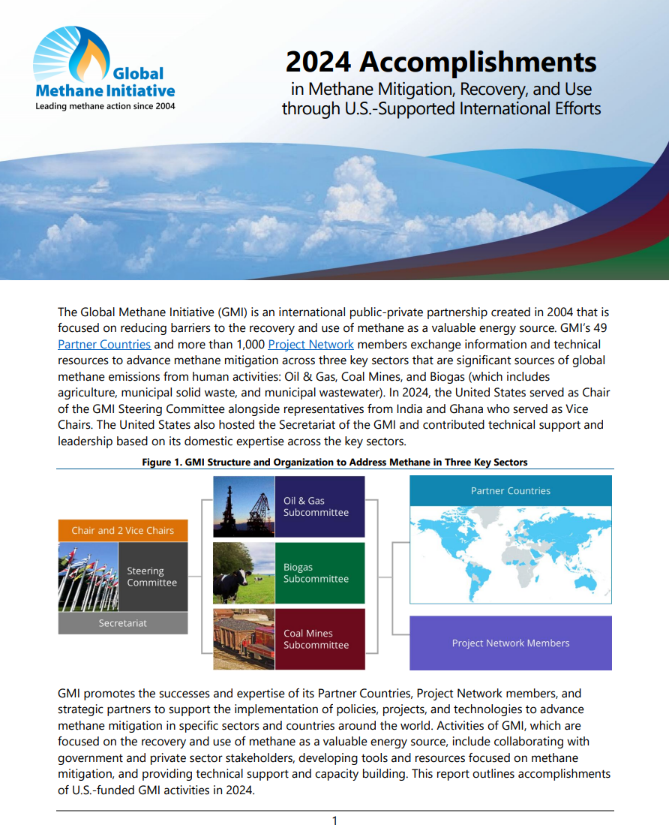
2024 Accomplishments in Methane Mitigation, Recovery, and Use through U.S.-supported International Efforts

The U.S. government provided key leadership to reduce barriers to the recovery and use of methane as a valuable energy source. The 2024 Accomplishments Report summarizes the contributions of the U.S. government in promoting methane capture and use projects and reducing emissions of methane internationally. Sector-specific activity highlights are also featured.

Download
Topic
Language
Publish Date
01 Jul 2025
thumb-cmm-units-converter.png

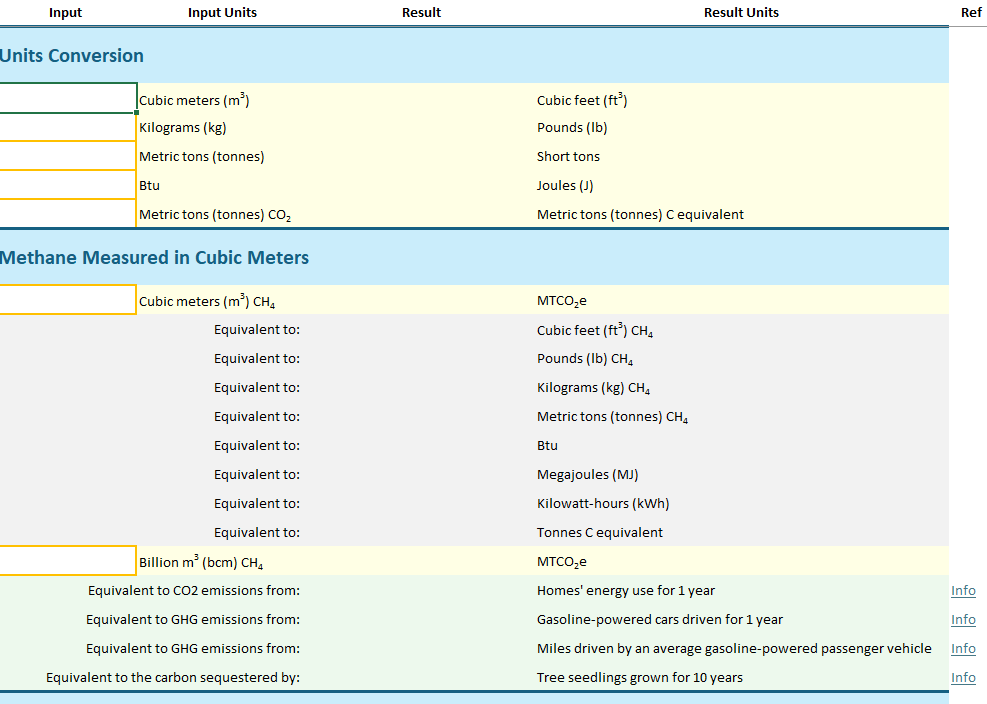
Coal Mine Methane (CMM) Units Converter Tool

This tool converts methane (CH4) emissions to metric tons of carbon dioxide (CO2) equivalent (MTCO2e) and a variety of other measurement units and greenhouse gas (GHG) equivalencies. These abstract equivalencies are also translated into relatable terms, such as annual emissions from cars or households. The tool uses a global warming potential (GWP) value of 28 for methane.

NOTE: Calculations for conversions are approximate and should not be used for emission inventories or formal carbon emissions analysis.

Download
Topic
Language
Publish Date
01 Sep 2023
Thumb-UNECE-VAM.png

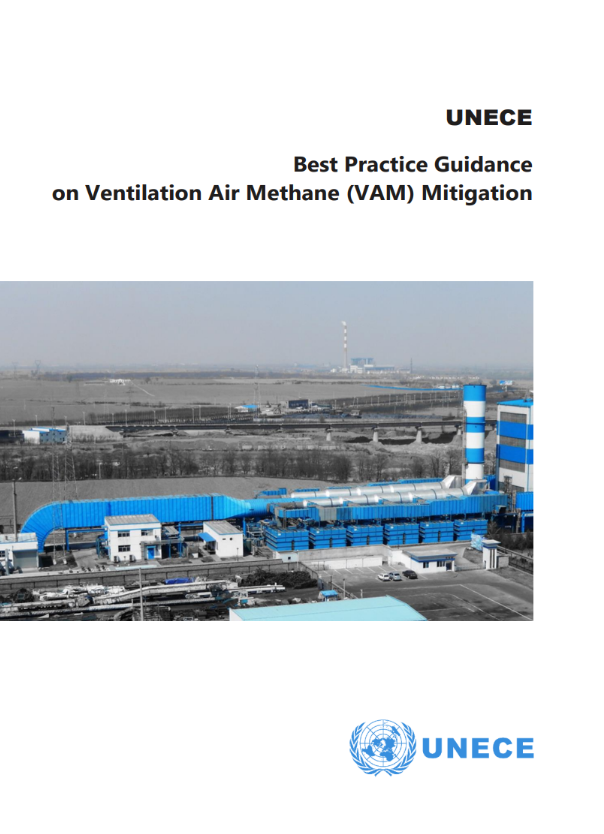
Best Practice Guidance on Ventilation Air Methane (VAM) Mitigation

The “Best Practice Guidance on Ventilation Air Methane (VAM) Mitigation” report, developed by the United Nations Economic Commission for Europe (UNECE) Group of Experts on Coal Mine Methane and Just Transition, sheds light on the urgency of tackling VAM emissions. It highlights the cost-effectiveness of VAM mitigation, noting that advanced technologies, such as Regenerative Thermal Oxidation (RTO), have been successfully deployed in large-scale, long-term projects, proving the technical viability of VAM mitigation.

Download
Topic
Language
Publish Date
01 Feb 2025
delterra.png

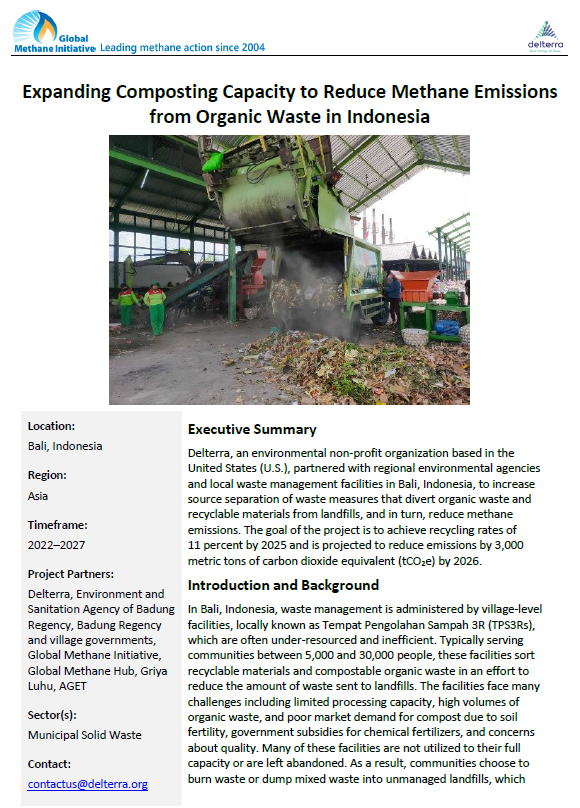
Expanding composting capacity to reduce methane emissions from organic waste in Indonesia

Delterra, an environmental non-profit organization based in the United States (U.S.), partnered with regional environmental agencies and local waste management facilities in Bali, Indonesia, to increase source separation of waste measures that divert organic waste and recyclable materials from landfills, and in turn, reduce methane emissions. The goal of the project is to achieve recycling rates of 11 percent by 2025 and is projected to reduce emissions by 3,000 metric tons of carbon dioxide equivalent (tCO2e) by 2026.

Download
Topic
Region
Language
Publish Date
01 Jul 2024
Subscribe to English