delterra.png

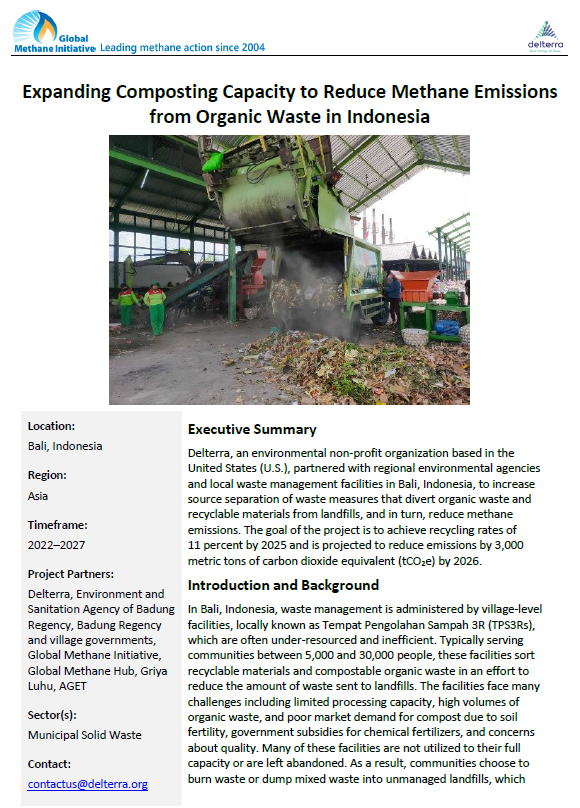
Expanding composting capacity to reduce methane emissions from organic waste in Indonesia

Delterra, an environmental non-profit organization based in the United States (U.S.), partnered with regional environmental agencies and local waste management facilities in Bali, Indonesia, to increase source separation of waste measures that divert organic waste and recyclable materials from landfills, and in turn, reduce methane emissions. The goal of the project is to achieve recycling rates of 11 percent by 2025 and is projected to reduce emissions by 3,000 metric tons of carbon dioxide equivalent (tCO2e) by 2026.

Download
Topic
Region
Language
Publish Date
01 Jul 2024
banarjee.png

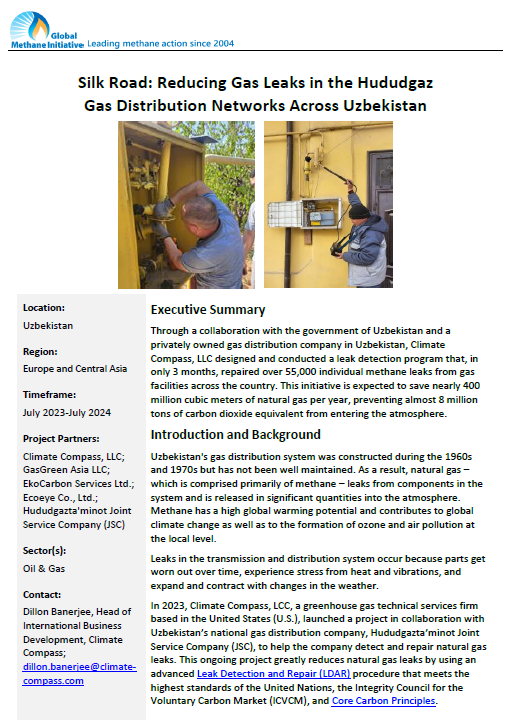
Silk Road: Reducing Gas Leaks in the Hududgaz Gas Distribution Networks Across Uzbekistan

Through a collaboration with the government of Uzbekistan and a privately owned gas distribution company in Uzbekistan, Climate Compass, LLC designed and conducted a leak detection program that, in only 3 months, repaired over 55,000 individual methane leaks from gas facilities across the country. This initiative is expected to save nearly 400 million cubic meters of natural gas per year, preventing almost 8 million tons of carbon dioxide equivalent from entering the atmosphere.

Download
Topic
Region
Language
Publish Date
01 Jul 2024
pmf-bangladesh.png

Bangladesh National Action Planning for Short-Lived Climate Pollutants

Working with CCAC in 2013, Bangladesh developed a plan for reducing short-lived climate pollutants, including methane. Between 2016 and 2018, efforts focused on capacity building for the plan's adoption, followed by development of a work plan for implementation. Bangladesh determined its most impactful actions were introducing clean-burning biomass cooking stoves, replacing traditional kilns with modern technologies, and phasing out high emission vehicles.

Partners

  • Global Methane Initiative (GMI)
  • Climate & Clean Air Coalition (CCAC)
External Link
Topic
Region
Language
Publish Date
01 Jan 2013
showcase_p_Page_01.png

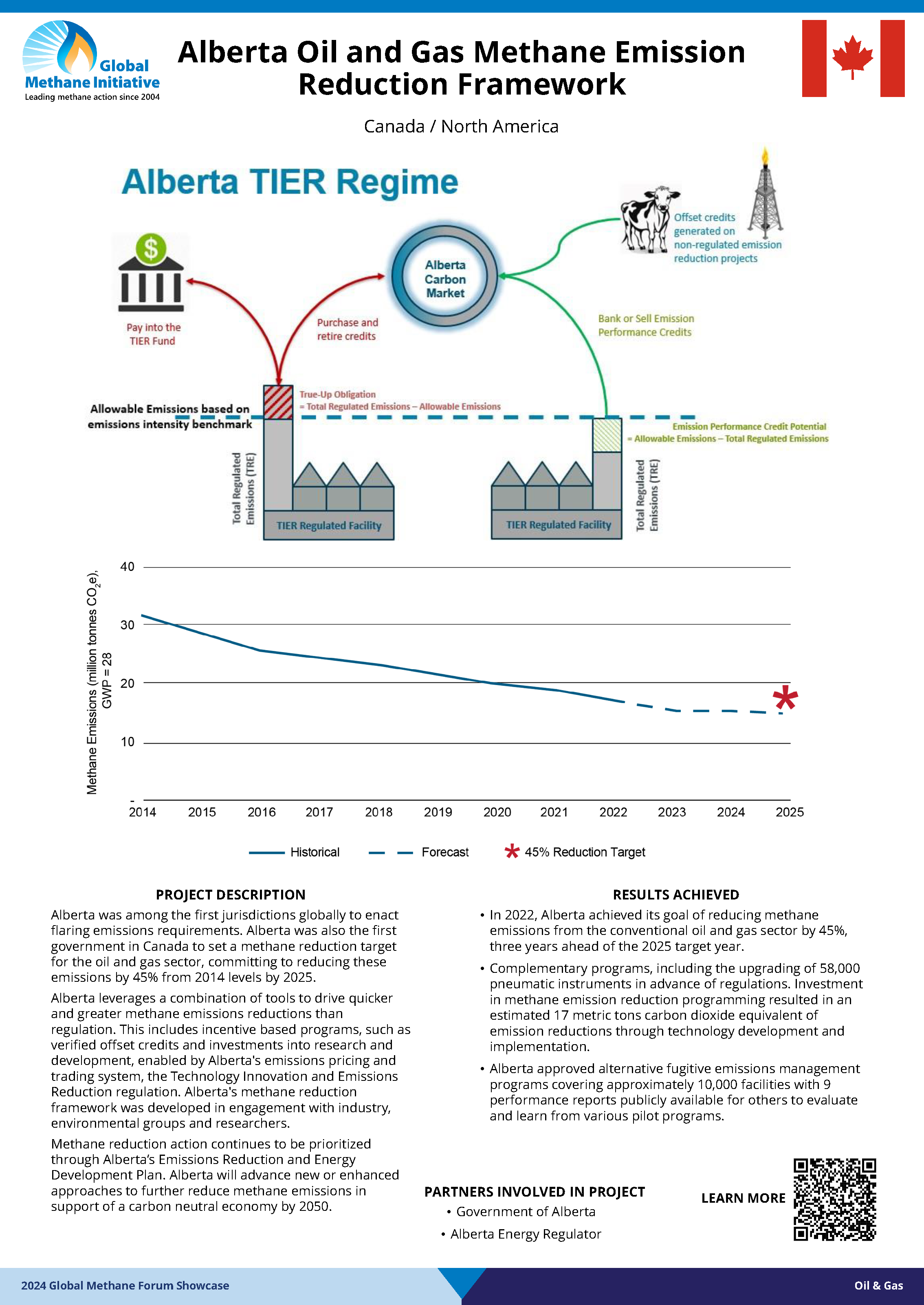
Alberta Oil and Gas Methane Emission Reduction Framework

Alberta was among the first jurisdictions globally to enact flaring emissions requirements. It was also the first government in Canada to set a methane reduction target for the oil and gas sector, committing to reducing these emissions by 45% from 2014 levels by 2025. In 2022, Alberta achieved its goal of reducing methane emissions from the conventional oil and gas sector by 45%, three years ahead of its 2025 target year. Methane reduction action continues to be prioritized, and Alberta intends to further reduce methane emissions in support of carbon neutral economy by 2050.

Partners

  • Government of Alberta
  • Alberta Energy Regulator
Download
Topic
Region
Language
Publish Date
01 Jan 2015
pfm-japan.png

Japan Reduces Methane from Landfills

In 2016, Japan adopted two new standards on waste management: (1) reduction in the amount of waste for final disposal, which banned the direct landfilling of organic municipal solid waste and industrial waste; and (2) adoption of semi-aerobic landfill structure in final waste disposal sites. The Japan Ministry of the Environment reported a decrease in total and per capita volumes of waste generation from 2019 to 2020.

Partners

  • Global Methane Initiative (GMI)
  • Japan Ministry of the Environment
External Link
Topic
Region
Language
Publish Date
01 Jan 2016
showcase_l_Page_10.png

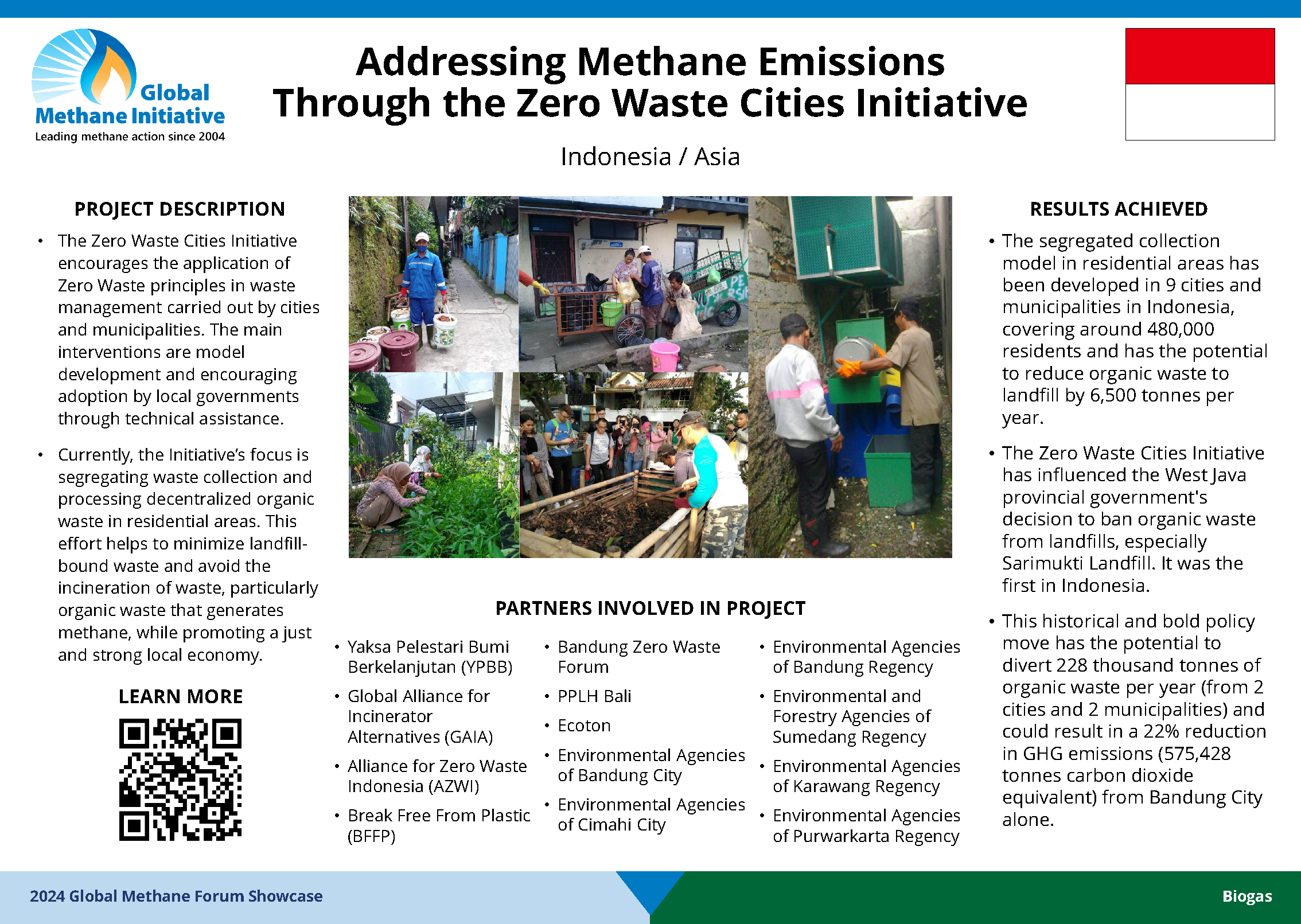
Addressing Methane Emissions Through the Zero Waste Cities Initiative

The Zero Waste Cities Initiative is focused on segregating waste collection and processing decentralized organic waste in residential areas. This effort helps to minimize landfill-bound waste and avoid incineration of waste while promoting the local economy. The segregated collection model has been developed in 9 cities and municipalities in Indonesia, covering about 480,000 residents and has the potential to reduce organic waste to landfill by 6,500 tonnes per year. The Initiative influenced the West Java provincial government's decision to ban organic waste in landfills. This policy change has the potential to result in a 22% reduction in greenhouse gas emissions from Bandung City alone.

Partners

  • Yaksa Pelestari Bumi Berkelanjutan (YPBB)
  • Global Alliance for Incinerator Alternatives (GAIA)
  • Alliance for Zero Waste Indonesia
  • Break Free from Plastic
  • Bandung Zero Waste Forum
  • PPLH Bali
  • Ecoton
  • Environmental Agencies of Bandung City
  • Environmental
Download
Topic
Region
Language
Publish Date
01 Jan 2016
showcase_p_Page_11.png

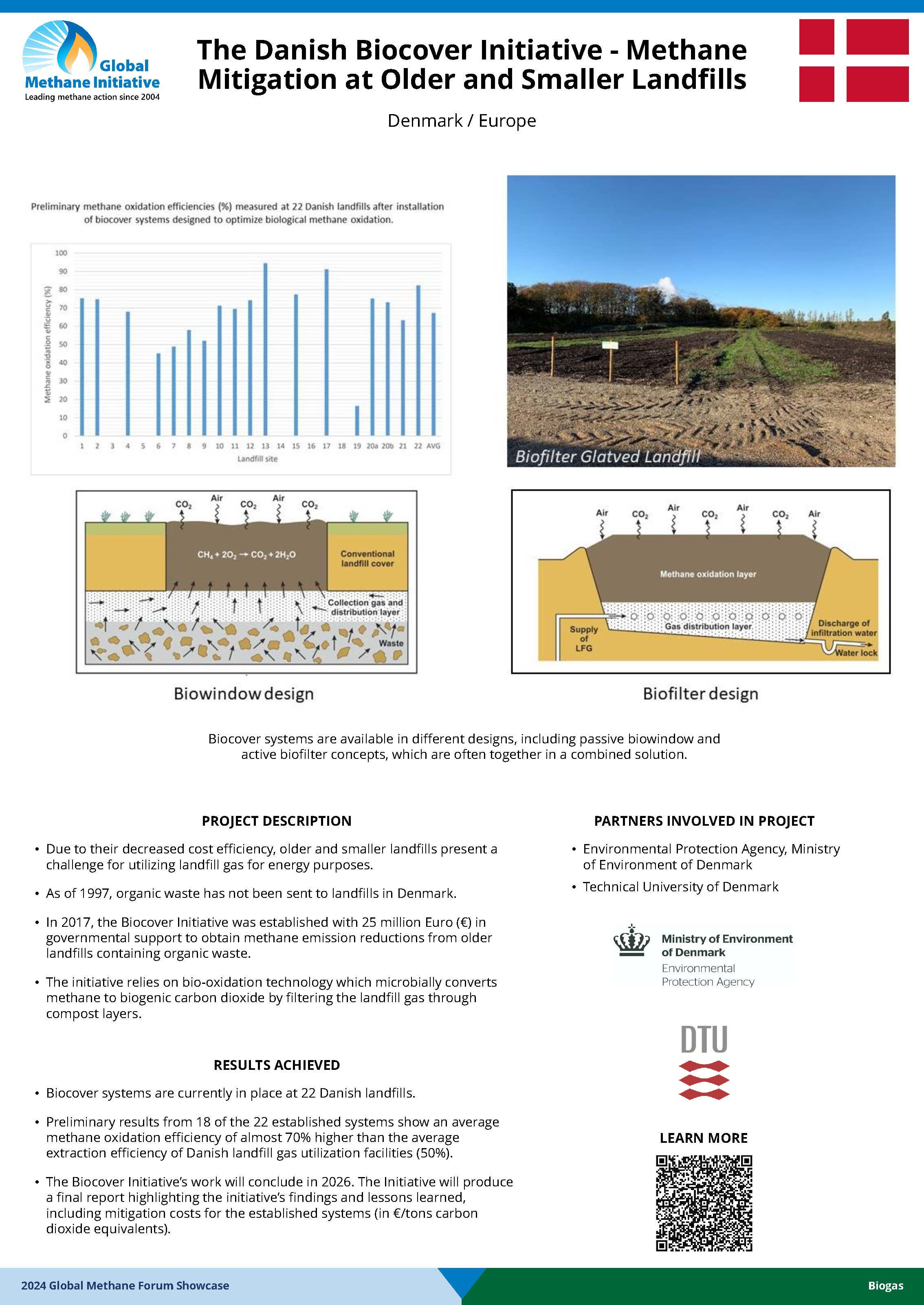
The Danish Biocover Initiative - Methane Mitigation at Older and Smaller Landfills

In 2017, the Biocover Initiative was established with governmental support to obtain methane emissions reductions from older landfills containing organic waste. Due to their decreased cost efficiency, older and smaller landfills present a challenge for utilizing landfill gas for energy purposes. The project relies on bio-oxidation technology which microbially converts methane to biogenic carbon dioxide by filtering the landfill gas through compost layers. Preliminary results from 18 of the 22 established systems show an average methane oxidation efficiency of almost 70% higher than the average extraction efficiency of Danish landfill gas utilization facilities (50%).

Partners

  • Technical University of Denmark
  • Environmental Protection Agency, Ministry of Environment of Denmark
Download
Topic
Region
Language
Publish Date
01 Jan 2017
showcase_l_Page_19.png

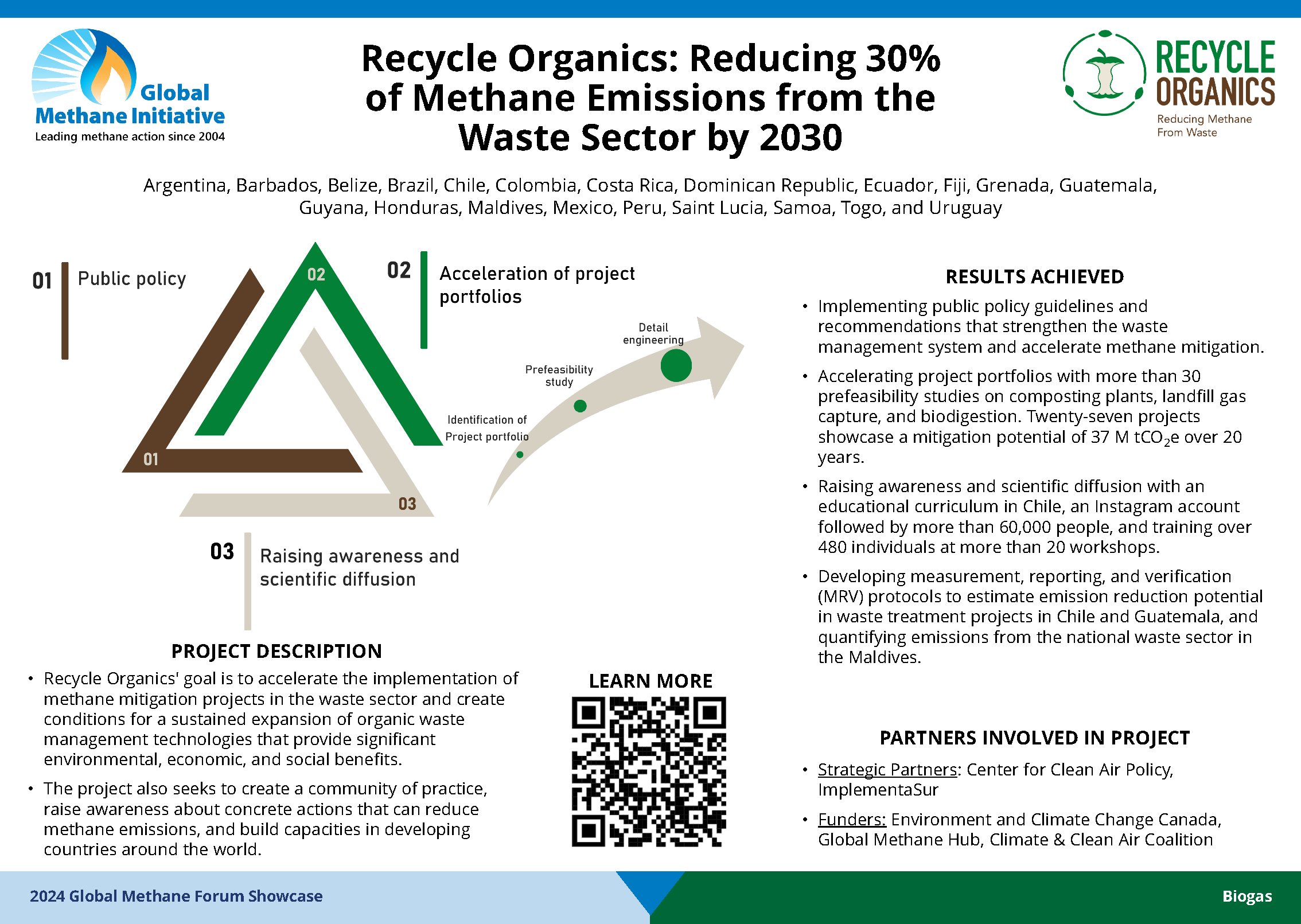
Recycle Organics: Reducing 30% of Methane Emissions from the Waste Sector by 2030

The goal of Recycle Organics is to accelerate the implementation of methane mitigation projects in the waste sector and create conditions for a sustained expansion of organic waste technologies. Public policy guidelines and recommendations that strengthened the waste management system and accelerated methane mitigation were implemented. The project raised awareness and scientific diffusion with an educational curriculum in Chile, the use of social media, and more than 20 workshops which trained over 480 individuals. Under the project, development of measurement, reporting, and verification protocols to estimate emission reduction potential in waste treatment projects and quantifying emissions from the national waste sector was done.

Partners

  • Center for Clean Air Policy
  • ImplementaSur
  • Environment and Climate Change Canada
  • Global Methane Hub
  • Climate & Clean Air Coalition (CCAC)
Download
Topic
Region
Language
Publish Date
01 Jan 2017
showcase_p_Page_09.png

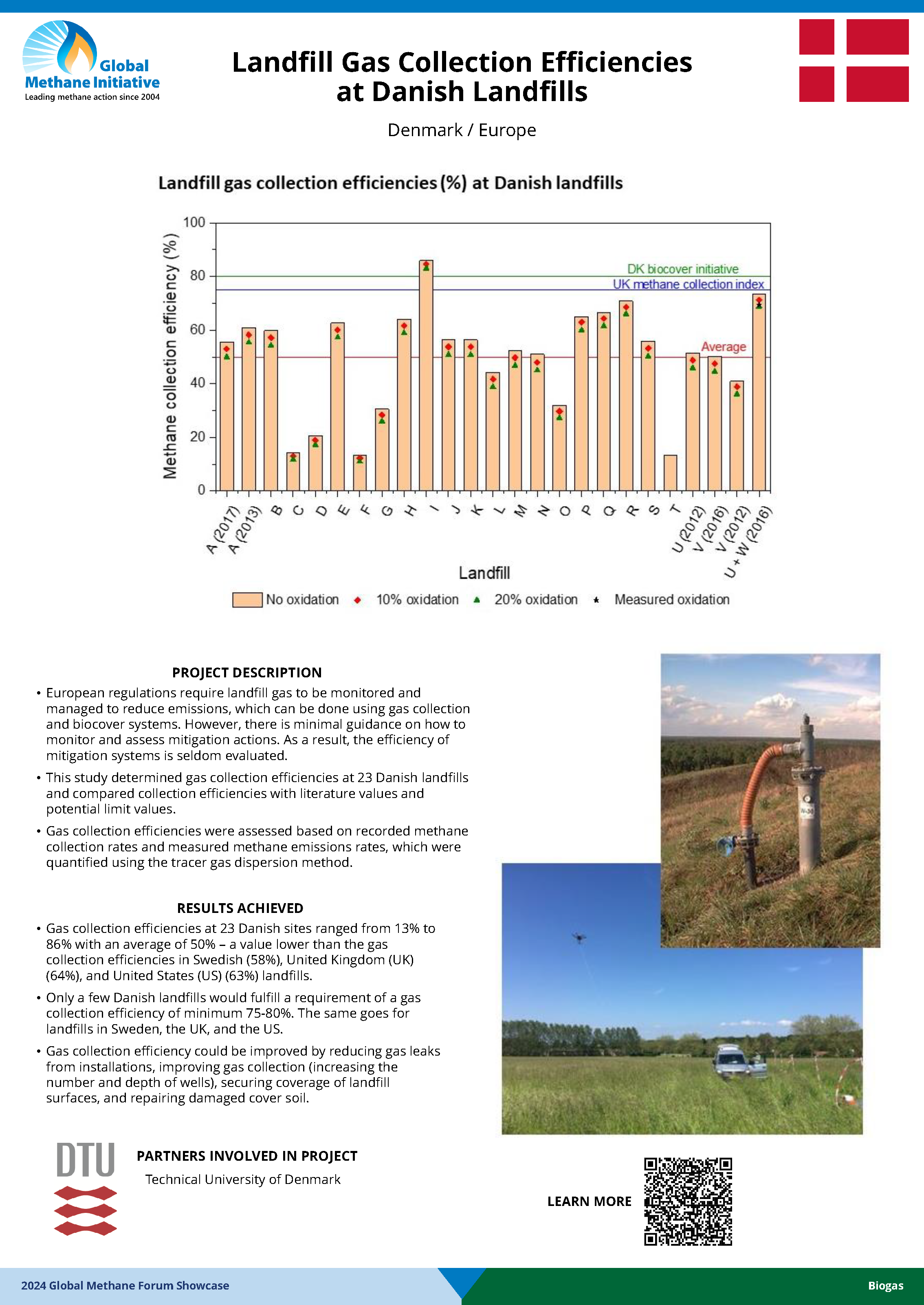
Landfill Gas Collection Efficiencies at Danish Landfills

European regulations require landfill gas to be monitored and managed to reduce methane emissions, which can be done using gas collection and biocover systems. There is minimal guidance on how to monitor and assess mitigation actions and as a result the efficiency of mitigation systems is seldom evaluated. This project determined gas collection efficiencies at 23 Danish landfills and compared collection efficiencies with literature values and potential limit values. The research showed that gas collection efficiency could be improved by reducing gas leaks from installations, improving gas collection, securing coverage of landfill surfaces, and repairing damaged cover soil.

Partners

  • Technical University of Denmark
Download
Topic
Region
Language
Publish Date
01 Jan 2018
showcase_p_Page_07.png

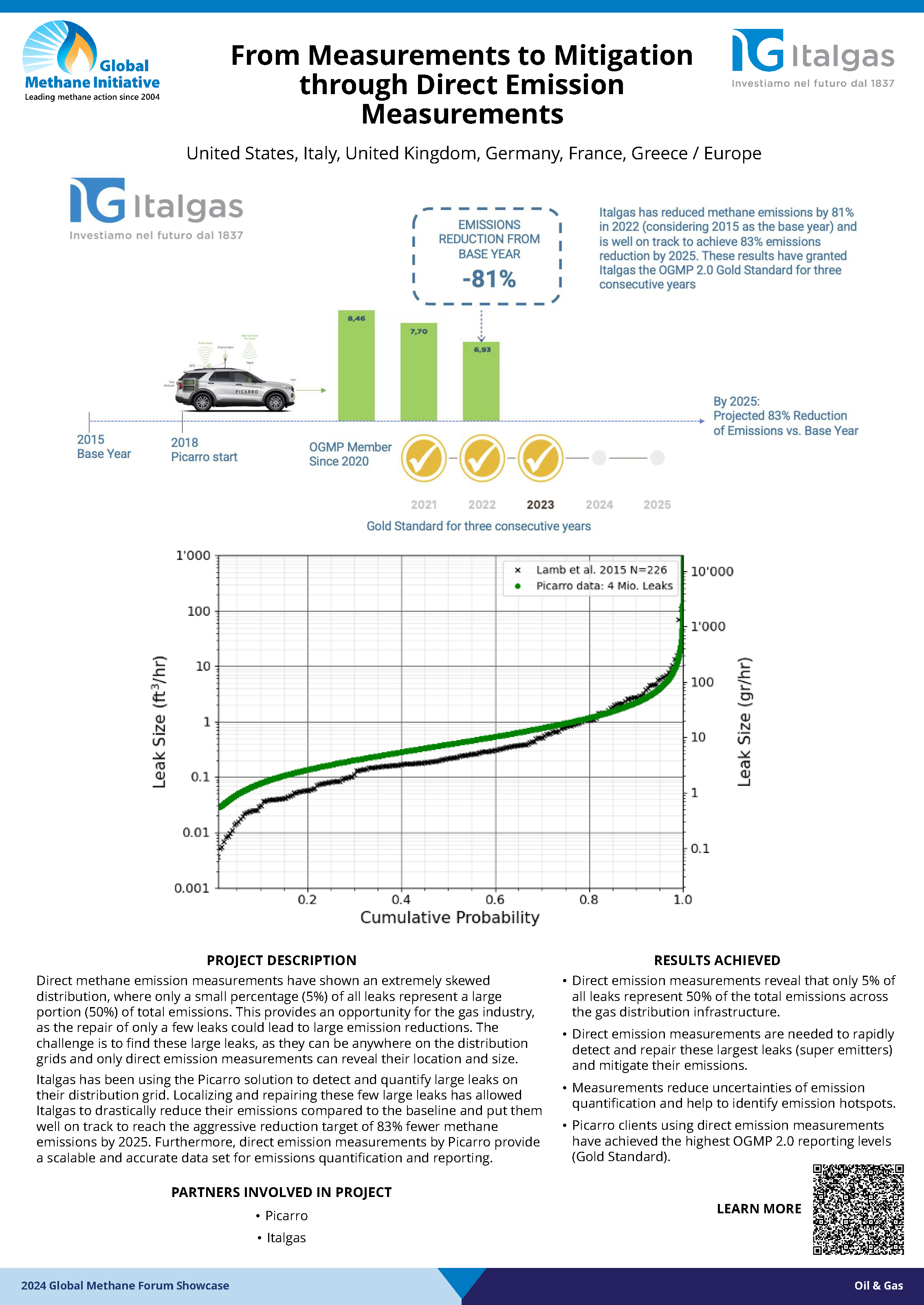
From Measurements to Mitigation through Direct Emission Measurements

Italgas has been using the Picarro solution to detect and quantify large leaks on the distribution grid. Localizing and repairing these few large leaks has allowed Italgas to drastically reduce their emissions compared to the baseline and put them well on track to reach the aggressive reduction target of 83% fewer methane emissions by 2025. Picarro clients using direct emission measurements have achieved the highest OGMP 2.0 reporting levels (Gold Standard).


Partners

  • Picarro
  • Italgas
Download
Topic
Region
Language
Publish Date
01 Jan 2018
Subscribe to Case Study