thumb-Identifying and Evaluating Opportunities for Greenhouse Gas Mitigation Operational Efficiency Improvement at Oil and Gas Facilities.jpg

Identifying and Evaluating Opportunities for Greenhouse Gas Mitigation & Operational Efficiency Improvement at Oil and Gas Facilities

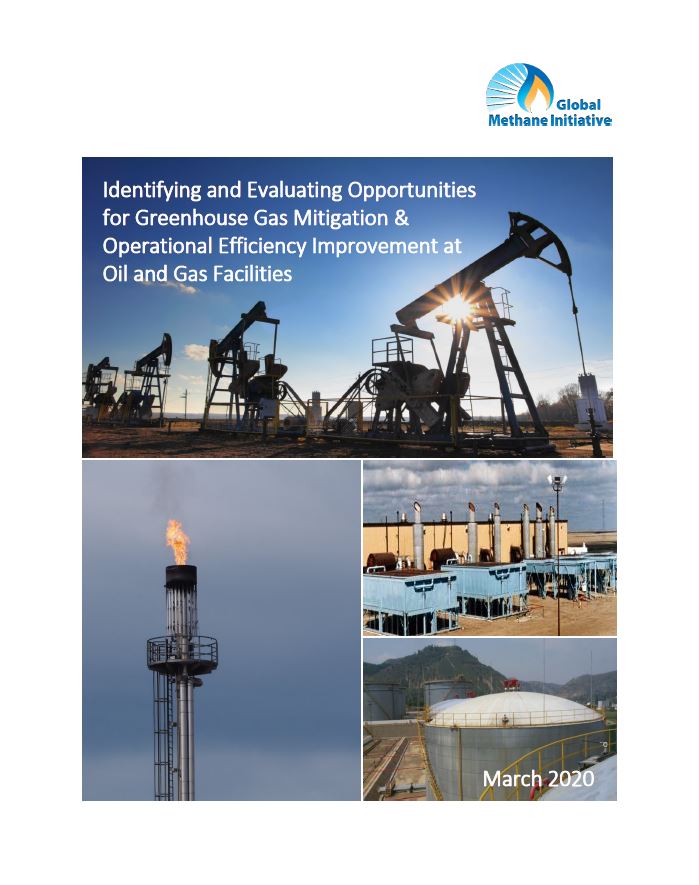
This document presents introductory guidance on a pragmatic, integrated approach to identifying, evaluating, and advancing cost-effective, high-impact opportunities to manage greenhouse gas (GHG) emissions and energy use at oil and natural gas facilities. The focus is primarily on key sources of short-lived climate pollutants (SLCP).

The primary audience for this document includes company managers, facility operators, and relevant service providers outside of North America (particularly where other regulatory guidance for GHG reductions and energy management may not be available).

The primary aim of this guide is to help identify opportunities for cost-effective mitigation of methane and more energy efficient operations, with a focus on types of facilities and operations mostly likely to offer such opportunities based on practical experience. The guide identifies specific operational issues or problems that could contribute to unaccounted emissions, product losses, and process inefficiencies.

Download
Topic
Language
Publish Date
01 Jan 2020
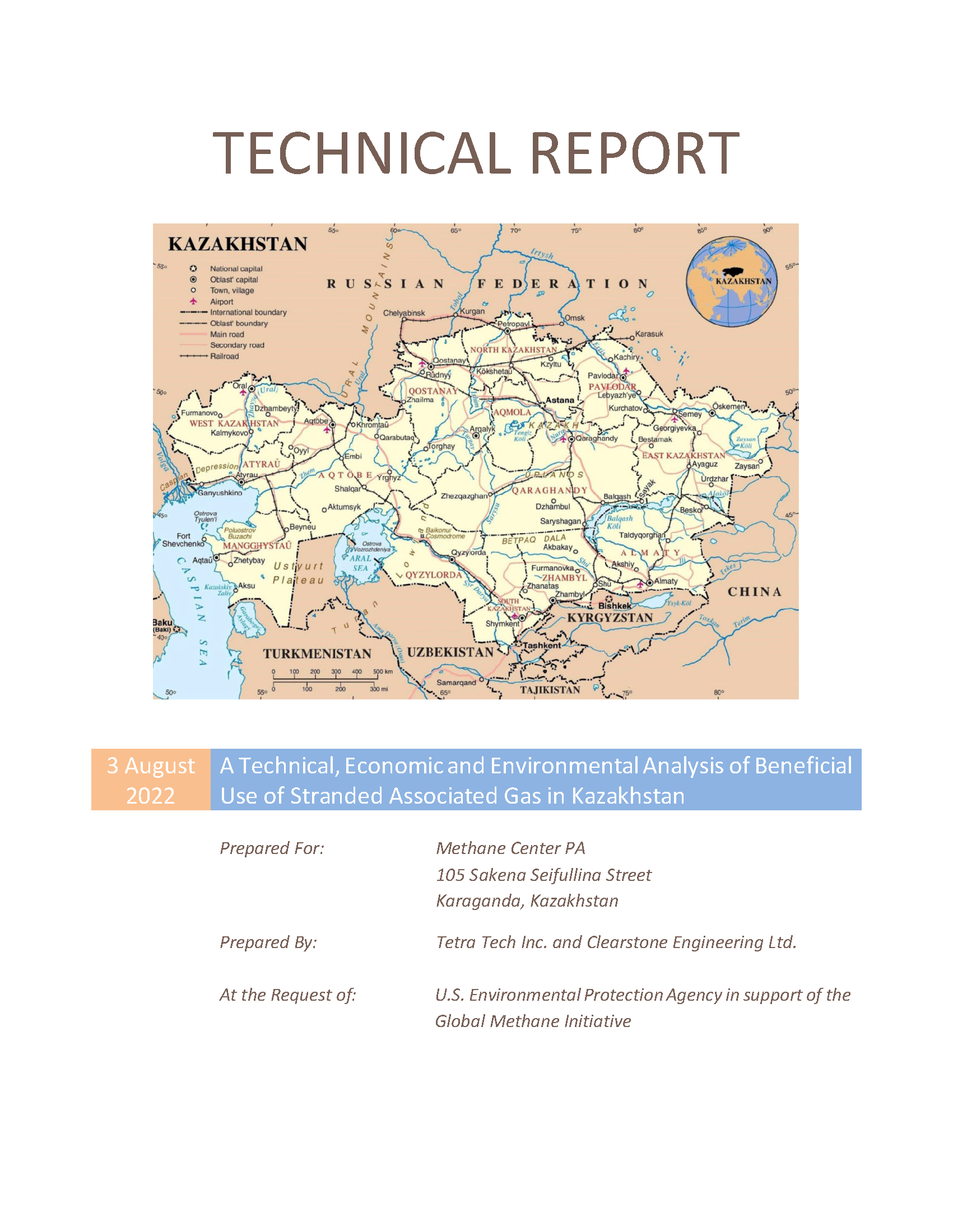
thumb-A Technical, Economic and Environmental Analysis of Beneficial Use of Stranded Associated Gas in Kazakhstan.png

A Technical, Economic and Environmental Analysis of Beneficial Use of Stranded Associated Gas in Kazakhstan

GMI, with support from the U.S. Environmental Protection Agency (EPA), worked with a partner in Kazakhstan to obtain data on associated gas availability and content to assess the opportunity to mitigate methane and reduce flaring at the Mangystau oilfield in southwest Kazakhstan. The prefeasibility study investigated the potential to monetize the stranded associated gas in the Mangystau oilfield by utilizing modular, small-scale processing technologies to produce marketable liquid hydrocarbon commodities such as methanol, syn-diesel, oil, or others. The report includes the results of the prefeasibility assessment of the range of practical mitigation options and recommendations for an optimum solution.

Download
Topic
Language
Publish Date
01 Jan 2023
thumb Best Practices Oil and Gas Cover.jpeg

Best Practice Guidance for Effective Methane Management in the Oil and Gas Sector: Monitoring, Reporting and Verification (MRV) and Mitigation

This document provides best practice guidance for methane management within the oil and gas sector and is intended to be a resource for facility owners, operators and government policymakers.

The purpose of this document is to provide information about cost-effective measures for detecting and mitigating methane emissions along the full oil and gas value chain at the company- and national-level. Guidance for developing and implementing practices for monitoring, reporting and verifying (MRV) methane emissions is also provided.

Specific topics covered in the document include:

  1. How to improve the quantification and reliability of methane emissions data by incorporating field and country specific data;
  2. Best practices for improving and streamlining company-level reporting of methane emissions data;
  3. Various options for government policymakers to develop policies, regulations and economic instruments focused on reducing methane emissions from the oil and gas sector; and
  4. Contributions of international initiatives to mitigate methane emissions focusing on the Paris Agreement.

The report (see the link below) includes two annexes. Annex 1 provides information on emission sources, typical mitigation techniques, applicable emission detection and quantification equipment, and quantification methodologies. Annex 2 provides a brief overview of commercially available methane emissions detection and quantification technologies.

Several complementary case studies focus on experiences of oil and gas companies with methane emissions inventory, regulatory approaches to methane management, and successful public-private partnerships. Case studies are downloadable below.

Download
Topic
Language
Publish Date
01 Jan 2019
Picture1.jpg

SMART Plus

The Simplified Methane Assessment and Reporting Tool, or SMART Plus tool, is an innovative, easy-to-use tool that helps improve the accuracy of estimated methane emissions (and other pollutants such as carbon dioxide) from oil & gas operations, both at the facility level and at the national level. Learn more about the Smart Plus Tool.

Download
Topic
Language
Publish Date
12 Jun 2025
Screenshot 2025-06-12 220200.jpg

Development and Implementation of a Leak Detection and Repair (LDAR) Program to Mitigate Methane Emissions in the Oil and Gas Sector 1

This course explains the concept, objectives, systematic approach, challenges and benefits of a non-regulatory leak detection and repair (LDAR) program for managing methane emissions from equipment leaks at oil and natural gas facilities. In addition, it provides specific guidance on designing, implementing, and managing the LDAR program.

Download
Topic
Language
Publish Date
12 Jun 2025
Subscribe to Oil & Gas