showcase_l_Page_20.png

Scaling Up Organic Waste Management in Serbia's South Backa Waste Management Region

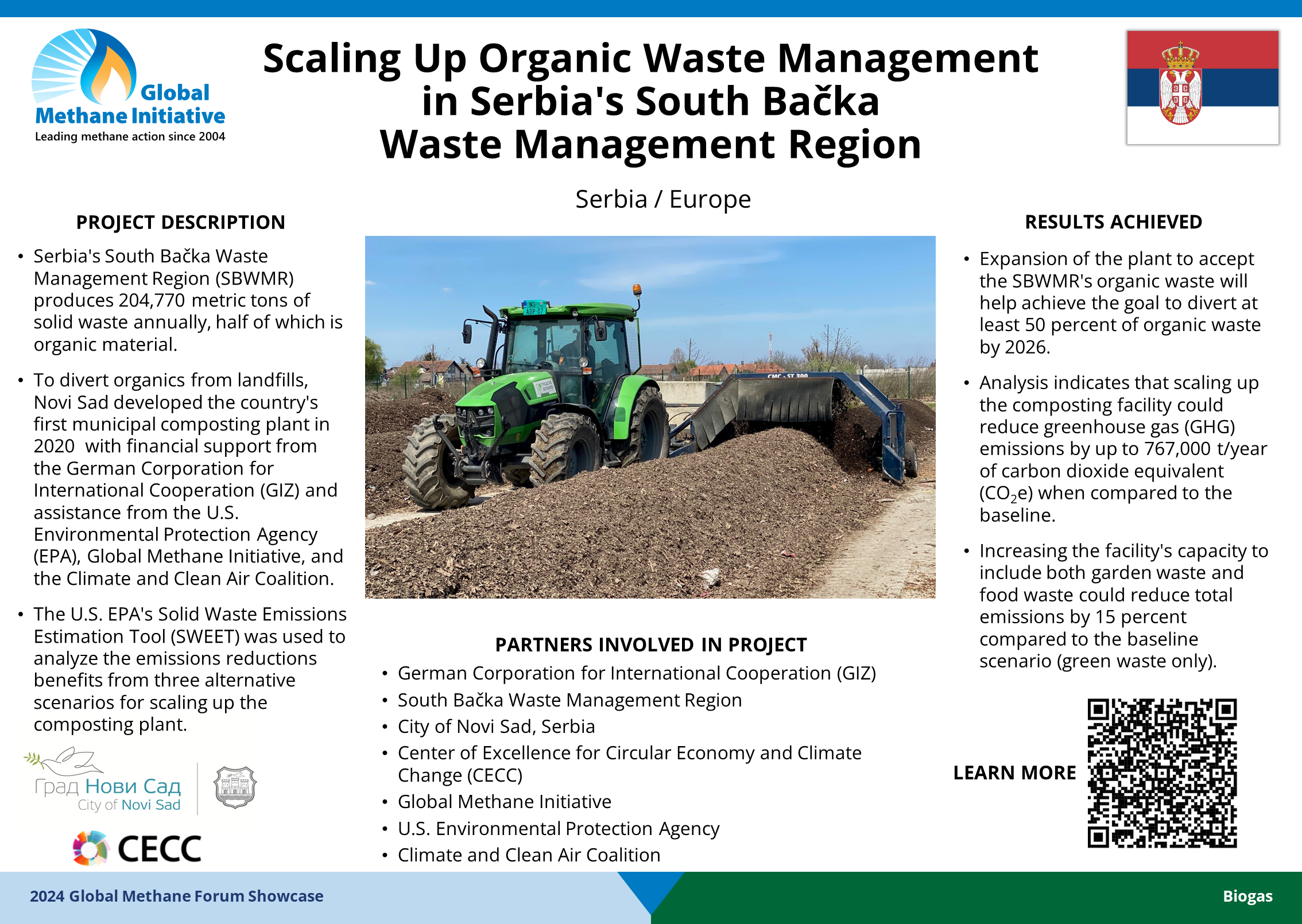
To divert organics from landfills, Novia Sad developed the country's first municipal composting plant in 2020. The U.S. Environmental Protection Agency's Solid Waste Emissions Tool (SWEET) was used to analyze the emissions reductions benefits from three alternative scenarios for scaling up the composting plant. The expansion of the plant will help achieve the goal to divert at least 50% of organic waste by 2026 and could reduce greenhouse gas emissions by up to 767,000 t/year of carbon dioxide equivalent when compared to the baseline. Additionally, increasing the facility's capacity to include both garden waste and food waste could reduce total emissions by 15% compared to the baseline scenario.

Partners

  • German Corporation for International Cooperation
  • South Backa Waste Management Region
  • City of Novi Sad, Serbia
  • Center of Excellence for Circular Economy and Climate Change
  • Global Methane Initiative (GMI)
  • U.S. Environmental Protection Agency (U.S. EPA)
Download
Topic
Region
Language
Publish Date
01 Jan 2020
showcase_p_Page_08.png

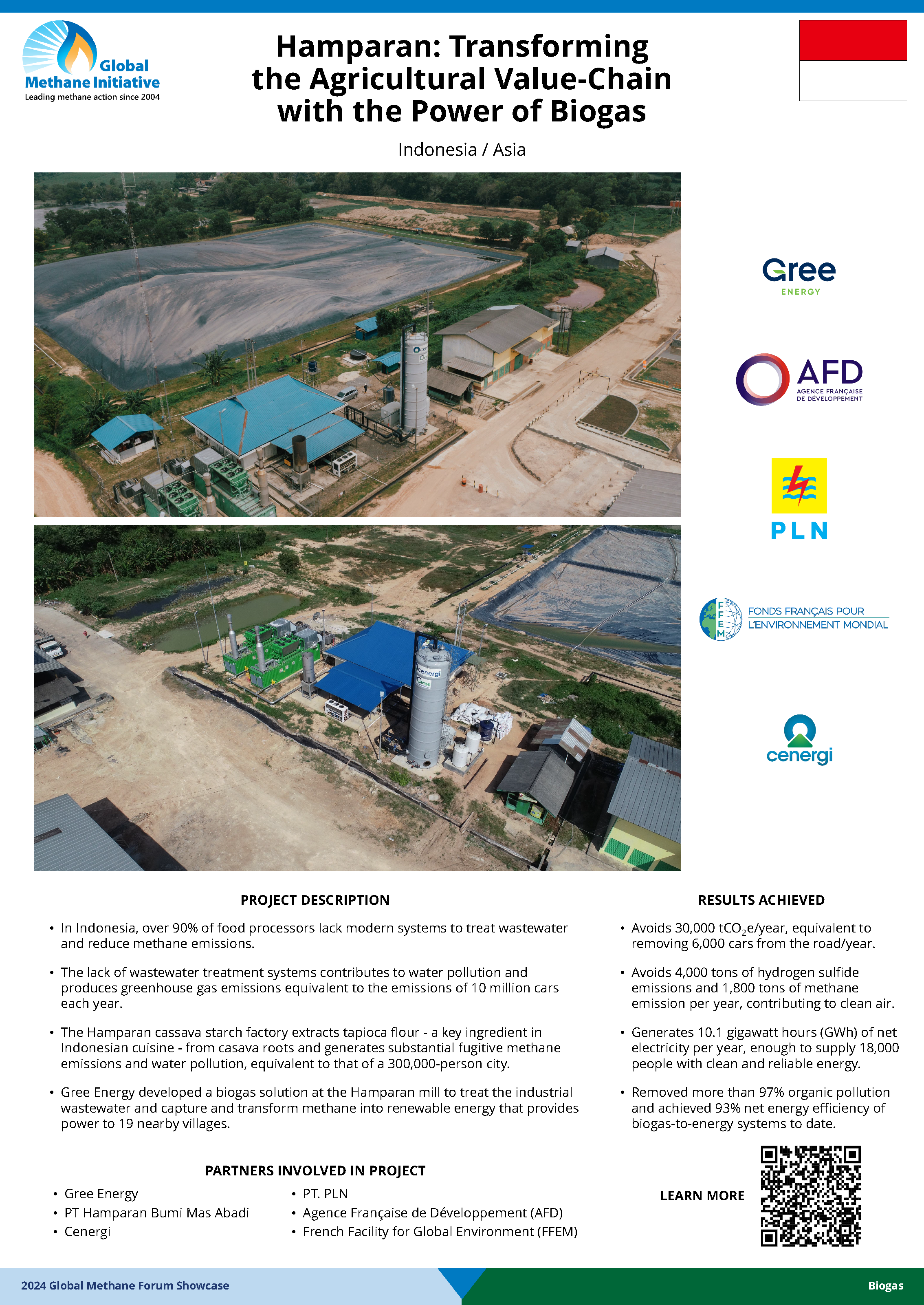
Hamparan: Transforming the Agricultural Value-Chain with the Power of Biogas

A biogas solution was developed to treat industrial wastewater and capture and transform methane into renewable energy that provides power to 19 nearby villages. The project removed more than 97% organic pollution and achieved 93% net energy efficiency of biogas-to-energy systems to date.

Partners

  • Gree Energy
  • PT Hamparan Bumi Mas Abadi
  • Cenergi
  • PT. PLN
  • Agence Francaise de Developpement
  • French Facility for Global Environment
Download
Topic
Region
Language
Publish Date
01 Jan 2020
sweet-novi-sad.png

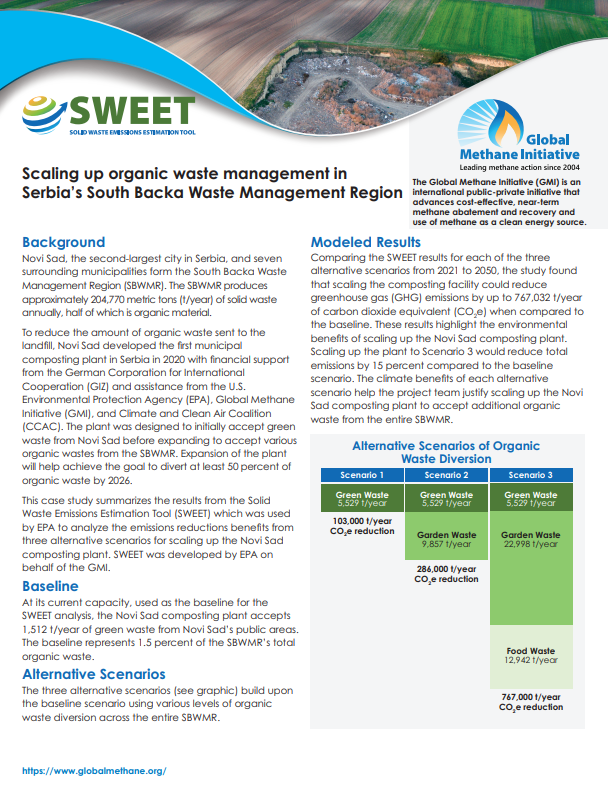
Scaling Up Organic Waste Management In Serbia's South Backa Waste Management Region

Comparing the SWEET results for three scenarios from 2021 to 2050, the study found that scaling the composting facility could reduce greenhouse gas emissions by up to 767,032 t/year of carbon dioxide equivalent (CO2e) when compared to the baseline. These results highlight the environmental benefits of scaling up the Novi Sad composting plant.

Partners

  • Global Methane Initiative (GMI)
  • U.S. Environmental Protection Agency (U.S. EPA)
Download
Topic
Region
Language
Publish Date
01 Jan 2021
showcase_l_Page_09.png

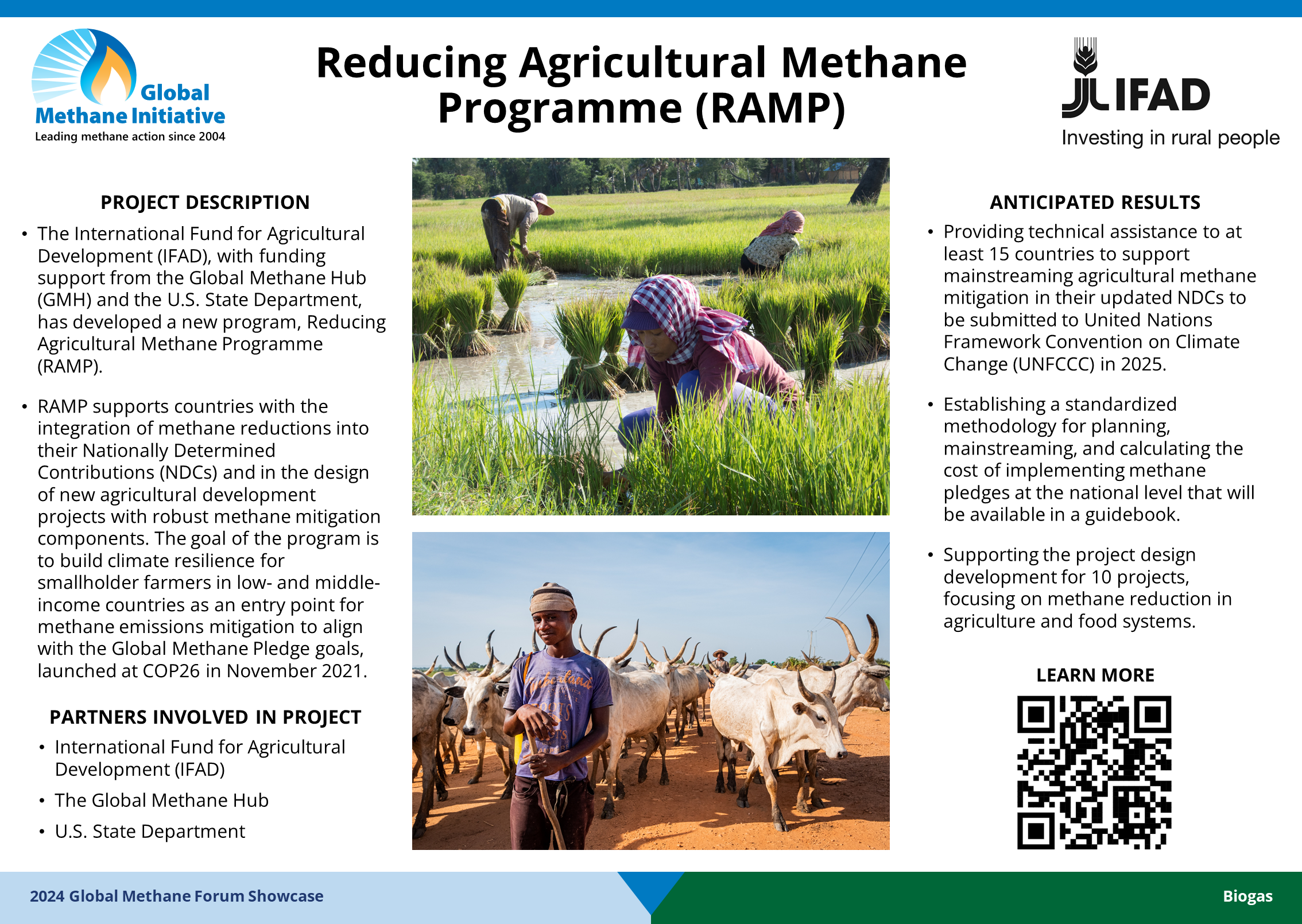
Reducing Agricultural Methane Programme (RAMP)

The Reducing Agricultural Methane Programme (RAMP) supports countries with the integration of methane reductions into their nationally determined contributions (NDCs) and in the design of new agricultural development projects with robust methane mitigation components. The goal is to build climate resilience for smallholder farmers as an entry point for methane emissions mitigation to align with Global Methane Pledge goals. The project aims to provide technical assistance to at least 15 countries to support mainstreaming agricultural methane mitigation in their updated NDCs for the United Nations Framework Convention on Climate Change (UNFCCC) in 2025. Additionally, it intends to establish a standardized methodology at the national level for a guidebook and support the project design for 10 projects focused on methane reduction in agriculture and food systems.

Partners

  • International Fund for Agricultural Development (IFAD)
  • Global Methane Hub
  • U.S. State Department
Download
Topic
Language
Publish Date
01 Jan 2021
showcase_p_Page_10.png

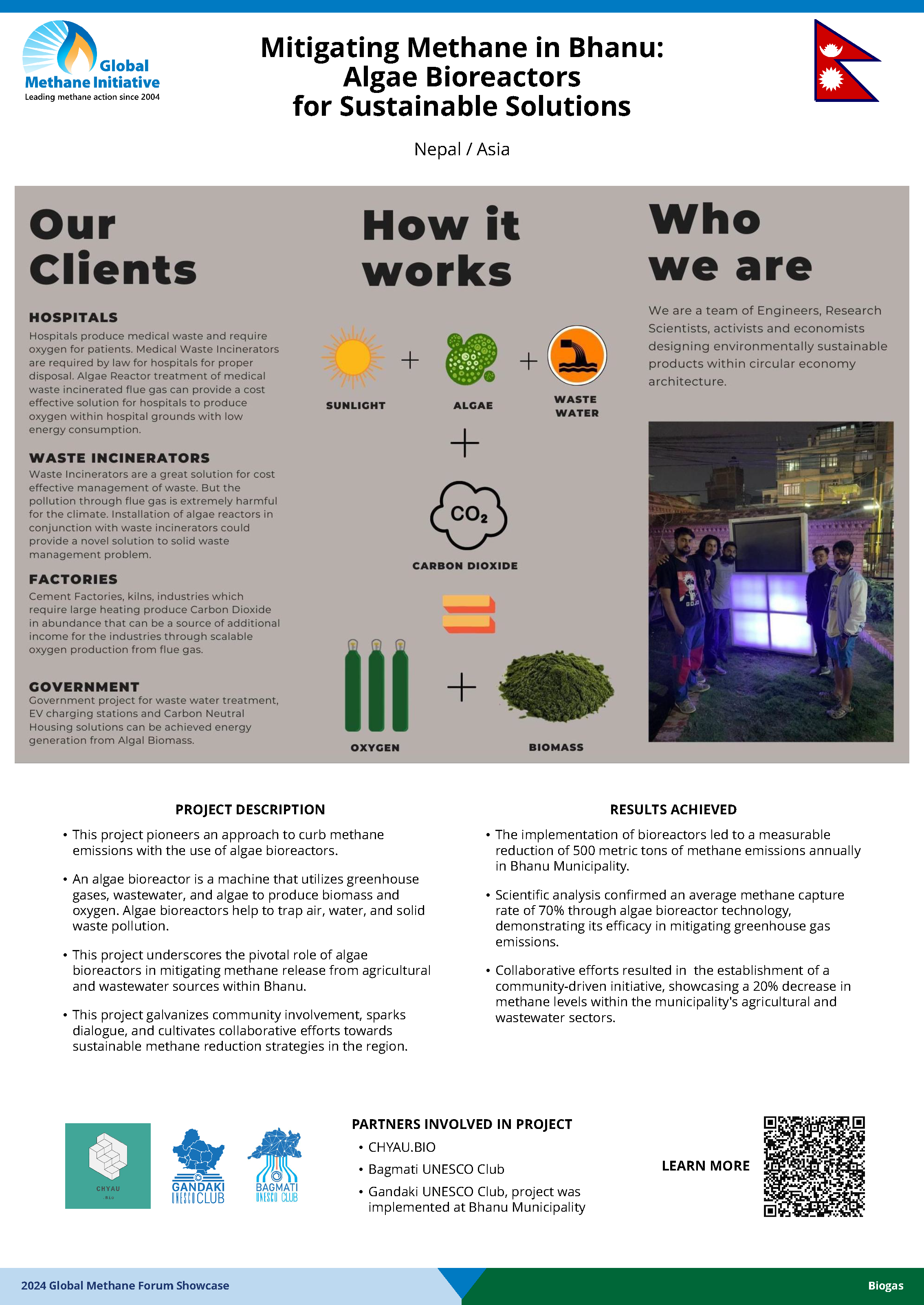
Mitigating Methane in Bhanu: Algae Bioreactors for Sustainable Solutions

This project pioneered an approach to curb methane emissions with the use of algae bioreactors. Algae bioreactors help to trap air, water, and solid waste pollution. The algae bioreactors were used in mitigating methane release from agricultural and wastewater sources. Scientific analysis confirmed an average methane capture rate of 70% through algae bioreactor technology, demonstrating its efficacy in mitigating greenhouse gas emissions. Methane levels within the municipality's agricultural and wastewater sectors decreased by 20%.

Partners

  • Chyau.Bio
  • Bagmati UNESCO Club
  • Gandaki UNESCO Club
Download
Topic
Region
Language
Publish Date
01 Jan 2021
showcase_p_Page_05.png

Methane Capture and Use from Dairy Farms in Cornwall, UK

A methane capture and use system is being piloted in Cornwall. In this pilot project, three dairy farms have repurposed an existing slurry pit with an impermeable cover to capture fugitive methane. A mobile purification system processes and compresses the biogas into fuel-grade biomethane on-site, for use in tractors, trucks, or generators. The capture of, on average, 170 kg of methane per cow per year which can be used to replace fossil fuels on and off farms. Benefits for farmers include replaced fossil fuel, reduced fertilizer usage and costs, and improved soil health and grass yield. The reductions in carbon footprint of nearly 90%, bring farms a step closer to Net Zero.

Partners

  • International Fugitive Emissions Abatement Association (IFEAA)
  • Bennamann
  • Cornwall Council
Download
Topic
Region
Language
Publish Date
01 Jan 2021
sweet-accra.png

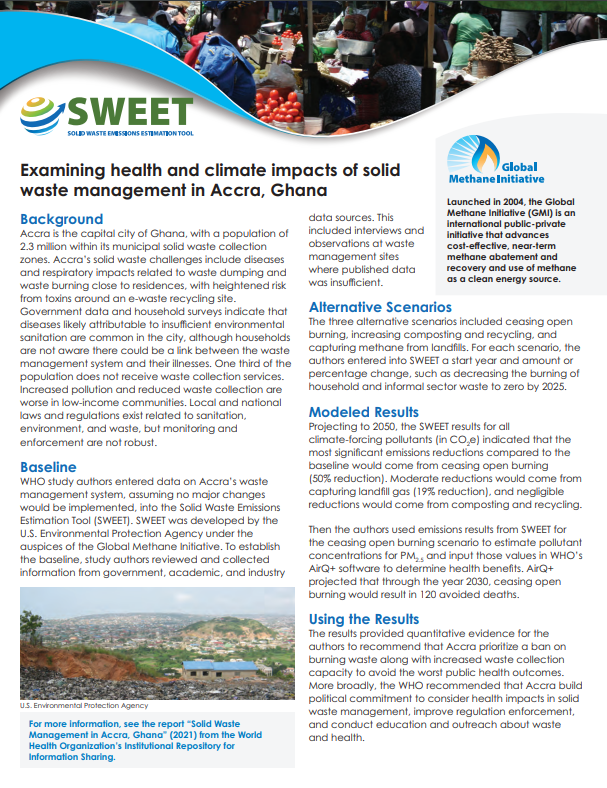
Examining Health and Climate Impacts of Solid Waste Management in Accra, Ghana

Projecting to 2050, the SWEET results for all climate-forcing pollutants indicated that the most significant emissions reductions compared to the baseline would come from ceasing open burning (50% reduction). Moderate reductions would come from capturing landfill gas (19% reduction) and negligible reductions would come from composting and recycling.

Partners

  • Global Methane Initiative (GMI)
  • World Health Organization (WHO)
Download
Topic
Region
Language
Publish Date
01 Jan 2021
sweet-tyre.png

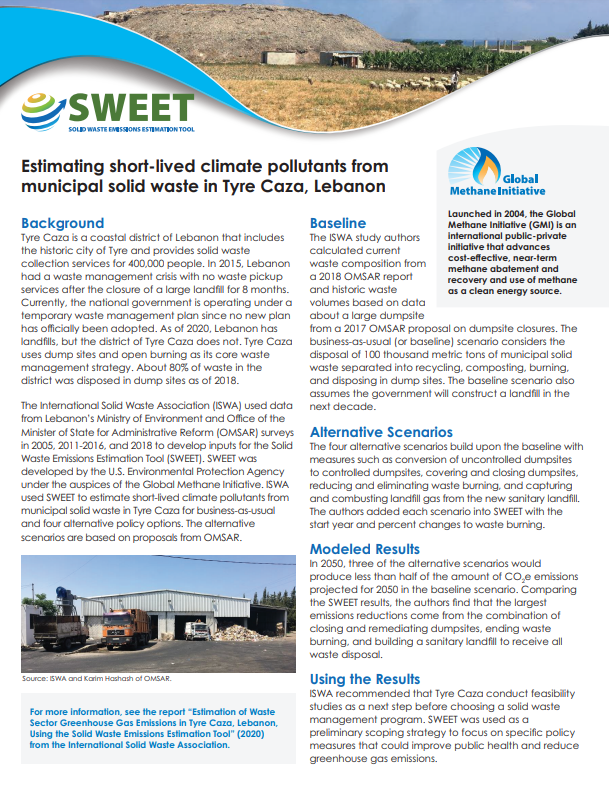
Estimating Short-Lived Climate Pollutants from Municipal Solid Waste in Tyre Caza, Lebanon

The International Solid Waste Association (ISWA) used data from Lebanon’s Ministry of Environment and Office of the Minister of State for Administrative Reform (OMSAR) surveys in 2005, 2011-2016, and 2018 to develop inputs for the Solid Waste Emissions Estimation Tool (SWEET). Comparing the SWEET results, the authors find that the largest emissions reductions come from the combination of closing and remediating dumpsites, ending waste burning, and building a sanitary landfill to receive all waste disposal.

Partners

  • Global Methane Initiative (GMI)
  • International Solid Waste Association (ISWA)
  • Lebanon Ministry of Environment and Office of the Minister of State for Administrative Reform (OMSAR)
Download
Topic
Region
Language
Publish Date
01 Jan 2021
showcase_l_Page_16.png

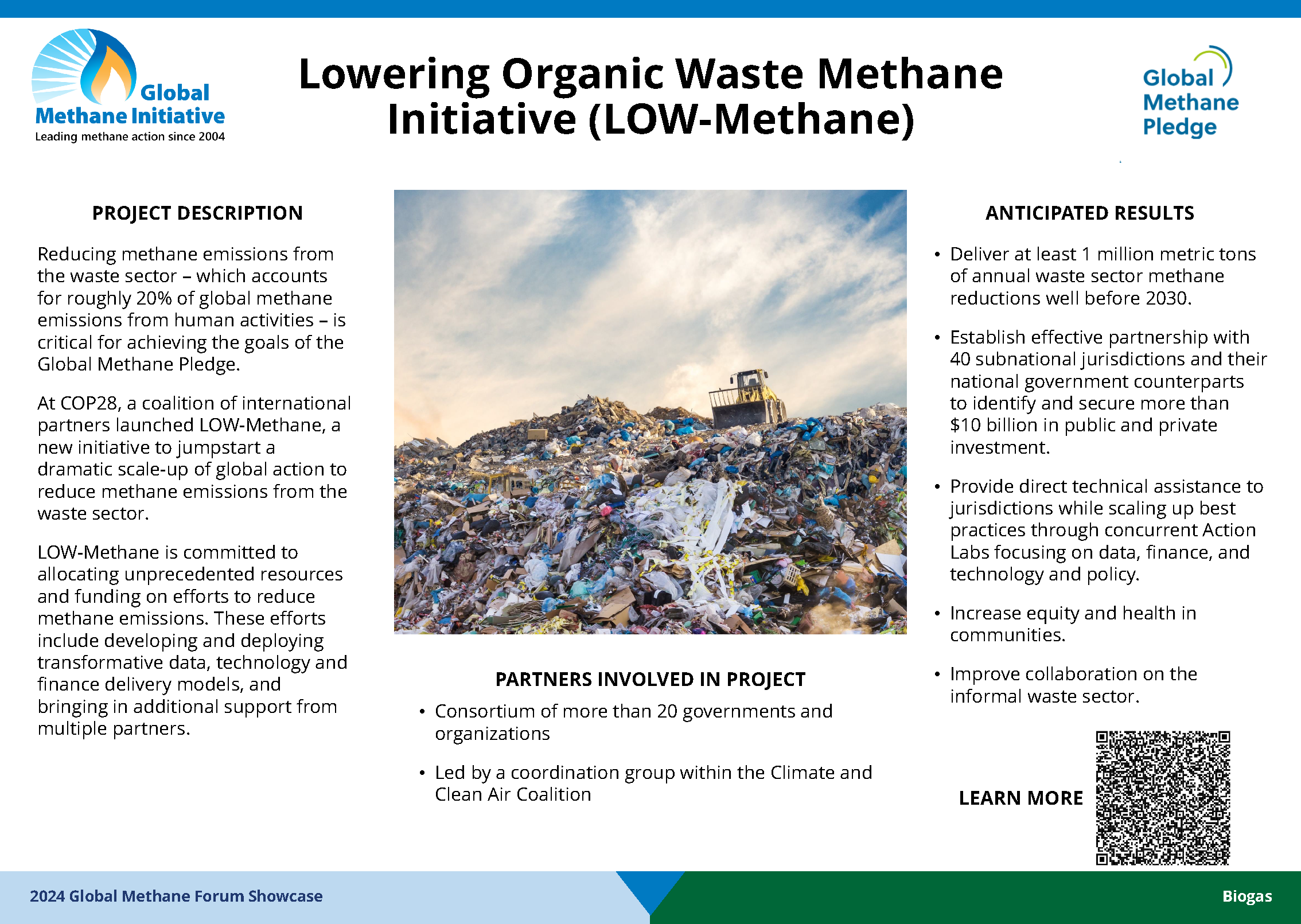
Lowering Organic Waste Methane Initiative (LOW-Methane)

The LOW-Methane Initiative aims to achieve a dramatic scale-up of global action to reduce methane emissions from the waste sector. The initiative intends to deliver at least 1 million metric tons of annual waste sector methane reductions before 2030 and establish effective partnerships with subnational and national governments to secure more than $10 billion in public and private investment. Additionally, technical assistance will be provided while scaling up best practices through concurrent Action Labs focusing on data, finance, technology, and policy.

Partners

  • U.S. Environmental Protection Agency (U.S. EPA)
  • Consortium of more than 20 governments and organizations led by a coordination group within the Climate & Clean Air Coalition (CCAC)
Download
Topic
Region
Language
Publish Date
01 Jan 2022
showcase_l_Page_14.png

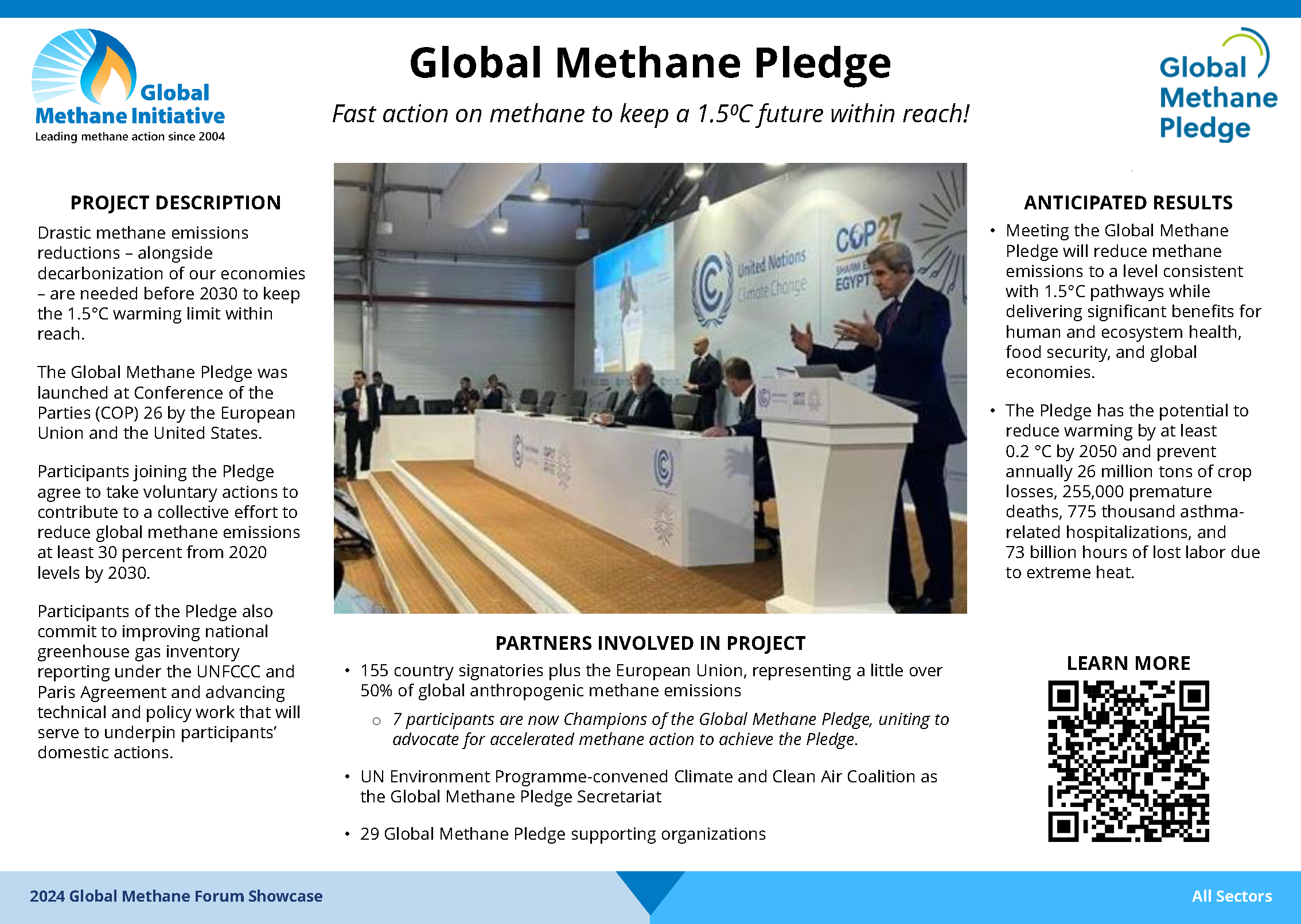
Global Methane Pledge

The Global Methane Pledge was launched in 2021 by the European Union and the United States. The Pledge is represented by 155 countries (as of March 2024). Meeting the Global Methane Pledge will reduce methane emissions to a level consistent with 1.5˚C pathways while delivering significant benefits for human and ecosystem health, food security, and global economies. The Pledge has the potential to reduce warming by 0.2˚C by 2050 and to prevent numerous losses of food, human life, and labor.

Partners

  • U.S. Environmental Protection Agency (U.S. EPA)
  • 155 country signatories plus the European Union
  • UN Environment Programme (UNEP)
  • Climate & Clean Air Coalition (CCAC)
  • 29 Global Methane Pledge supporting organizations
Download
Topic
Region
Language
Publish Date
01 Jan 2022
Subscribe to Biogas