Scaling Up Organic Waste Management in Serbia's South Backa Waste Management Region
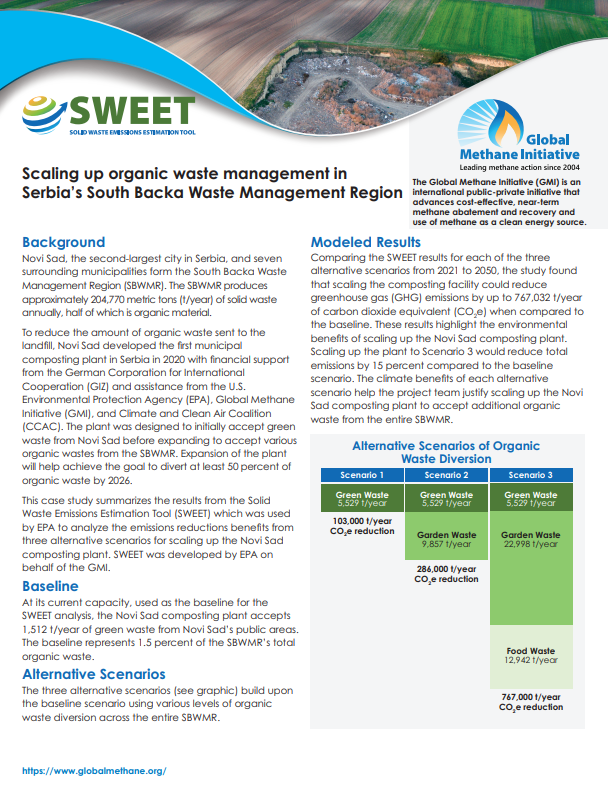
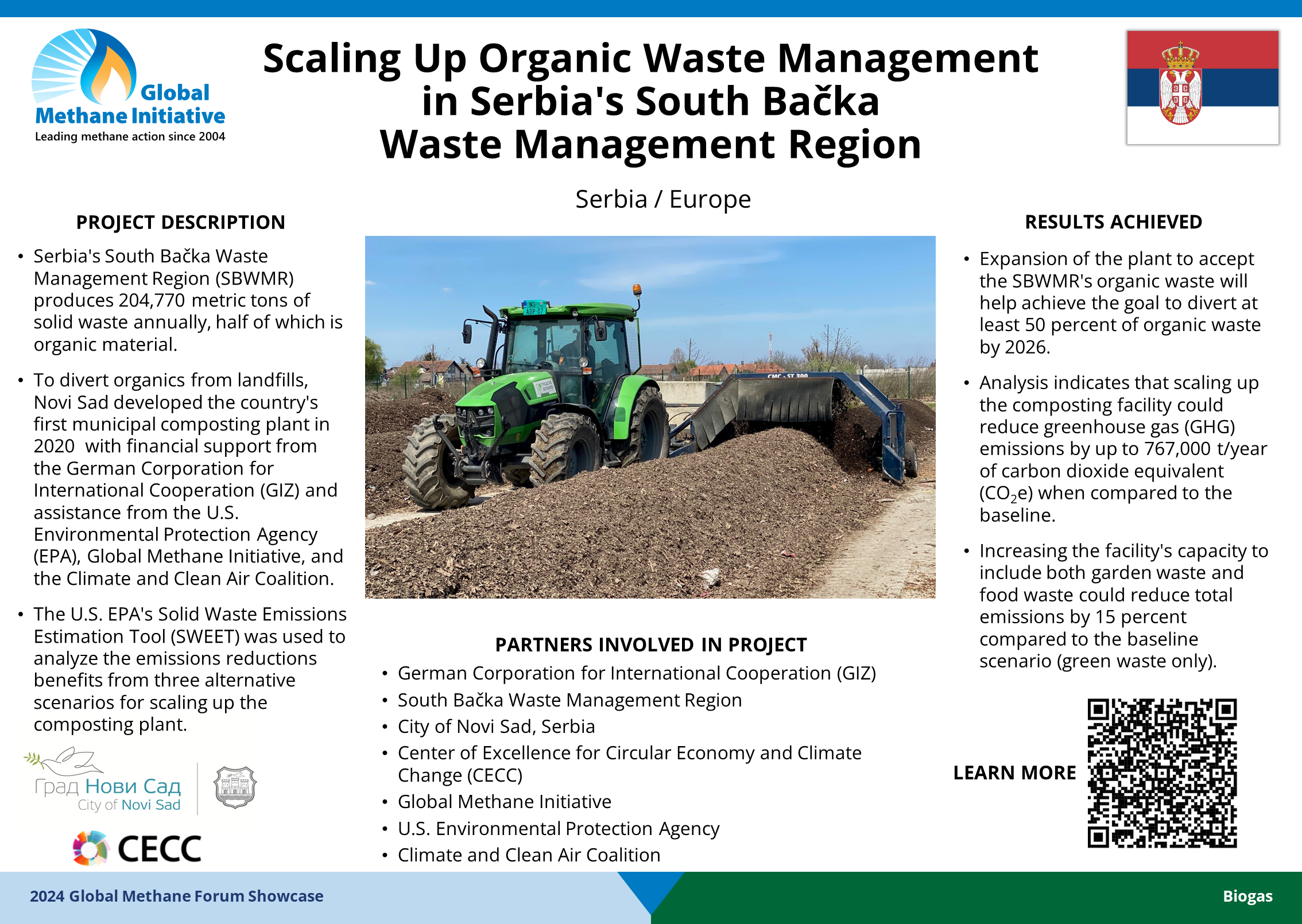
To divert organics from landfills, Novia Sad developed the country's first municipal composting plant in 2020. The U.S. Environmental Protection Agency's Solid Waste Emissions Tool (SWEET) was used to analyze the emissions reductions benefits from three alternative scenarios for scaling up the composting plant. The expansion of the plant will help achieve the goal to divert at least 50% of organic waste by 2026 and could reduce greenhouse gas emissions by up to 767,000 t/year of carbon dioxide equivalent when compared to the baseline. Additionally, increasing the facility's capacity to include both garden waste and food waste could reduce total emissions by 15% compared to the baseline scenario.
Partners
- German Corporation for International Cooperation
- South Backa Waste Management Region
- City of Novi Sad, Serbia
- Center of Excellence for Circular Economy and Climate Change
- Global Methane Initiative (GMI)
- U.S. Environmental Protection Agency (U.S. EPA)
- Download
-
landscape_prod_2024-03-08 20.pdf (683.89 KB)
- Topic
- Region
- Language
- Publish Date
- 01 Jan 2020