showcase_p_Page_03.png

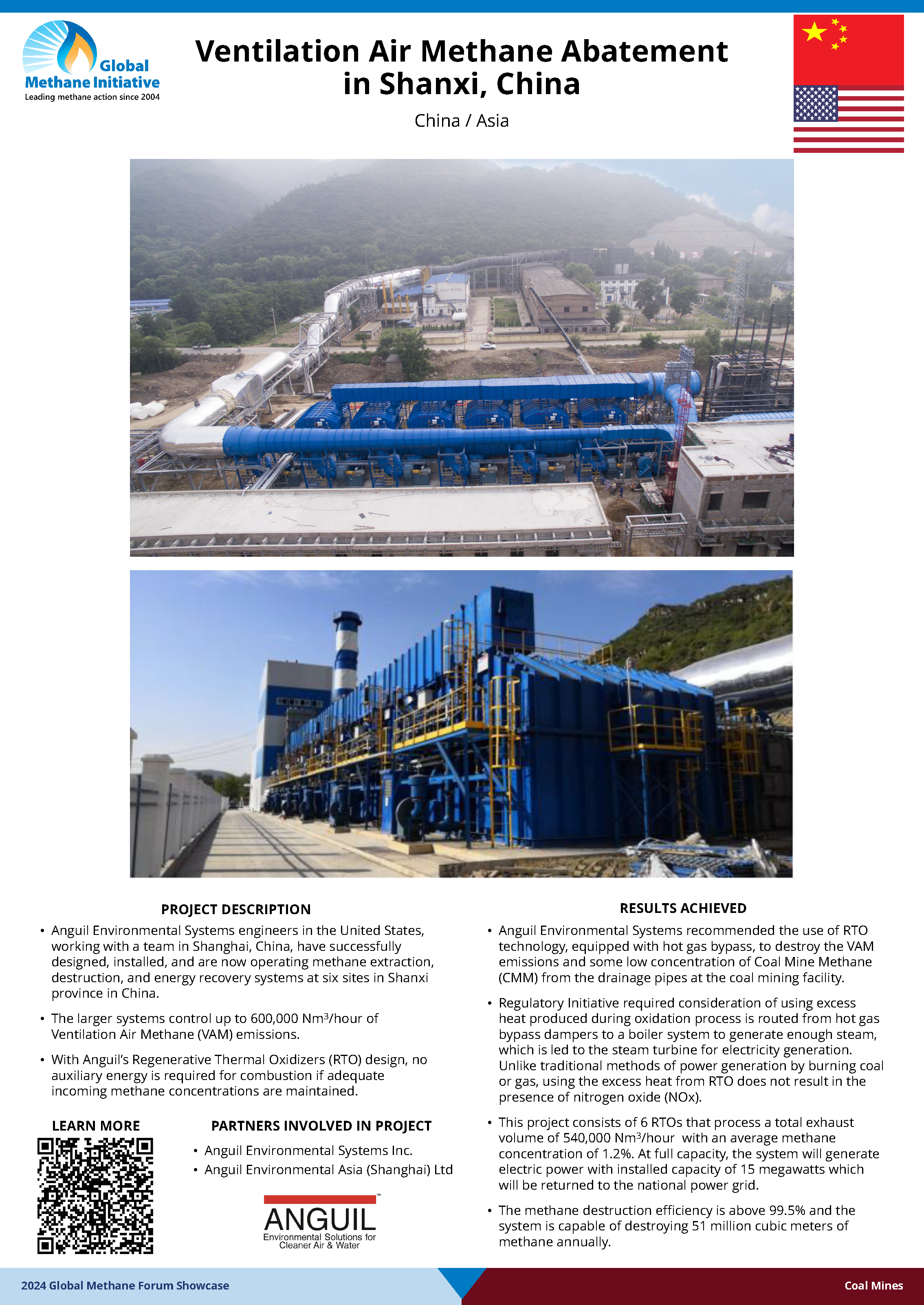
Ventilation Air Methane Abatement in Shanxi, China

Anguil Environmental Systems engineers have successfully designed, installed, and are now operating methane extraction, destruction, and energy recovery systems at six sites in Shangxi province in China. With Anguil's Regenerative Thermal Oxidizers (RTO) design, no auxiliary energy is required for combustion if adequate incoming methane concentrations are maintained. Anguil recommended the use of RTO technology, equipped with hot gas bypass, to destroy the ventilation air methane emissions and some low concentration of Coal Mine Methane from the drainage pipes at the coal mining facility.

Partners

  • Anguil Environmental Systems Inc.
  • Anguil Environmental Asia (Shanghai) Ltd
Download
Topic
Region
Language
Publish Date
01 Jan 2019
pfm-colombia.png

Identifying Coal Mine Methane (CMM) Mitigation Options in Colombia

Colombia prepared a CMM Country Profile in 2019 that described the national circumstances and identified and categorized 30 key stakeholders in Colombia's CMM industry. The U.S. EPA then conducted a pre-feasibility study to explore the possibility of CMM capture and utilization at the Casa Blanca Mine and determined that onsite power generation was the most viable option for CMM use.

Partners

  • Global Methane Initiative (GMI)
  • U.S. Environmental Protection Agency (U.S. EPA)
External Link
Topic
Region
Language
Publish Date
01 Jan 2019
pmf-albania.png

Albania's Landfill Methane Capture Strategy

Albania conducted a greenhouse gas inventory and set a goal to begin capturing methane in 2025 and increase the amount captured until 2030. Additionally, they set goals to increase the amount of composted waste by an additional 3 percent annually until 2030.

Partners

  • Global Methane Initiative (GMI)
  • Government of Albania
External Link
Topic
Region
Language
Publish Date
01 Jan 2019
showcase_l_Page_20.png

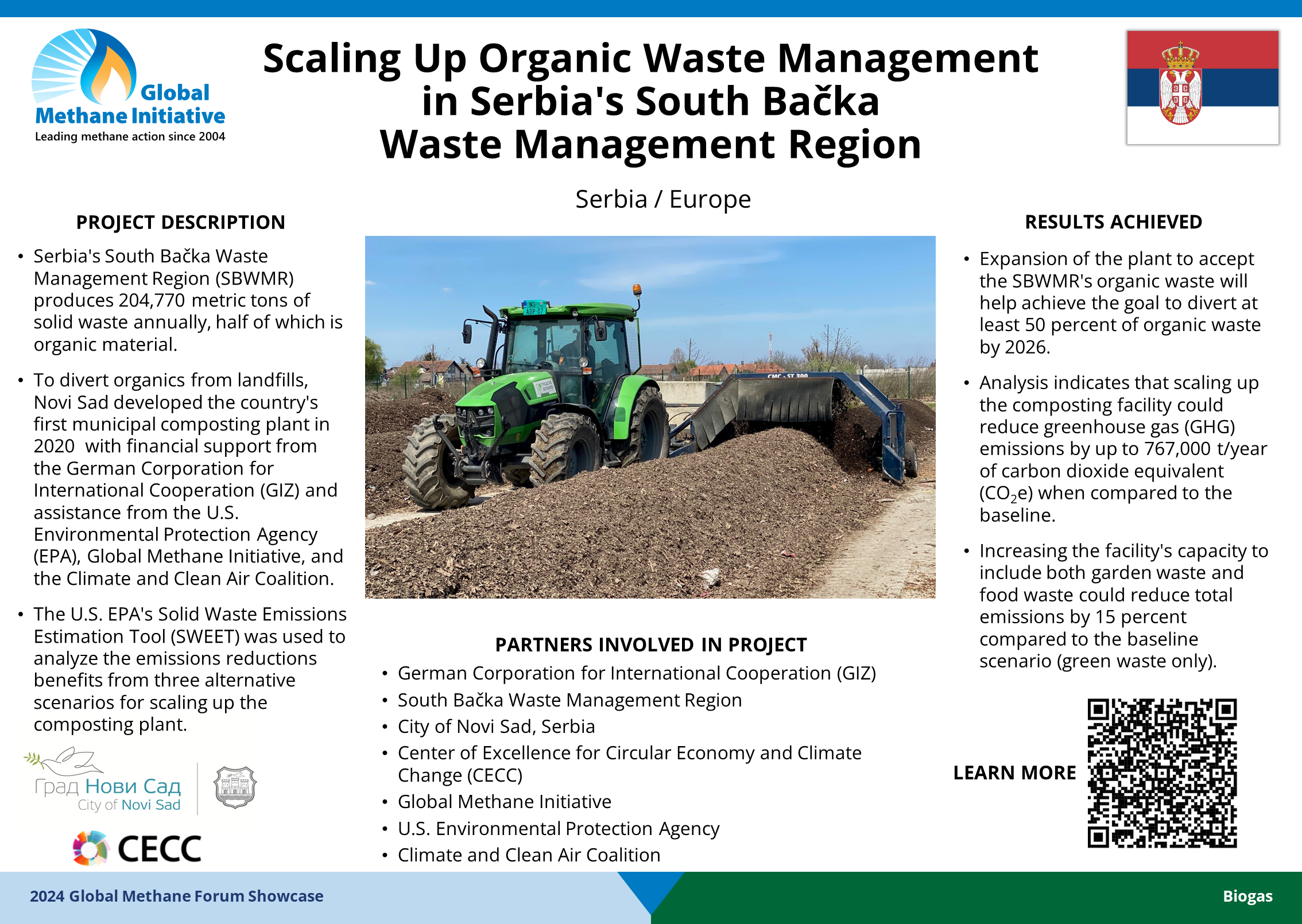
Scaling Up Organic Waste Management in Serbia's South Backa Waste Management Region

To divert organics from landfills, Novia Sad developed the country's first municipal composting plant in 2020. The U.S. Environmental Protection Agency's Solid Waste Emissions Tool (SWEET) was used to analyze the emissions reductions benefits from three alternative scenarios for scaling up the composting plant. The expansion of the plant will help achieve the goal to divert at least 50% of organic waste by 2026 and could reduce greenhouse gas emissions by up to 767,000 t/year of carbon dioxide equivalent when compared to the baseline. Additionally, increasing the facility's capacity to include both garden waste and food waste could reduce total emissions by 15% compared to the baseline scenario.

Partners

  • German Corporation for International Cooperation
  • South Backa Waste Management Region
  • City of Novi Sad, Serbia
  • Center of Excellence for Circular Economy and Climate Change
  • Global Methane Initiative (GMI)
  • U.S. Environmental Protection Agency (U.S. EPA)
Download
Topic
Region
Language
Publish Date
01 Jan 2020
showcase_p_Page_08.png

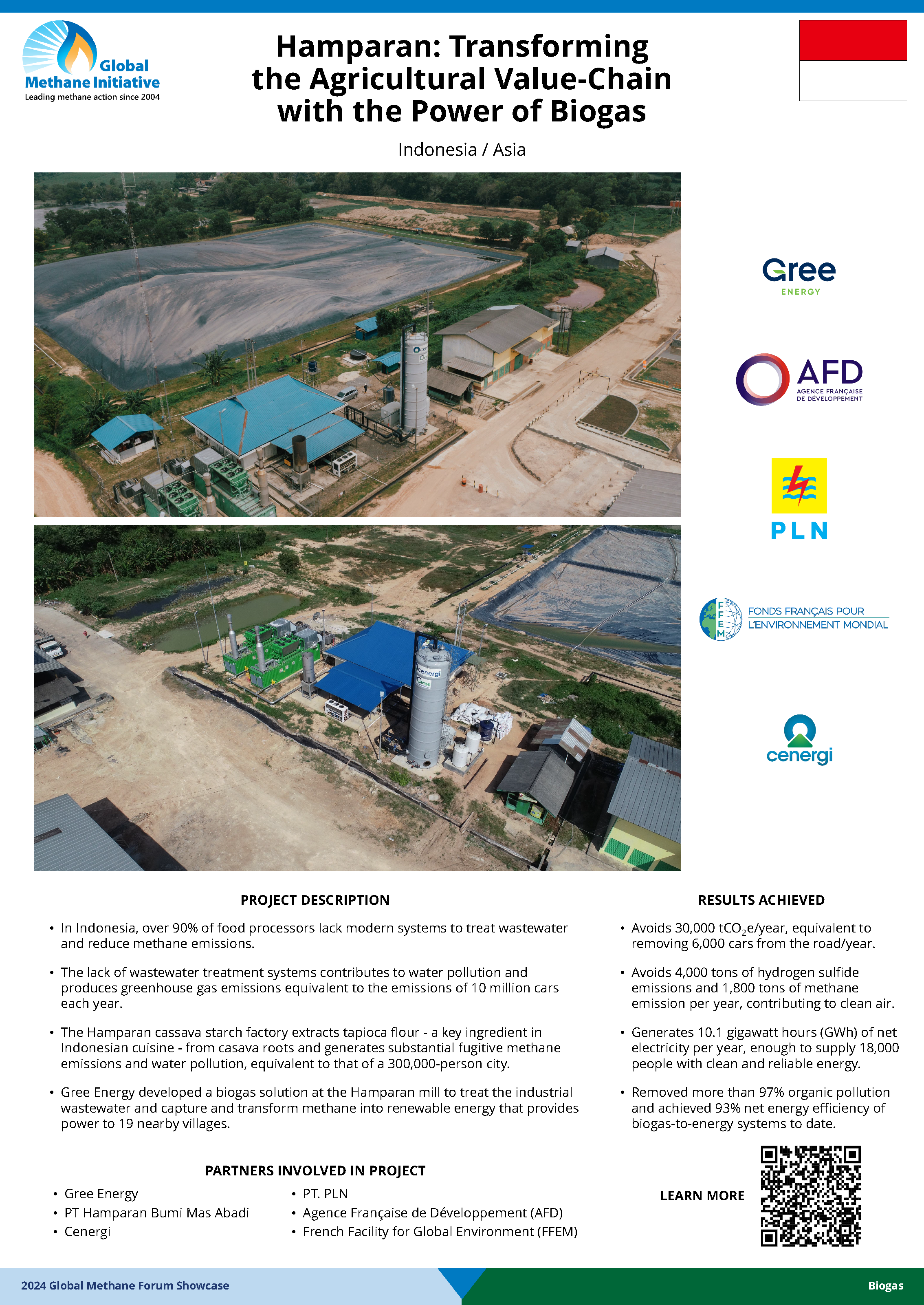
Hamparan: Transforming the Agricultural Value-Chain with the Power of Biogas

A biogas solution was developed to treat industrial wastewater and capture and transform methane into renewable energy that provides power to 19 nearby villages. The project removed more than 97% organic pollution and achieved 93% net energy efficiency of biogas-to-energy systems to date.

Partners

  • Gree Energy
  • PT Hamparan Bumi Mas Abadi
  • Cenergi
  • PT. PLN
  • Agence Francaise de Developpement
  • French Facility for Global Environment
Download
Topic
Region
Language
Publish Date
01 Jan 2020
pfm-tobago.png

Trinidad and Tobago, an Oil and Gas Producer, Strengthens Capacity for Emissions Transparency

In 2019, Trinidad and Tobago joined the Nationally Determined Contributions (NDC) Support Programme, through which a measurement, reporting, and verification (MRV) pilot project was developed. The project began in 2021 with three goals: strengthen capacity to prepare Biennial Transparency Reports, integrate climate change into the national planning and decision-making process, and establish and formalize the necessary institutional arrangements for implementing climate transparency activities.

Partners

  • Global Methane Initiative (GMI)
  • United Nations
External Link
Topic
Region
Language
Publish Date
01 Jan 2021
sweet-novi-sad.png

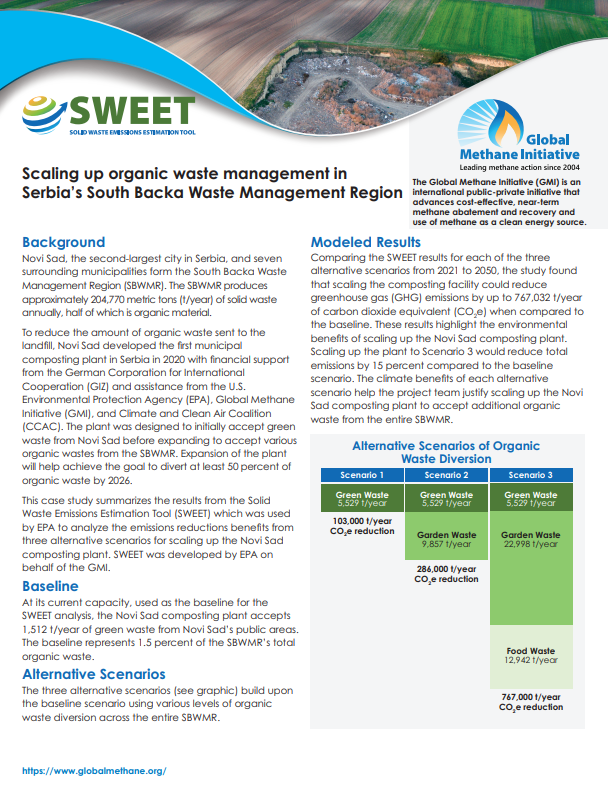
Scaling Up Organic Waste Management In Serbia's South Backa Waste Management Region

Comparing the SWEET results for three scenarios from 2021 to 2050, the study found that scaling the composting facility could reduce greenhouse gas emissions by up to 767,032 t/year of carbon dioxide equivalent (CO2e) when compared to the baseline. These results highlight the environmental benefits of scaling up the Novi Sad composting plant.

Partners

  • Global Methane Initiative (GMI)
  • U.S. Environmental Protection Agency (U.S. EPA)
Download
Topic
Region
Language
Publish Date
01 Jan 2021
showcase_l_Page_09.png

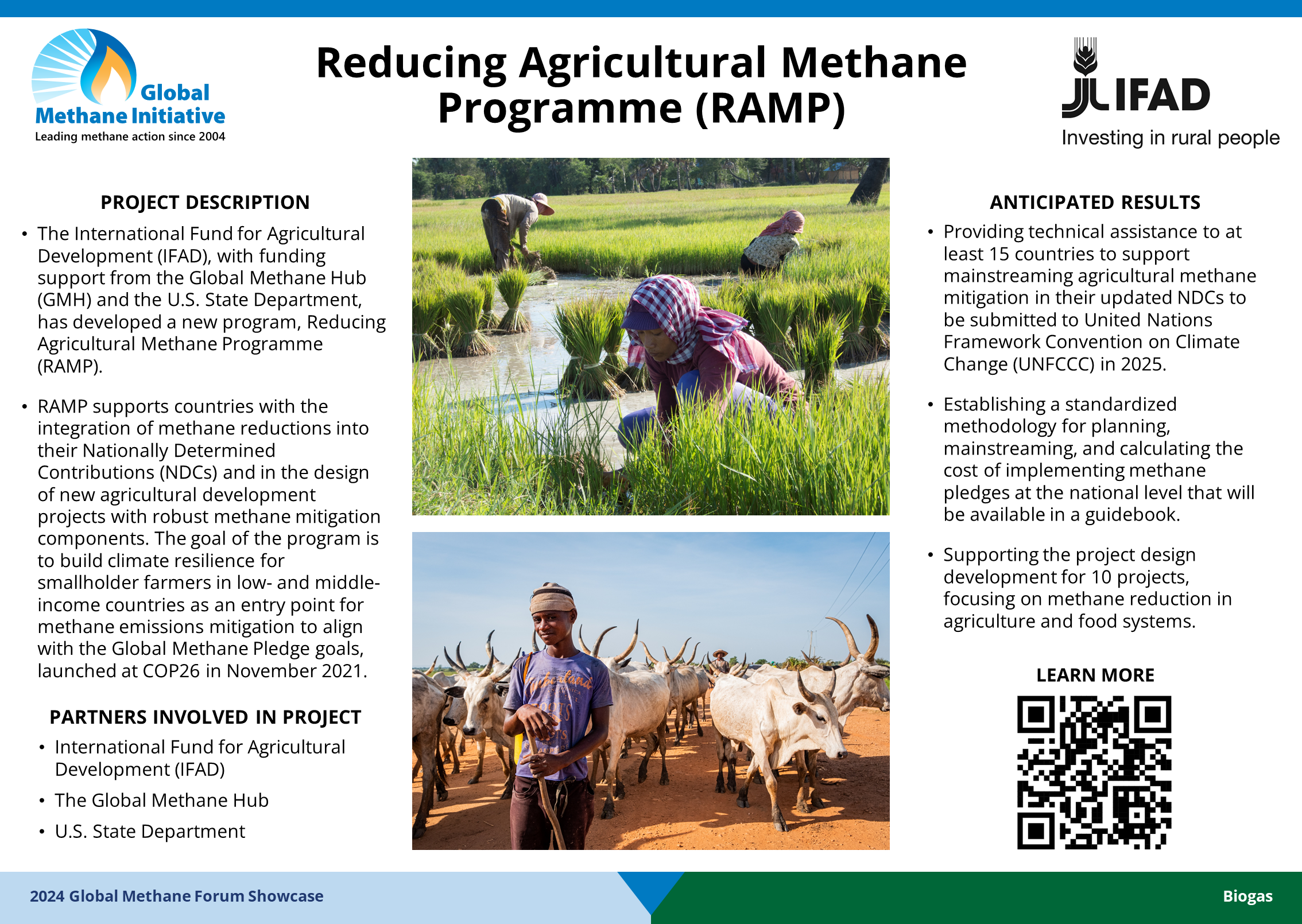
Reducing Agricultural Methane Programme (RAMP)

The Reducing Agricultural Methane Programme (RAMP) supports countries with the integration of methane reductions into their nationally determined contributions (NDCs) and in the design of new agricultural development projects with robust methane mitigation components. The goal is to build climate resilience for smallholder farmers as an entry point for methane emissions mitigation to align with Global Methane Pledge goals. The project aims to provide technical assistance to at least 15 countries to support mainstreaming agricultural methane mitigation in their updated NDCs for the United Nations Framework Convention on Climate Change (UNFCCC) in 2025. Additionally, it intends to establish a standardized methodology at the national level for a guidebook and support the project design for 10 projects focused on methane reduction in agriculture and food systems.

Partners

  • International Fund for Agricultural Development (IFAD)
  • Global Methane Hub
  • U.S. State Department
Download
Topic
Language
Publish Date
01 Jan 2021
showcase_l_Page_18.png

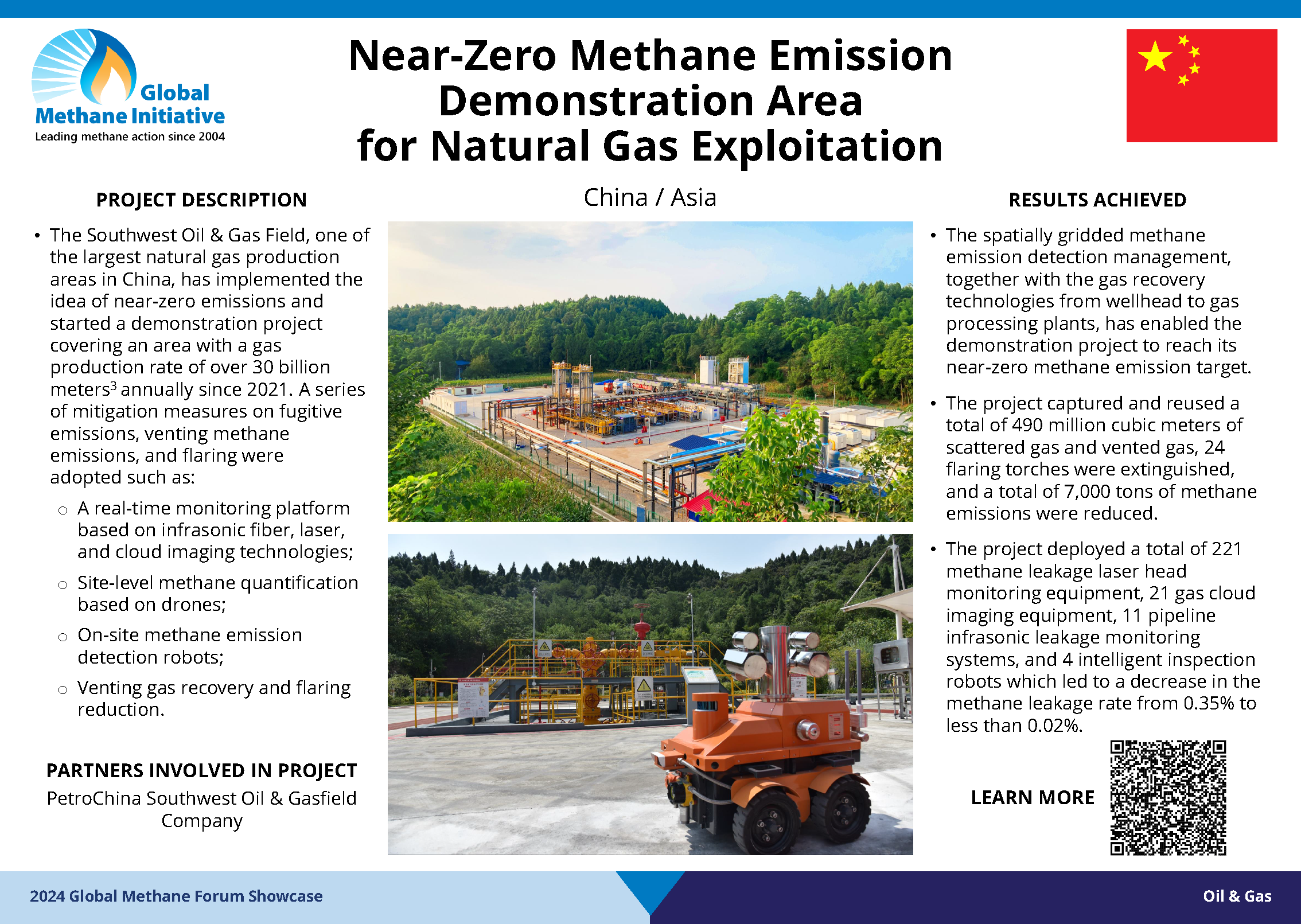
Near-Zero Methane Emission Demonstration Area for Natural Gas Exploitation

The Southwest Oil & Gas Field has adopted a series of mitigation measures on fugitive emissions, venting methane emissions, and flaring. The project captured and reused a total of 490 million cubic meters of scattered gas and vented gas, 24 flaring torches were extinguished, and a total of 7,000 tons of methane emissions were reduced. Additionally, the project deployed methane leakage laser head monitoring equipment, gas cloud imaging equipment, pipeline infrasonic leakage monitoring systems, and inspection robots. These deployments led to a decrease in the methane leakage rate from 0.35% to less than 0.02%.

Partners

  • PetroChina Southwest Oil & Gasfield Company
Download
Topic
Region
Language
Publish Date
01 Jan 2021
showcase_p_Page_10.png

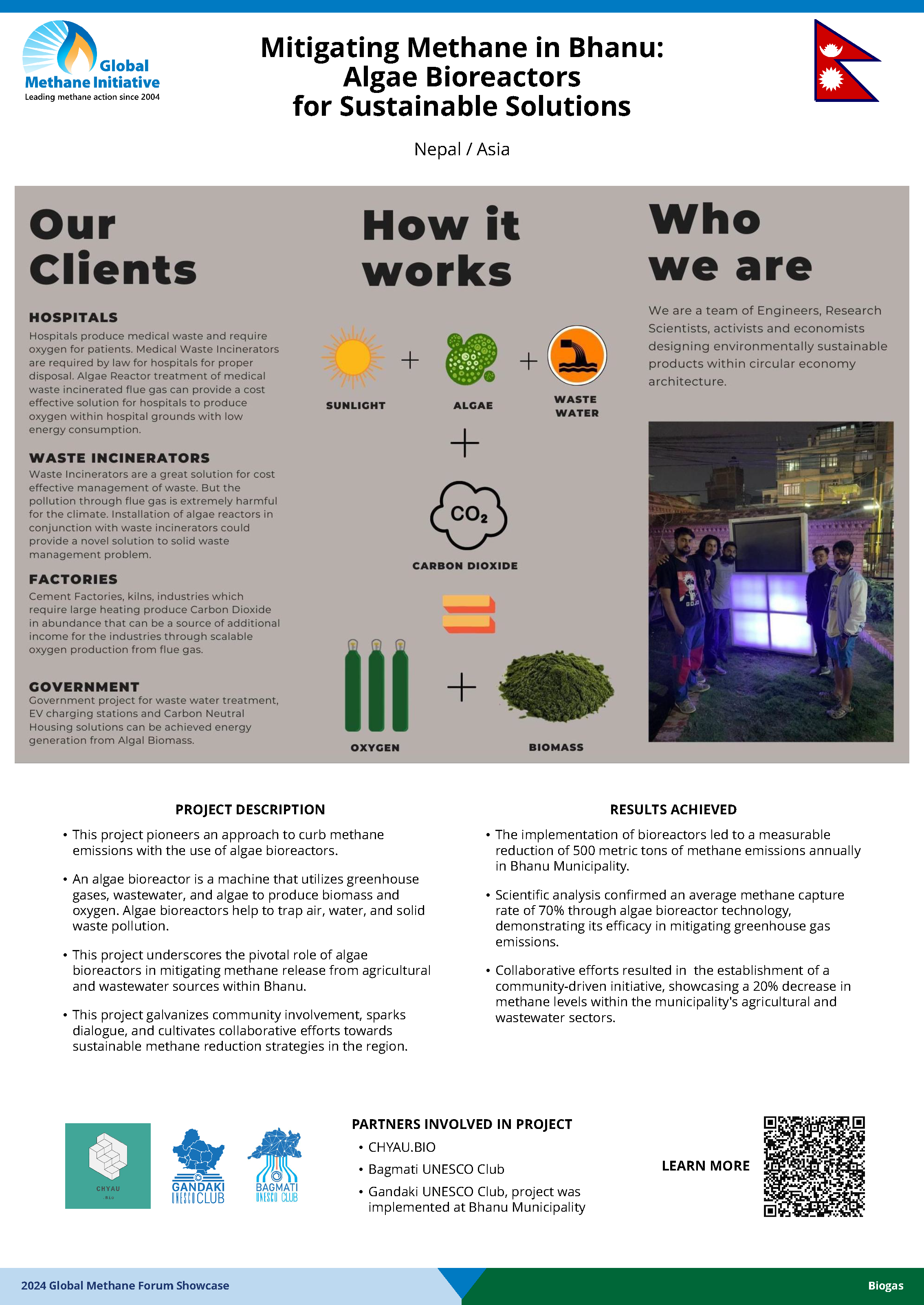
Mitigating Methane in Bhanu: Algae Bioreactors for Sustainable Solutions

This project pioneered an approach to curb methane emissions with the use of algae bioreactors. Algae bioreactors help to trap air, water, and solid waste pollution. The algae bioreactors were used in mitigating methane release from agricultural and wastewater sources. Scientific analysis confirmed an average methane capture rate of 70% through algae bioreactor technology, demonstrating its efficacy in mitigating greenhouse gas emissions. Methane levels within the municipality's agricultural and wastewater sectors decreased by 20%.

Partners

  • Chyau.Bio
  • Bagmati UNESCO Club
  • Gandaki UNESCO Club
Download
Topic
Region
Language
Publish Date
01 Jan 2021
Subscribe to English