thumb_colombia-lfg-model.png

Colombia Landfill Gas Model (Spanish)

The Model can be used to estimate landfill gas generation rates from landfills, and potential landfill gas recovery rates for landfills that have, or plan to have, gas collection and control systems in Colombia.

Download
Topic
Language
Publish Date
01 Jan 2010
thumb_colombia-lfg-model.png

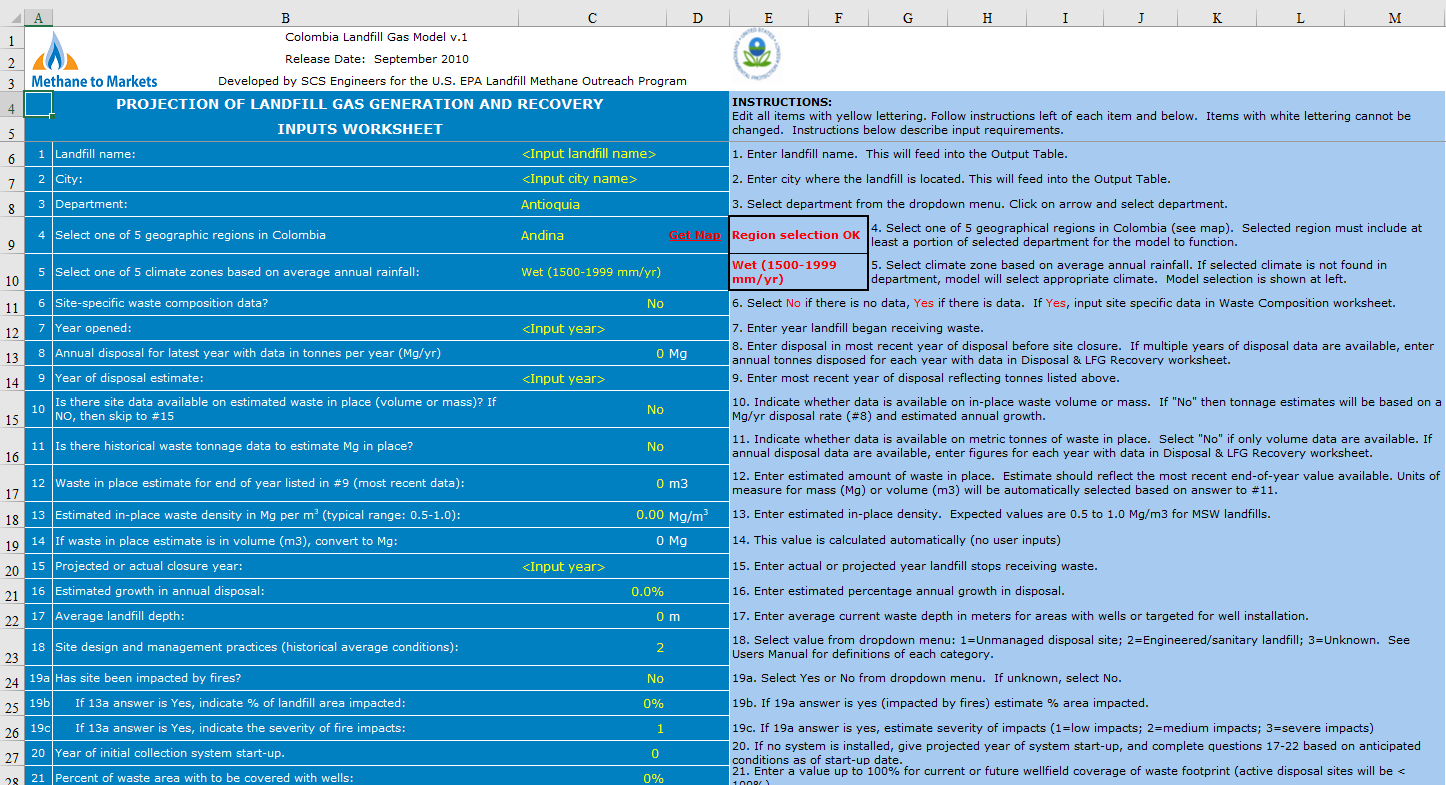
Colombia Landfill Gas Model

The Model can be used to estimate landfill gas generation rates from landfills, and potential landfill gas recovery rates for landfills that have, or plan to have, gas collection and control systems in Colombia.

Download
Topic
Language
Publish Date
01 Jan 2010
thumb_central-europe-lfg-model.png

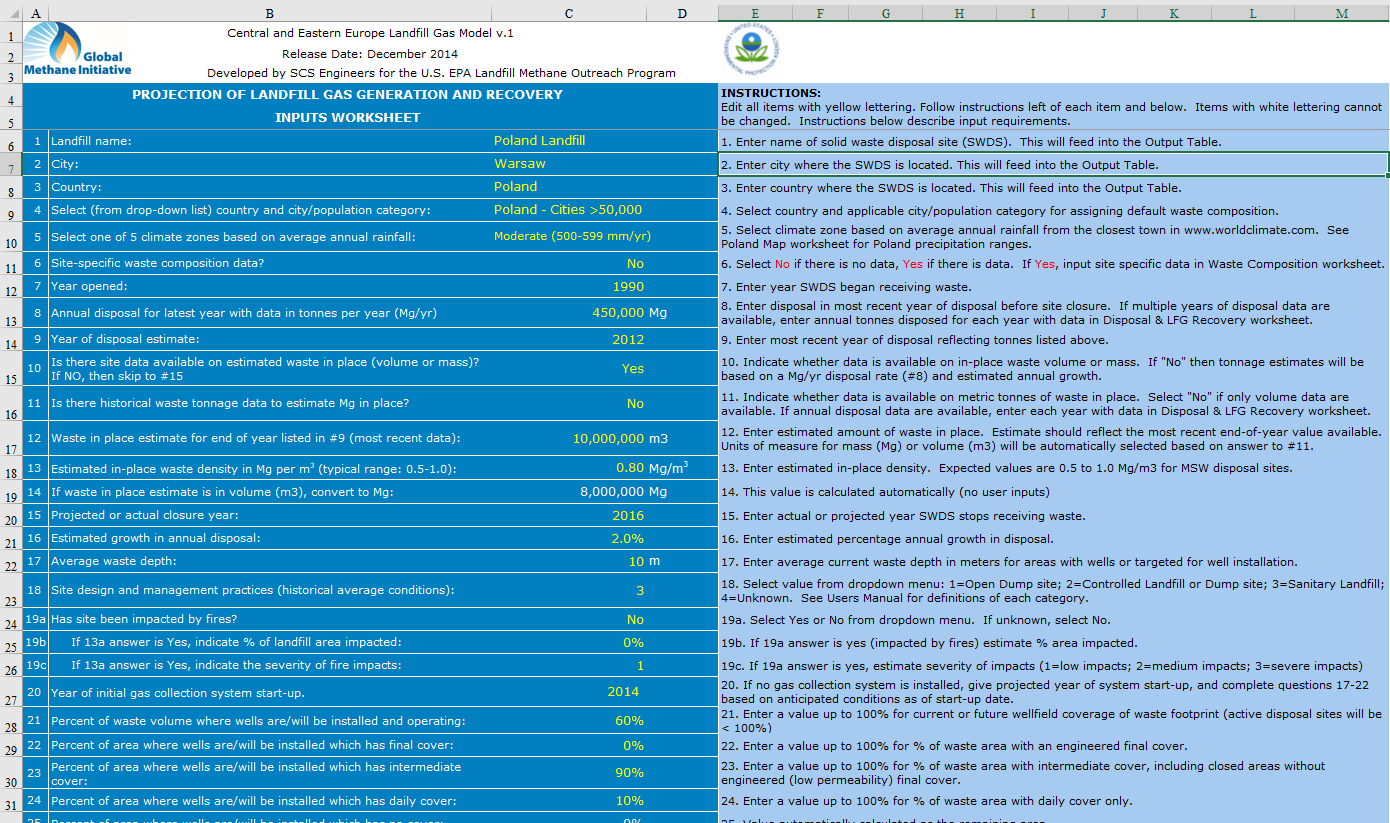
Central and Eastern Europe Landfill Gas Model

The Model can be used to estimate landfill gas generation rates from SWD sites, and potential landfill gas recovery rates for disposal sites that have, or plan to have, gas collection and control systems and are located in Central or Eastern European countries. The Model also may be used for SWD sites in other countries which experience similar site conditions and climate, and have waste composition data.

Download
Topic
Language
Publish Date
01 Jan 2014
thumb_lfge-pdh.png

International Best Practices Guide for Landfill Gas Energy Projects

Global Methane Initiative’s (GMI) International Best Practices Guide for Landfill Gas Energy Projects provides a broad overview of the development process for LFGE projects in international settings and presents the technological, economic and political considerations that typically affect the success of LFGE projects. The goal of the guide is to encourage environmentally and economically sound LFGE projects by connecting stakeholders with available information, tools and services. The guide is not intended to provide a step-by-step protocol for project development.

Download
Topic
Language
Publish Date
01 Jan 2012
biogas-toolkit-thumb.jpg

Biogas Toolkit

The U.S. Environmental Protection Agency (EPA) Biogas Toolkit serves as a centralized knowledge hub for biogas project stakeholders. The toolkit is designed to allow stakeholders to search and browse for information and resources that meet their specific project needs. The toolkit includes information and resources compiled from across several EPA programs, including AgSTAR, the Landfill Methane Outreach Program (LMOP), and GMI.

External Link
Topic
Language
Publish Date
01 Jan 2020
CCAC video thumbnail.jpeg

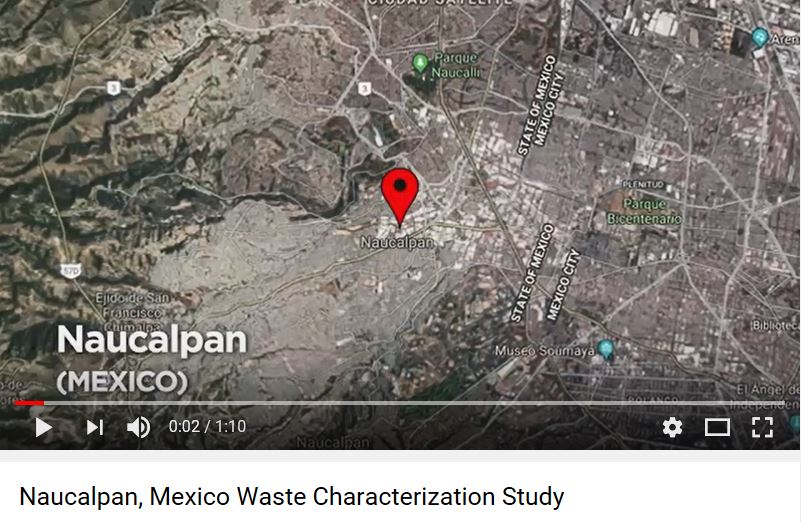
Naucalpan, Mexico Waste Characterization Study

In March 2017, the U.S. Environmental Protection Agency – as a lead partner in the Waste Initiative – conducted a waste characterization study at the municipality’s transfer station. The study indicated that approximately 69% of the waste handled at the transfer station could be recycled or otherwise diverted from the landfill, and that more than half of the waste could be used as feedstock in composting or anaerobic digestion projects. The municipality is using the results of the study to inform decision making about the project design and procurement options.


Topic
Language
Publish Date
01 Jan 2019
thumb-DiBiCoo.png

Biogas and Gasification Matchmaking Platform

The Biogas and Gasification Matchmaking Platform facilitates networking among international providers and users of biogas and bio-methane technologies. Developed by the Digital Global Biogas Cooperation (DiBiCoo), the online platform acts as a database of biogas and gasification related stakeholders.

The platform:

  • Connects biogas technology providers, project developers, and investors
  • Assists with finding the most suitable companies for collaboration
  • Helps to identify the best technologies for projects
  • Increases the visibility of companies working in the biogas and gasification sectors
  • Enables markets in developing and emerging countries to import sustainable biogas and biomethane technologies

Get started by joining the platform. With your free account, you can explore companies, business opportunities, and the knowledge base.

External Link
Topic
Language
Publish Date
01 Jan 2022
thumb-Training Series Best Practices for Landfill and Organic Waste Management.png

Training Series: Best Practices for Landfill and Organic Waste Management

In 2024, the U.S. EPA, in collaboration with the Asian Development Bank and in support of the aims of the Global Methane Initiative (GMI) Biogas Subcommittee, hosted a four-part training series: Best Practices on Landfill and Organic Waste Management. The training focused on proven approaches and case studies for dumpsite closure and remediation; sanitary landfill construction, operation, and maintenance; organic waste treatment; feedstock management; greenhouse gas (GHG) measurement, reporting, and verification; and useful tools and resources. The training was initially delivered to implementers of the Bahawalpur Integrated Solid Waste Management project in Pakistan, but the training materials are broadly applicable to national and subnational decision-makers and policymakers, waste professionals, waste facility operators, and project developers.

Session 1: Methane and Landfills on 28 October 2024


Session 2: Methane Mitigation Through Best Practices for Organic Waste Treatment on 29 October 2024


Session 3: Managing Feedstock – Best Practices for Solid Waste Source Separation on 30 October 2024


Session 4: Evaluating Methane Emission Reductions and Other Benefits of Organic Waste Management Projects on 31 October 2024


Download
Topic
Language
Publish Date
28 Oct 2024
thumb-OrganEcs Version 3.1.png

OrganEcs Version 3.1

Organic waste management (i.e. composting and anaerobic digestion) represent a key opportunity for achieving the reduction of short-lived climate pollutants from the municipal solid waste sector. Planning and developing such projects requires a detailed understanding of the costs involved in constructing and operating organic waste management facilities.

OrganEcs is a tool for estimating the costs associated with an organic waste management project. It provides planning-level assistance to local governments, waste professionals, policymakers, facility operators, and project developers to help them make financial decisions about their potential organic waste management projects.

OrganEcs was developed by the U.S. Environmental Protection Agency under the auspices of the Global Methane Initiative and in support of the Climate and Clean Air Coalition. 
Download
Topic
Language
Publish Date
01 Jan 2021
thumb-LFG-ScreeningTool.png

Landfill Gas Screening Tool (LFG-ST)

The Landfill Gas Screening Tool’s goal is to assist cities in assessing the potential feasibility of a landfill gas energy (LFGE) project. It provides a preliminary estimate of how much landfill gas (LFG) a site could collect, and whether that fuel supply is likely sufficient to support a modest-sized LFGE project. LFGE project types include combusting LFG directly to produce heat (e.g., for industrial applications), using LFG to generate electricity, and - in some cases - converting LFG into a compressed natural gas (CNG) to fuel vehicles.

The Landfill Gas Screening Tool was developed by the U.S. Environmental Protection Agency in support of the Global Methane Initiative and the Climate and Clean Air Coalition.
Download
Topic
Language
Publish Date
01 Jan 2021
Subscribe to Biogas