thumb-AD-Screening-Tool.png

Anaerobic Digestion Screening Tool

The U.S. Environmental Protection Agency, on behalf of the Global Methane Initiative (GMI), developed the Anaerobic Digestion (AD) Screening Tool to assist stakeholders in assessing the potential feasibility of an AD project.

The AD Screening Tool enables users to conduct pre-feasibility analyses to evaluate AD opportunities for a variety of feedstocks, including organic municipal solid waste, livestock manure, agricultural residues, and wastewater. The tool generates the following outputs:

  • Annual biogas and digestate production
  • Project methane emission reductions
  • Potential end uses of biogas, including estimates for electricity production, natural gas production, cooking gas potential, and home heating potential

This tool is intended to help project developers, government agencies, financial institutions, and other stakeholders conduct an initial screening assessment of the technical and financial feasibility of proposed AD projects.


Tutorials

Estimating Biogas Production

Download
Topic
Language
Publish Date
01 Jan 2025
thumb-sweet.png

Solid Waste Emissions Estimation Tool (SWEET)

The Solid Waste Emissions Estimation Tool (SWEET) is an Excel-based tool that quantifies emissions of methane, black carbon, and other pollutants from sources in the municipal solid waste sector. The tool provides emissions and emissions reduction estimates at the project-, source-, and municipality-level. Cities can use this information for multiple purposes, including establishing a baseline scenario, comparing a baseline scenario to as many as four alternative scenarios, analyzing specific projects for potential emissions reductions, estimating the contribution of activities in the waste sector to overall city emissions reduction goals, and tracking progress over time, among other things.

SWEET was developed by the U.S. Environmental Protection Agency under the auspices of the Global Methane Initiative and in support of the Climate and Clean Air Coalition.


Testimonials

"SWEET can be considered a policy planning tool that requires less data input than the usual life cycle assessment-based tools."
World Health Organization

"If a city has overall emissions reductions goals, SWEET helps them better understand how investments in waste management in particular will contribute to those goals, which helps cities prioritize interventions and make financing decisions."
Climate and Clear Air Coalition Secretariat

"SWEET is, overall, an easy to use tool to estimate LFG emission of a waste management system. [...] In particular, it would be beneficial for municipalities in low and middle-income countries that want to communicate positive climate effects and have compelling arguments ready for relevant stakeholders before making the first steps of improving their waste management practices."
International Solid Waste Association


Trainings

General Information


Landfills and Dumpsites


Advanced Tips and Tricks


Training Modules

Case Studies

Download
SWEET_UserManual.pdf (1002.92 KB)
Topic
Language
Publish Date
01 Jan 2025
thumb-MRV Webinar Series The Role and Importance of MRV for Biogas Projects.png

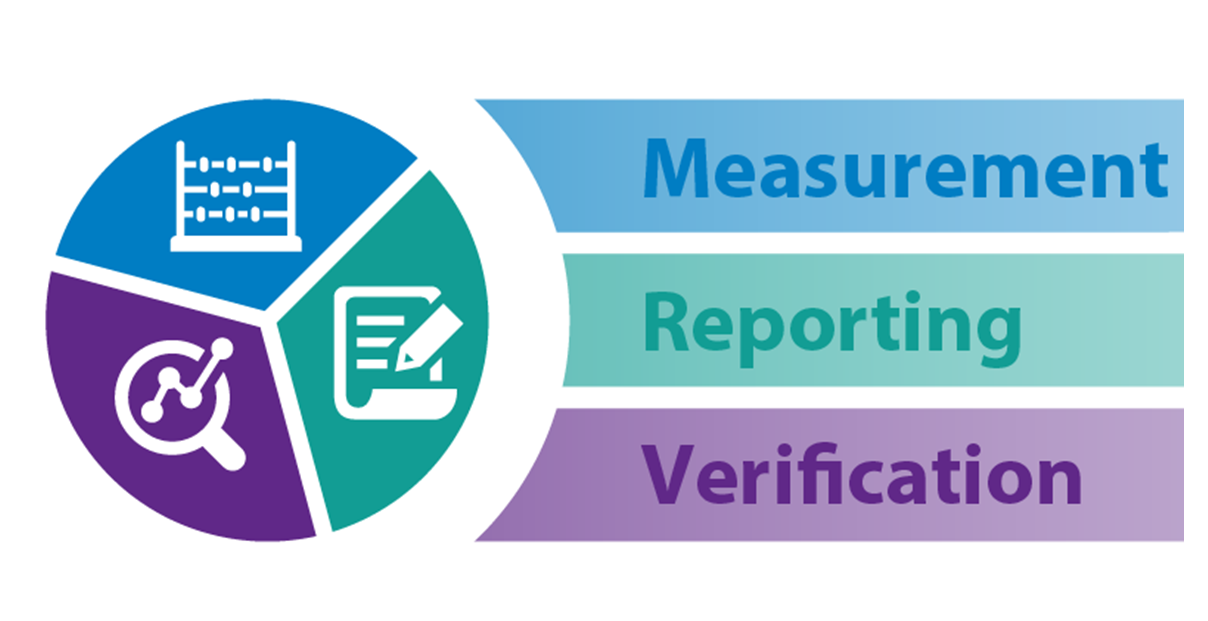
MRV Webinar Series: The Role and Importance of MRV for Biogas Projects

Biogas projects—including those that capture and use methane emissions from the agriculture, municipal solid waste, and municipal wastewater sectors—are critical for mitigating climate change, enhancing energy security, and improving public health.

Many governments may find it difficult to account for biogas project emissions and emissions reductions. One key challenge is the limited access to clear guiding principles for measurement, reporting, and verification (MRV) of emissions and emissions reductions from the biogas sector. An effective MRV system is critical for nations to develop robust emissions inventories and set ambitious mitigation targets under the Paris agreement.

This first webinar introduced the basics of MRV, discussed the big picture importance of MRV in the context of the Paris Climate Agreement, and highlighted GMI’s MRV resources, including the MRV Handbook and Resource Center.

Panelists:

  • Nick Elger – GMI Biogas Subcommittee Co-Chair, Environmental Protection Agency
  • Neelam Singh – Senior Associate, World Resources Institute (WRI)
  • Lisa Hanle – Independent Consultant, formerly the Enhanced Transparency Framework Coordinator at United Nations Framework Convention on Climate Change (UNFCCC)
Topic
Language
Publish Date
08 Sep 2022
thumb-Waste Characterization Handbook Understanding Municipal Waste Streams to Develop Data-Driven Methane Mitigation Strategies.png

Waste Characterization Handbook: Understanding Municipal Waste Streams to Develop Data-Driven Methane Mitigation Strategies

The U.S. Environmental Protection Agency on behalf of the Global Methane Initiative developed the Waste Characterization Handbook and accompanying Excel tool to help decision-makers and solid waste professionals plan and conduct waste characterization studies to understand the composition of waste streams. Waste characterization data can be used to inform improved waste management planning and implementation and measure methane mitigation from these strategies.

  • The Waste Characterization Handbook provides information for city decision-makers and solid waste professionals to plan and conduct a waste characterization study. The handbook includes recommended activities and resources to help plan an appropriate type of study for specific site conditions; conduct field activities to collect the data; and analyze the data to help make informed solid waste planning decisions.
  • The Waste Characterization Planning and Data Tool is an Excel-based tool that streamlines data entry and provides instant graphics to visualize the data entered during the study.

Resulting waste characterization data can be used in existing GMI tools to better understand organic waste management and methane mitigation options:

  • Data on the average composition of collected waste (e.g., food waste, paper, cardboard, textiles, plastic) can be entered into the Solid Waste Emissions Estimation Tool (SWEET) to understand the emissions impacts of various management strategy and technology (e.g., composting, anaerobic digestion (AD), waste combustion, recycling).
  • Data on specific organic waste types and quantities (e.g., mixed food waste, coffee grounds, bananas) can be entered into the Anaerobic Digestion (AD) Screening Tool to assess AD project feasibility. The AD Screening Tool outputs include annual biogas and digestate production, methane emissions reductions, and potential end uses of biogas.
  • Data on the annual disposal rate (metric tons/year) of a city or community can be input into the Landfill Gas (LFG) Screening Tool. The tool provides an estimate of how much LFG can be collected at a dumpsite or landfill and provides initial recommendations on whether that fuel supply is likely sufficient to support a modest-sized LFG Energy (LFGE) project. LFGE project types include combusting LFG directly to produce heat (e.g., for industrial applications), using LFG to generate electricity, and - in some cases - converting LFG into compressed natural gas (CNG) to fuel vehicles.
Download
Topic
Language
Publish Date
01 Jan 2024
thumb-BioWATT.jpg

Biogas Wastewater Assessment Technology Tool (BioWATT)

The Biogas Wastewater Assessment Technology Tool (BioWATT) provides a quick and preliminary assessment of wastewater-to-energy projects. Through BioWATT, users can receive a specific summary of their biogas production estimates for various wastewater-to-energy technologies, electricity generation potential from the produced biogas, greenhouse gas savings associated with biogas-generated electricity, and more.

Download
Topic
Language
Publish Date
01 Jan 2016
thumb-How India’s Cleanest City Reduces Methane Emissions from Municipal Solid Waste.png

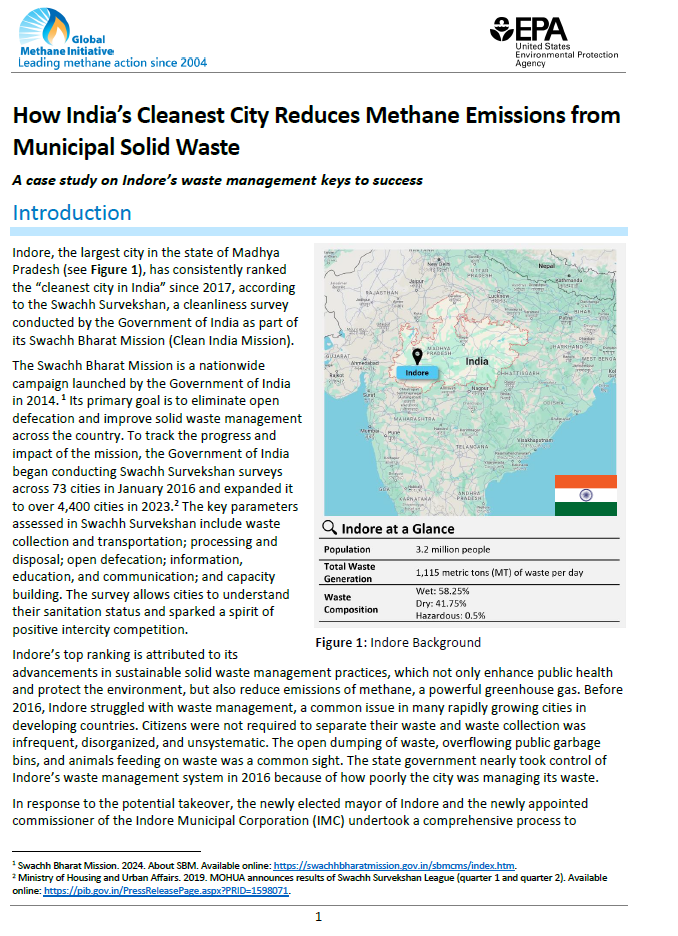
How India’s Cleanest City Reduces Methane Emissions from Municipal Solid Waste

A case study on Indore’s waste management keys to success: Indore, the largest city in the state of Madhya Pradesh, India, has consistently ranked the “cleanest city in India” since 2017. In October 2023, the U.S. Environmental Protection Agency, on behalf of the Global Methane Initiative, conducted a study tour of Indore that brought other waste management officials to learn about Indore’s improved waste management. This case study provides an overview of the factors that contributed to the successful transformation of Indore’s waste management system, including leadership buy-in, public engagement and participation, pilot testing, infrastructure upgrades, and innovative financing. It can serve as a model for cities around the world to improve solid waste management and reduce methane emissions and other climate pollutants.

Download
Topic
Language
Publish Date
01 Jan 2024
thumb-Methane Mitigation Lessons Learned from India Compressed Biogas (Renewable Natural Gas) Projects.png

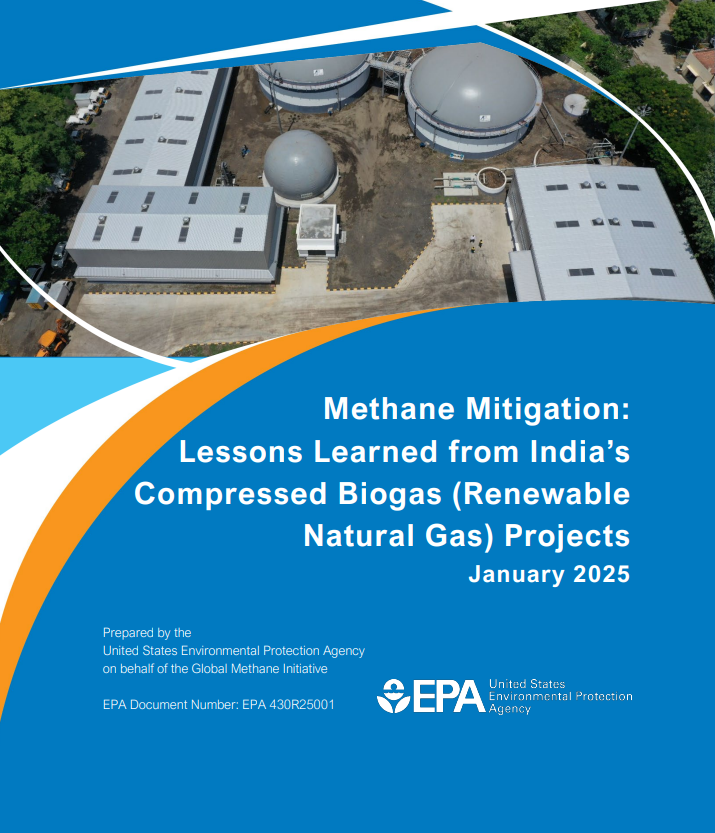
Methane Mitigation: Lessons Learned from India’s Compressed Biogas (Renewable Natural Gas) Projects

This report presents the results of study analyzing a subset of India’s compressed biogas sector focusing on the potential role for this sector to create a market for a renewable energy resource while mitigating a significant source of methane emissions in India.

Download
Topic
Language
Publish Date
01 Jan 2025
thumb-Market Opportunities for Anaerobic Digestion of Livestock and Agro-Industrial Wastes in India.png

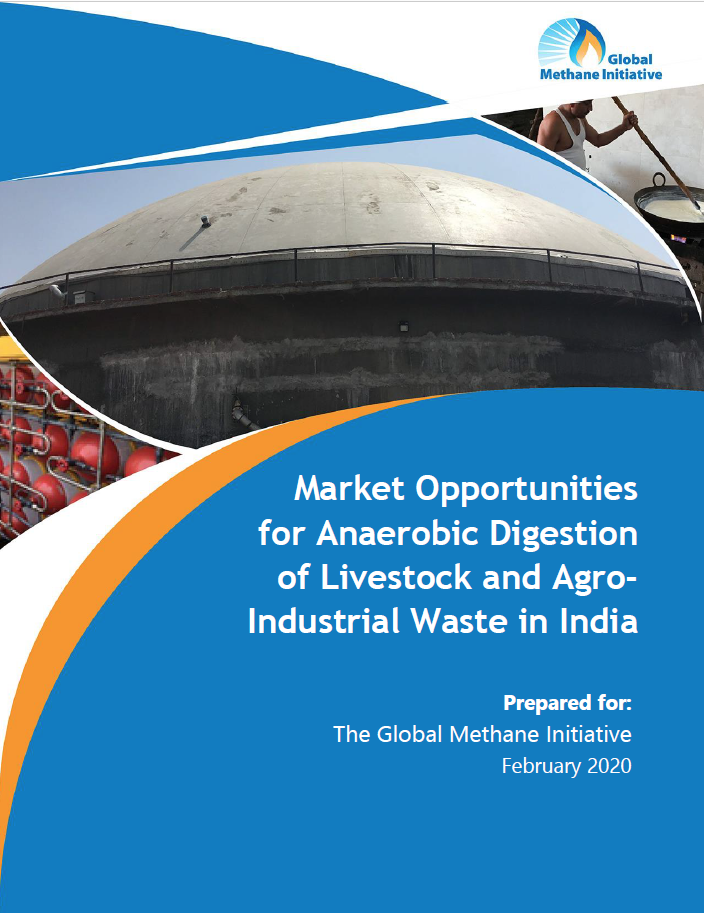
Market Opportunities for Anaerobic Digestion of Livestock and Agro-Industrial Wastes in India

Under the auspices of GMI, the U.S. Environmental Protection Agency has developed a report on the Market Opportunities for Anaerobic Digestion of Livestock and Agro-Industrial Wastes in India to help inform project developers, policymakers, and other interested stakeholders about the potential for biogas capture and use in India. The report covers:

  • Uses of biogas and digestate;
  • Current biogas policies and incentives in India;
  • Biogas production potential from India’s largest agricultural production industries, including:
    • Dairy
    • Milk processing
    • Poultry
    • Sugarcane processing
    • Distillery
    • Fruit and vegetable processing
    • Cornstarch production
    • Tapioca production
    • Crop residues;
  • Technology options for anaerobic digestion in India; and
  • Business models and case studies from India, Asia, and the United States.
Download
Topic
Language
Publish Date
01 Jan 2020
thumb-Establishing Biogas-Powered Cold Storage in Rural India for Methane Mitigation and Sustainable Food Systems.png

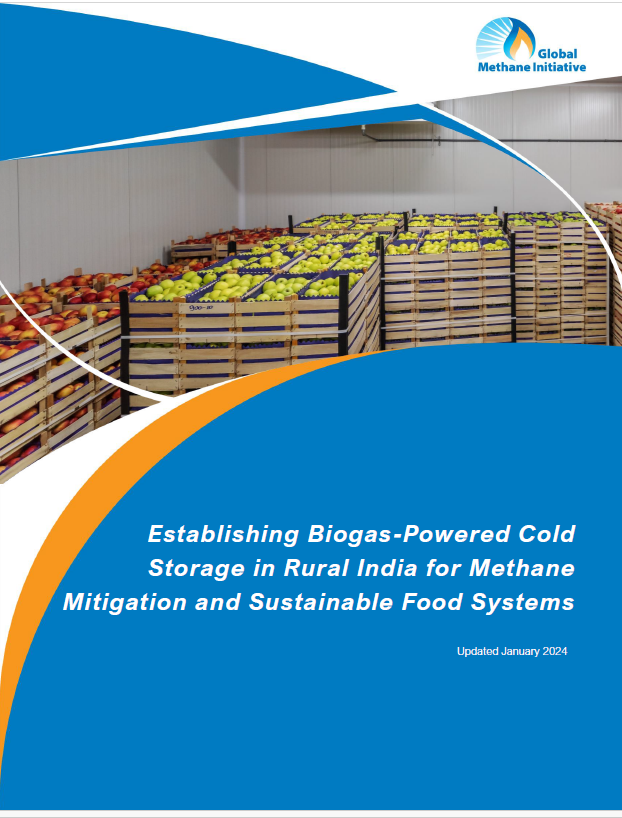
Establishing Biogas-Powered Cold Storage in Rural India for Methane Mitigation and Sustainable Food Systems

Mitigating post-harvest food loss can result in economic benefits for farmers, increase food security, and reduce methane emissions from organic waste. Each year, an estimated 30 percent of fruits and vegetables produced in India are lost or wasted despite the country ranking 94th out of 100 on the 2020 Global Hunger Index (HLPE, 2014; Agarwal et al., 2021). Almost half of post-harvest food losses in India are attributed to the lack of a reliable cold chain, the integrated network of refrigerated storage facilities, transportation, and merchandising technologies that maintain food quality moving from harvest to the consumer (Peters et al., 2019). Cold-chain technologies are energy intensive and typically powered by fossil fuels. In recent years, there has been a focus on clean energy powered cold-chain solutions, including renewable energy powered cold storage facilities that store commodities after harvest.

The U.S. Environmental Protection Agency (EPA) conducted a financial pre-feasibility assessment for direct biogas-powered cold storage facilities in Maharashtra, India. EPA used the Global Methane Initiative’s (GMI) Organics Economics (OrganEcs) and Anaerobic Digestion Screening Tool to assess an anaerobic digestion system processing livestock manure into biogas, which is then used by an absorption cooling technology to generate off-grid cold storage without electricity. Data collected from farmers in Maharashtra included the potential crops available for cold storage and commodity prices. Project developers and technical experts provided data on the facility capital and operating costs, as well as sale prices for biogas, digestate, and cold storage fees.

Download
Topic
Language
Publish Date
01 Jan 2024
thumb-Methane Mitigation from Municipal Wastewater Treatment Plants.png

Methane Mitigation from Municipal Wastewater Treatment Plants

This fact sheet provides an overview of methane emissions generated in both wastewater collection systems and at wastewater treatment plants (WWTP). Topics include wastewater collection systems, conventional activated sludge (CAS) treatment systems, aerobic/aerated lagoon treatment systems, and anaerobic lagoon treatment systems. Biosolids management and opportunities for methane mitigation and use are also described.

Download
Topic
Language
Publish Date
01 Jan 2023
Subscribe to Biogas