thumb-BioWATT.jpg

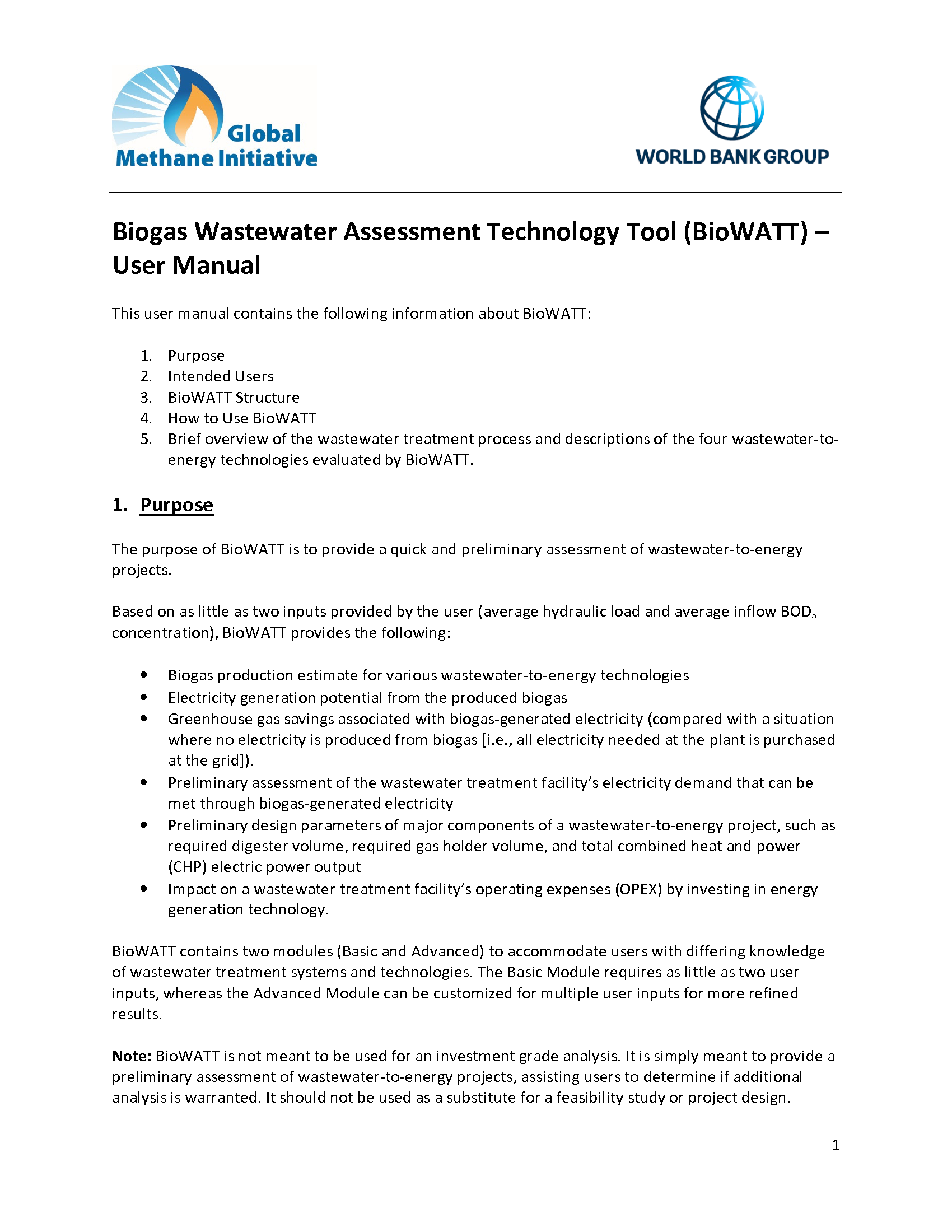
Biogas Wastewater Assessment Technology Tool (BioWATT)

The Biogas Wastewater Assessment Technology Tool (BioWATT) provides a quick and preliminary assessment of wastewater-to-energy projects. Through BioWATT, users can receive a specific summary of their biogas production estimates for various wastewater-to-energy technologies, electricity generation potential from the produced biogas, greenhouse gas savings associated with biogas-generated electricity, and more.

Download
Topic
Language
Publish Date
01 Jan 2016
thumb-How India’s Cleanest City Reduces Methane Emissions from Municipal Solid Waste.png

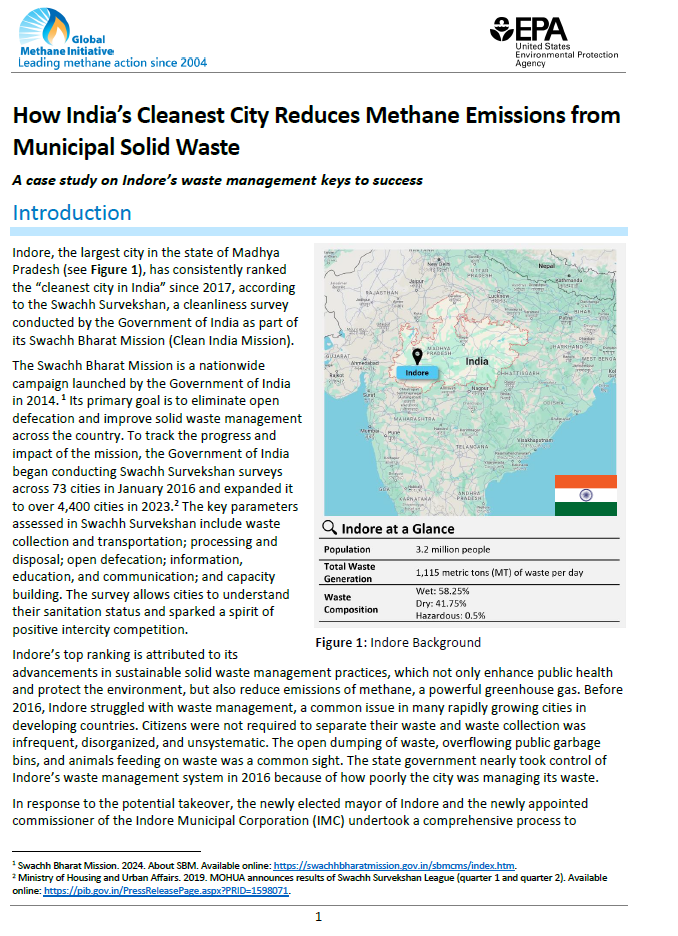
How India’s Cleanest City Reduces Methane Emissions from Municipal Solid Waste

A case study on Indore’s waste management keys to success: Indore, the largest city in the state of Madhya Pradesh, India, has consistently ranked the “cleanest city in India” since 2017. In October 2023, the U.S. Environmental Protection Agency, on behalf of the Global Methane Initiative, conducted a study tour of Indore that brought other waste management officials to learn about Indore’s improved waste management. This case study provides an overview of the factors that contributed to the successful transformation of Indore’s waste management system, including leadership buy-in, public engagement and participation, pilot testing, infrastructure upgrades, and innovative financing. It can serve as a model for cities around the world to improve solid waste management and reduce methane emissions and other climate pollutants.

Download
Topic
Language
Publish Date
01 Jan 2024
thumb-Methane Mitigation Lessons Learned from India Compressed Biogas (Renewable Natural Gas) Projects.png

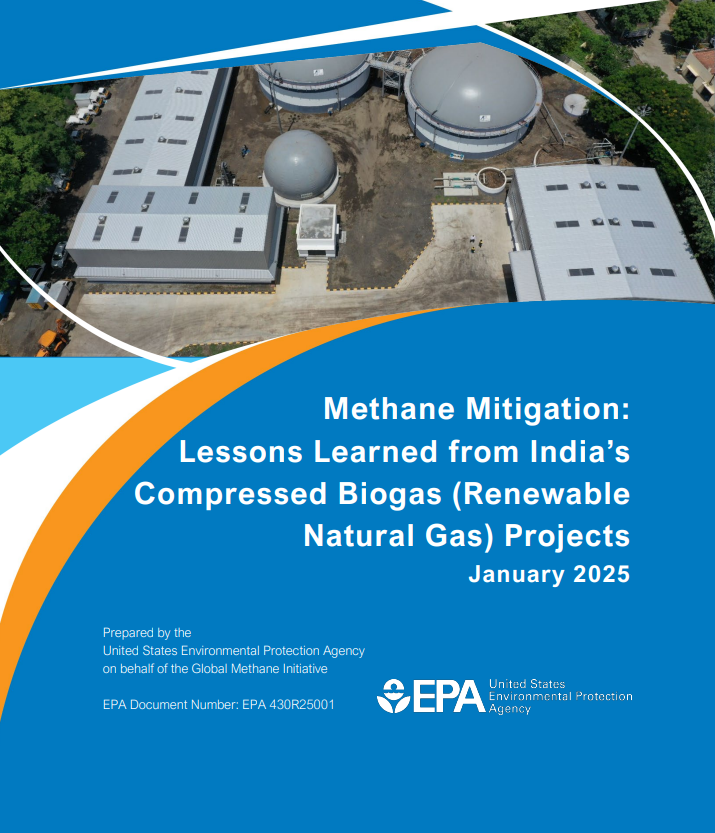
Methane Mitigation: Lessons Learned from India’s Compressed Biogas (Renewable Natural Gas) Projects

This report presents the results of study analyzing a subset of India’s compressed biogas sector focusing on the potential role for this sector to create a market for a renewable energy resource while mitigating a significant source of methane emissions in India.

Download
Topic
Language
Publish Date
01 Jan 2025
thumb-Market Opportunities for Anaerobic Digestion of Livestock and Agro-Industrial Wastes in India.png

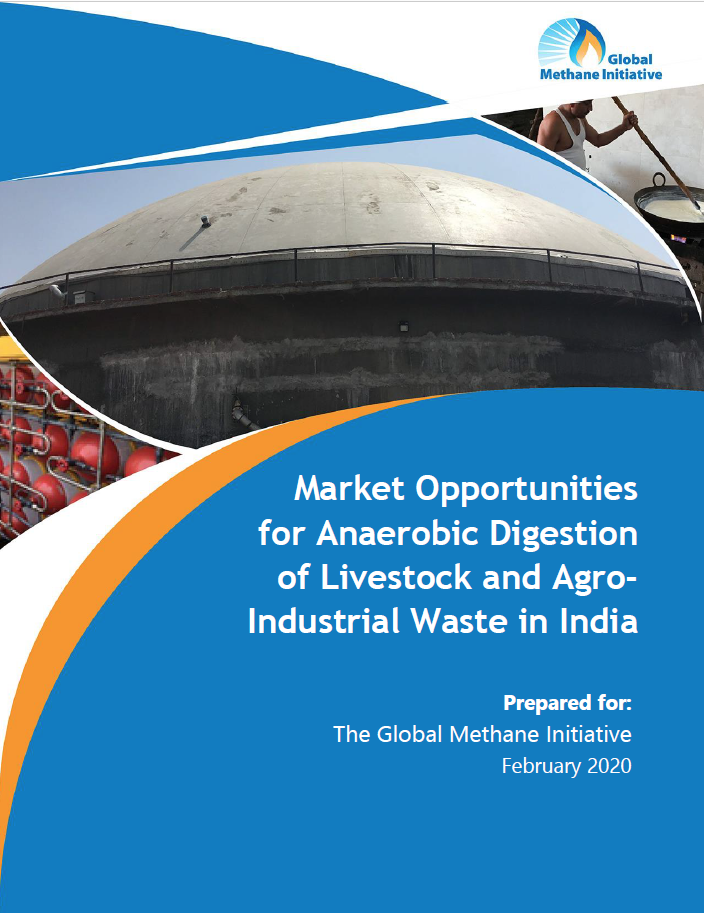
Market Opportunities for Anaerobic Digestion of Livestock and Agro-Industrial Wastes in India

Under the auspices of GMI, the U.S. Environmental Protection Agency has developed a report on the Market Opportunities for Anaerobic Digestion of Livestock and Agro-Industrial Wastes in India to help inform project developers, policymakers, and other interested stakeholders about the potential for biogas capture and use in India. The report covers:

  • Uses of biogas and digestate;
  • Current biogas policies and incentives in India;
  • Biogas production potential from India’s largest agricultural production industries, including:
    • Dairy
    • Milk processing
    • Poultry
    • Sugarcane processing
    • Distillery
    • Fruit and vegetable processing
    • Cornstarch production
    • Tapioca production
    • Crop residues;
  • Technology options for anaerobic digestion in India; and
  • Business models and case studies from India, Asia, and the United States.
Download
Topic
Language
Publish Date
01 Jan 2020
thumb-Coal Mine Methane Mitigation and Utilization Technologies and Project Profiles.png

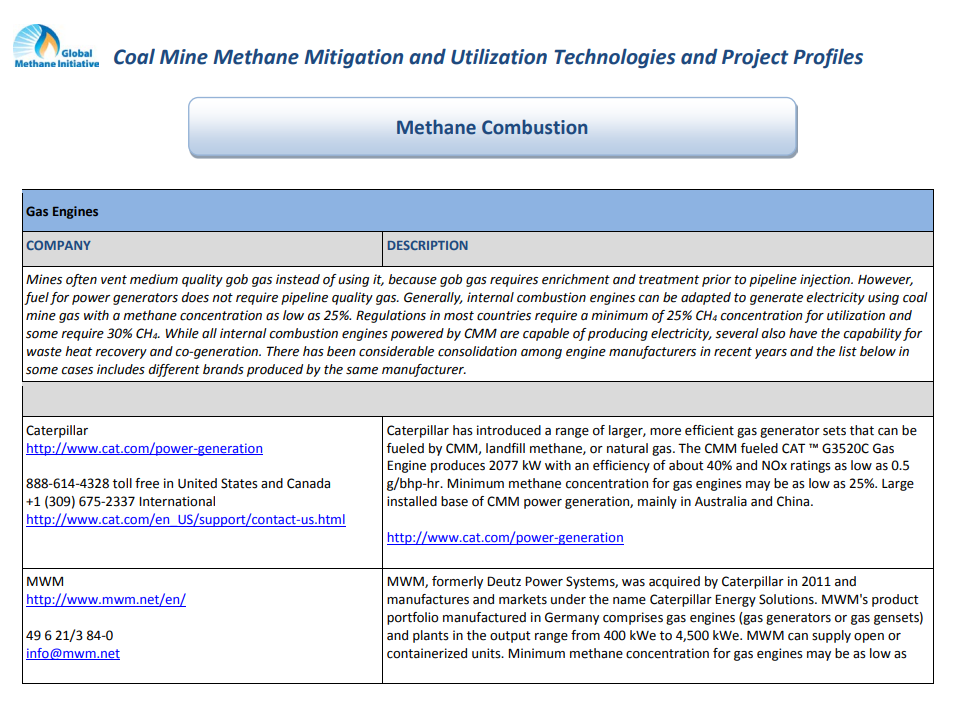
Coal Mine Methane Mitigation and Utilization Technologies and Project Profiles

This database provides basic descriptions of several key technologies applicable to coal mine methane recovery and utilization, including each technology’s current status and commercial availability. It is intended to be a living document, which will be periodically updated to remain current. The database is an updated and revised version of the original database compiled by Australia’s Department of Industry, Tourism and Resources, on behalf of the Global Methane Initiative.

Download
Topic
Language
Publish Date
01 Apr 2018
thumb-Status of CMM Ownership and Policy Incentives in Key Countries Considerations for Decision Makers.png

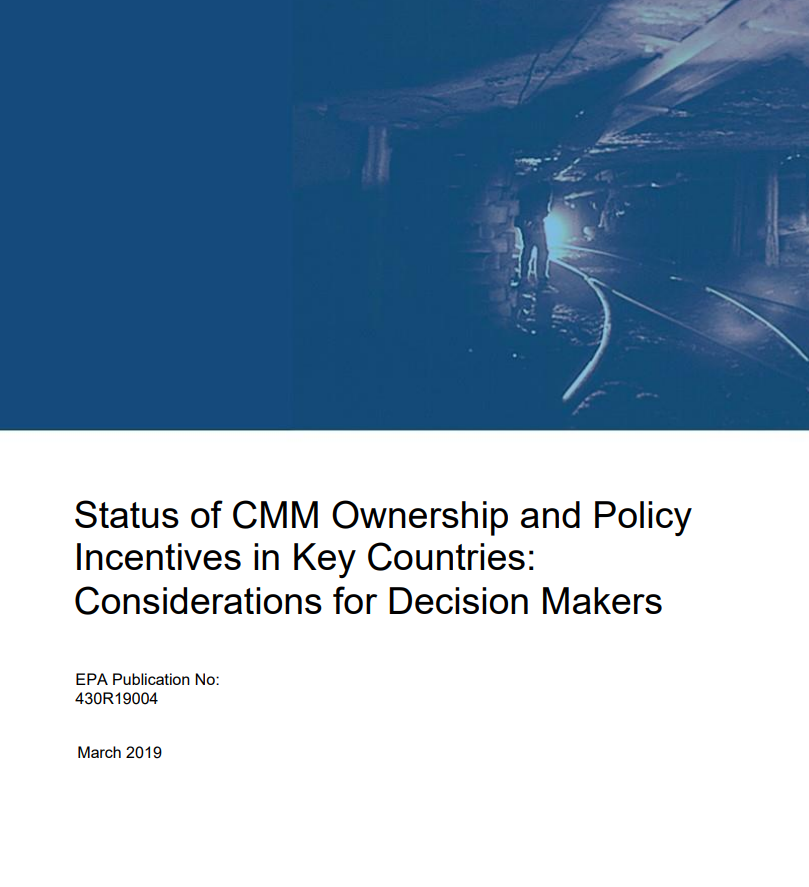
Status of CMM Ownership and Policy Incentives in Key Countries: Considerations for Decision Makers

This document presents case studies on the ownership and legal status of coal mines and incentives and policies to increase the capture and utilize methane from coal mines.

Download
Topic
Language
Publish Date
01 Mar 2019
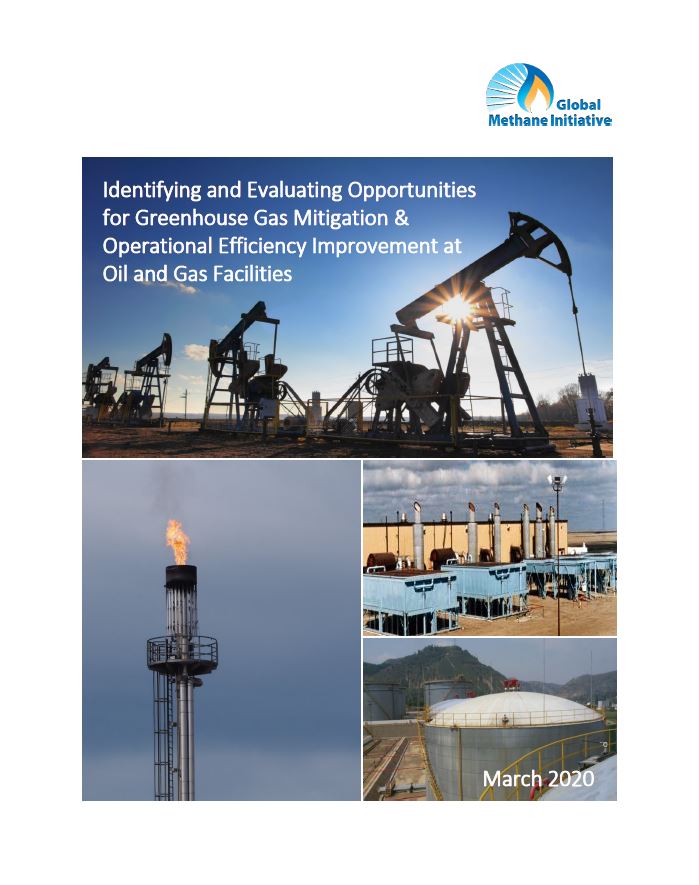
thumb-Identifying and Evaluating Opportunities for Greenhouse Gas Mitigation Operational Efficiency Improvement at Oil and Gas Facilities.jpg

Identifying and Evaluating Opportunities for Greenhouse Gas Mitigation & Operational Efficiency Improvement at Oil and Gas Facilities

This document presents introductory guidance on a pragmatic, integrated approach to identifying, evaluating, and advancing cost-effective, high-impact opportunities to manage greenhouse gas (GHG) emissions and energy use at oil and natural gas facilities. The focus is primarily on key sources of short-lived climate pollutants (SLCP).

The primary audience for this document includes company managers, facility operators, and relevant service providers outside of North America (particularly where other regulatory guidance for GHG reductions and energy management may not be available).

The primary aim of this guide is to help identify opportunities for cost-effective mitigation of methane and more energy efficient operations, with a focus on types of facilities and operations mostly likely to offer such opportunities based on practical experience. The guide identifies specific operational issues or problems that could contribute to unaccounted emissions, product losses, and process inefficiencies.

Download
Topic
Language
Publish Date
01 Jan 2020
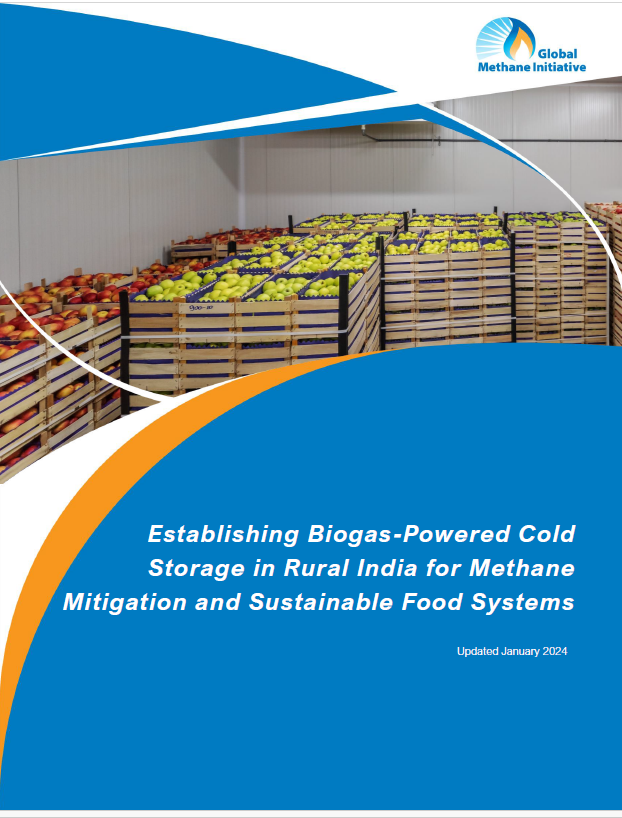
thumb-Establishing Biogas-Powered Cold Storage in Rural India for Methane Mitigation and Sustainable Food Systems.png

Establishing Biogas-Powered Cold Storage in Rural India for Methane Mitigation and Sustainable Food Systems

Mitigating post-harvest food loss can result in economic benefits for farmers, increase food security, and reduce methane emissions from organic waste. Each year, an estimated 30 percent of fruits and vegetables produced in India are lost or wasted despite the country ranking 94th out of 100 on the 2020 Global Hunger Index (HLPE, 2014; Agarwal et al., 2021). Almost half of post-harvest food losses in India are attributed to the lack of a reliable cold chain, the integrated network of refrigerated storage facilities, transportation, and merchandising technologies that maintain food quality moving from harvest to the consumer (Peters et al., 2019). Cold-chain technologies are energy intensive and typically powered by fossil fuels. In recent years, there has been a focus on clean energy powered cold-chain solutions, including renewable energy powered cold storage facilities that store commodities after harvest.

The U.S. Environmental Protection Agency (EPA) conducted a financial pre-feasibility assessment for direct biogas-powered cold storage facilities in Maharashtra, India. EPA used the Global Methane Initiative’s (GMI) Organics Economics (OrganEcs) and Anaerobic Digestion Screening Tool to assess an anaerobic digestion system processing livestock manure into biogas, which is then used by an absorption cooling technology to generate off-grid cold storage without electricity. Data collected from farmers in Maharashtra included the potential crops available for cold storage and commodity prices. Project developers and technical experts provided data on the facility capital and operating costs, as well as sale prices for biogas, digestate, and cold storage fees.
Download
Topic
Language
Publish Date
01 Jan 2024
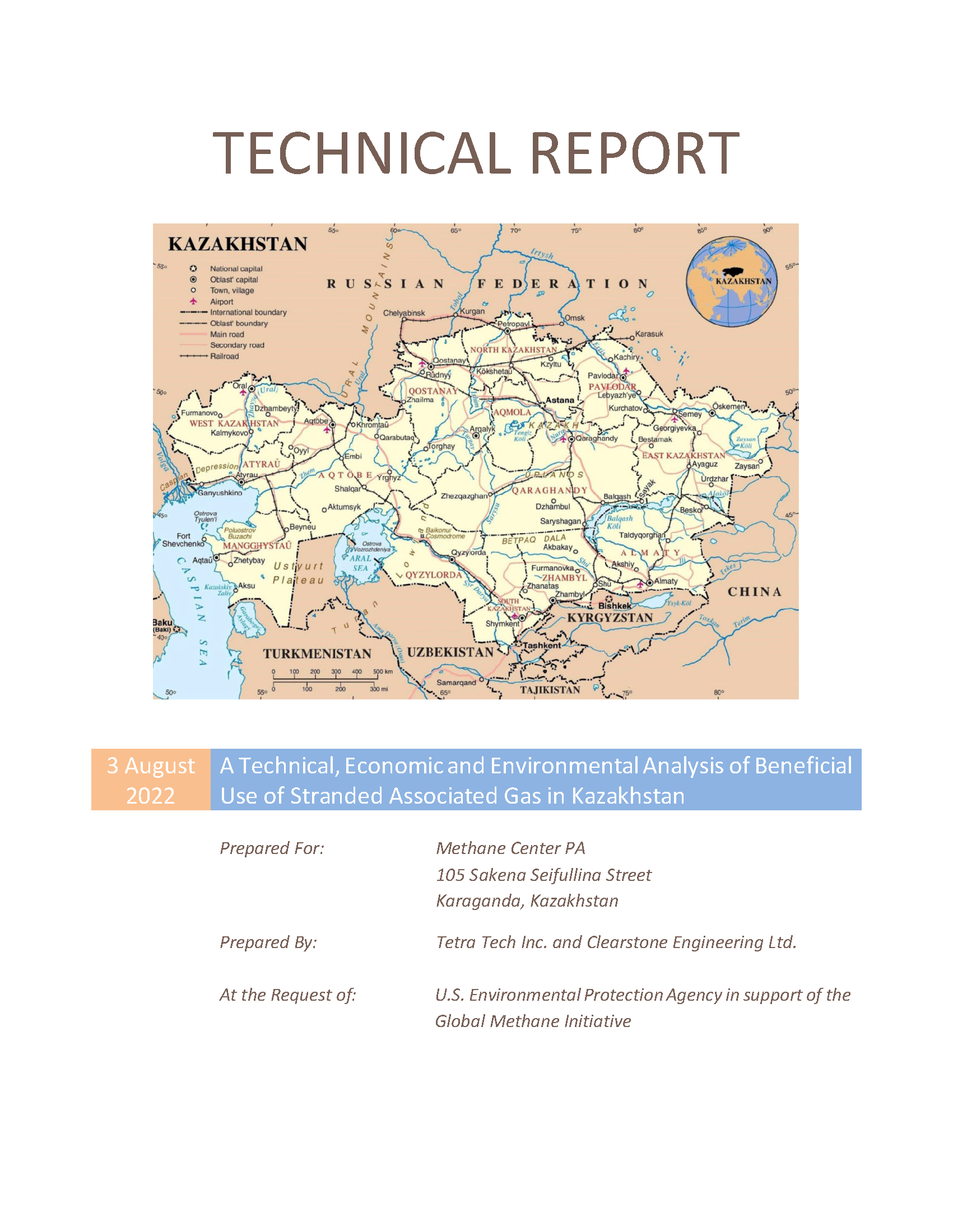
thumb-A Technical, Economic and Environmental Analysis of Beneficial Use of Stranded Associated Gas in Kazakhstan.png

A Technical, Economic and Environmental Analysis of Beneficial Use of Stranded Associated Gas in Kazakhstan

GMI, with support from the U.S. Environmental Protection Agency (EPA), worked with a partner in Kazakhstan to obtain data on associated gas availability and content to assess the opportunity to mitigate methane and reduce flaring at the Mangystau oilfield in southwest Kazakhstan. The prefeasibility study investigated the potential to monetize the stranded associated gas in the Mangystau oilfield by utilizing modular, small-scale processing technologies to produce marketable liquid hydrocarbon commodities such as methanol, syn-diesel, oil, or others. The report includes the results of the prefeasibility assessment of the range of practical mitigation options and recommendations for an optimum solution.

Download
Topic
Language
Publish Date
01 Jan 2023
thumb-MRVHandbook.png

Policy Maker’s Handbook for Measurement, Reporting, and Verification in the Biogas Sector

The Global Methane Initiative’s Policy Maker’s Handbook for Measurement, Reporting, and Verification in the Biogas Sector can help government decision-makers overcome barriers in accounting for emissions and emissions reductions from biogas projects.

The handbook serves as a high-level resource, intended primarily for national governments, on how applying best practices for project-level Measurement, Reporting, and Verification (MRV) in the biogas sector can support national-level objectives such as developing robust greenhouse gas emissions inventories; enhancing targets, policies, and actions in nationally determined contributions for emissions reductions; demonstrating progress toward sustainable development goals; and increasing access to external funding sources to promote economic growth.

This handbook was developed by the United States Environmental Protection Agency (EPA) on behalf of the Global Methane Initiative.

Download
Language
Publish Date
01 Jan 2022
Subscribe to English